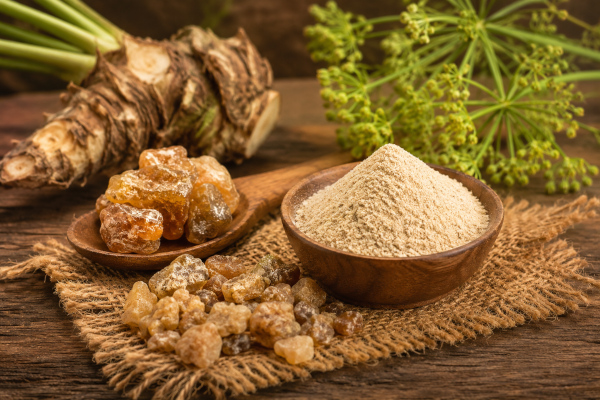
Asafoetida, known in Ayurveda as Hingu and in Indian kitchens as hing, heeng, perungayam, kayam or inguva, is one of the smallest ingredients used in Indian cooking, yet one of the most powerful from an Ayurvedic point of view. It is not a leaf, seed or fruit spice. True asafoetida is an oleo-gum-resin obtained from the fleshy roots and rhizomes of Ferula assa-foetida, a plant of the Apiaceae/Umbelliferae family. The raw resin has a sharp sulphurous smell, which is why it is often called strong, pungent or even unpleasant in its raw form, but when fried lightly in ghee or oil, it transforms into one of the most beautiful digestive aromas in Indian cuisine.
In Ayurveda, Hingu is valued mainly as a Deepana-Pachana dravya — a substance that kindles digestive fire and helps the body process food properly. This is why Indian cooking traditionally adds a tiny pinch of hing to dals, sambar, rasam, kadhi, chana, rajma, yam, colocasia, leafy vegetables and other foods that may otherwise produce heaviness, bloating or gas. The idea is simple but profound: digestion is not an afterthought in Indian food; digestion is built into the recipe itself.
How to Identify Asafoetida
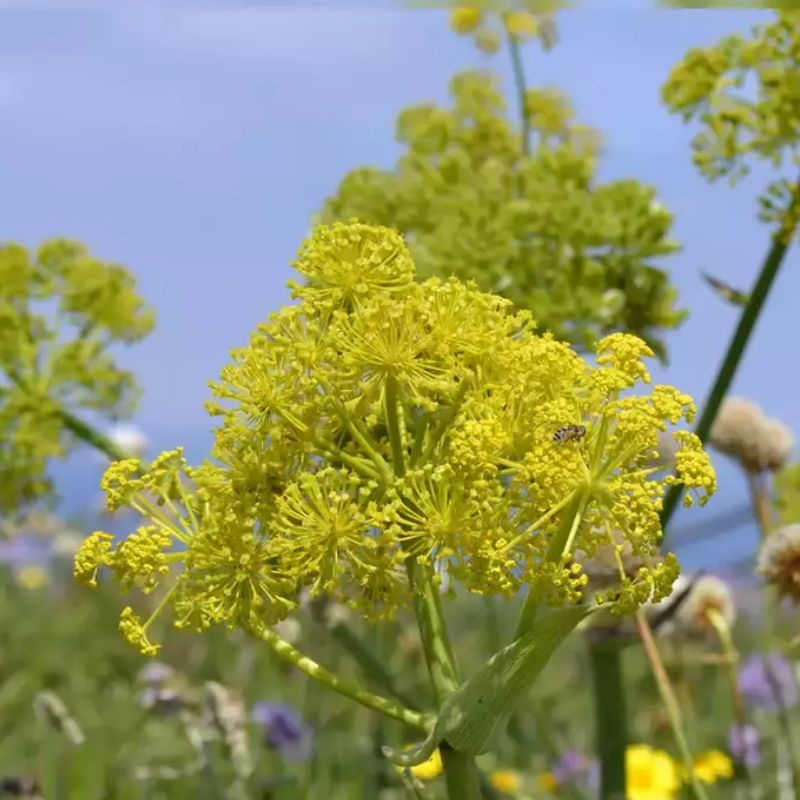
The asafoetida plant is a tall perennial herb with a thick, fleshy root. The medicinal and culinary material is collected by making incisions in the root or rhizome, allowing the milky exudate to come out and dry into a gum-resin. In traditional trade, raw asafoetida appears as irregular lumps or tears that may be yellowish, reddish-brown or dark brown with a very strong smell. The powdered hing commonly sold in shops is usually compounded with edible starches or flours because pure asafoetida is extremely strong, sticky and difficult to handle in exact culinary quantities.
India has been one of the world’s biggest consumers of asafoetida, but historically depended heavily on imports from countries such as Afghanistan, Iran and Uzbekistan. In 2020, CSIR-IHBT began introducing asafoetida cultivation in the cold desert conditions of Himachal Pradesh’s Lahaul Valley, because Ferula assa-foetida prefers cold, dry conditions and takes about five years to produce oleo-gum-resin in its roots.
Ayurvedic Profile of Hingu
In classical Ayurvedic understanding, Hingu is Katu Rasa — pungent in taste. Its Guna are generally described as Laghu and Tikshna, meaning light and penetrating. Its Virya is Ushna, or heating, and its Vipaka is also Katu, meaning it retains a pungent post-digestive effect. Because of these qualities, it is especially useful in conditions dominated by Vata and Kapha, particularly when digestion is slow, gas is trapped, appetite is weak, or the abdomen feels heavy. However, because it is heating and sharp, it can aggravate Pitta when used excessively.
This explains why Ayurveda treats hing with respect. It is not a casual spice to be thrown in handfuls. It is a pinch medicine. A little awakens digestion; too much can create burning, acidity, irritation or excess heat. That is why the Indian kitchen uses hing almost like a mantra — small, precise and powerful.
Hingu as a Digestive Ally
The greatest Ayurvedic importance of asafoetida lies in its action on the digestive system. It is traditionally used for Ajeerna or indigestion, Adhmana or gaseous distension, Anaha or abdominal bloating, Shula or colicky pain, and weak appetite. Classical Ayurvedic descriptions connect Hingu with actions such as Deepana — stimulating appetite, Pachana — helping digestion, and Anulomana — supporting the proper downward movement of Vata.
This is why hing is so closely linked with dal and pulses. Lentils, beans and gram are nourishing, protein-rich foods, but they can be Vata-provoking when digestion is weak. By adding hing, cumin, ginger, black pepper, ajwain or ghee, Indian recipes reduce the roughness and gas-forming tendency of these foods. In other words, the recipe itself becomes an Ayurvedic correction.
A simple example is hing-jeera tadka. When a pinch of hing is added to warm ghee with cumin seeds and poured over dal, it does more than add aroma. It supports digestive fire, reduces heaviness, improves flavour and makes the food easier to assimilate. This is the real genius of traditional Indian cooking: taste and health are not separate categories.
Asafoetida for Vata Balance
From an Ayurvedic angle, many common abdominal complaints are linked to disturbed Vata — especially when there is dryness, irregular eating, cold food, excess raw food, anxiety, travel, constipation or trapped gas. Hingu’s heating, penetrating and Vata-moving nature makes it useful in such situations. It helps break the feeling of stagnation in the abdomen and supports the normal movement of Apana Vata.
This is why traditional households often use hing in foods given during seasonal changes, after heavy meals, or when the digestive system feels sluggish. A very common home practice is adding a small pinch of hing to warm water, buttermilk, rasam or thin dal. In many homes, hing is also used externally in folk practice as a paste around the navel for gas discomfort, though such uses should be approached carefully, especially for children or sensitive skin.
Role in Respiratory and Kapha Conditions
Because Hingu is heating, pungent and Kapha-reducing, Ayurveda also places it among substances that may support the clearing of heaviness and stagnation. Traditional references associate Hingu with respiratory support, especially in Kapha-linked conditions where there is congestion, heaviness or sluggishness. Modern reviews also discuss asafoetida’s traditional use in respiratory complaints, along with antispasmodic and expectorant-type properties, though these should be understood as supportive traditional uses rather than a replacement for medical treatment.
In food, this is why hing often appears in warm, light, soupy preparations such as rasam, pepper water, thin dal and spiced buttermilk. Such recipes are not merely “comfort food”; they are carefully designed combinations of heat, spice, fat and fluid to support digestion and reduce stagnation.
Modern View: Why Hing Works So Powerfully
Modern pharmacological reviews have examined asafoetida for several biological activities, including digestive, antispasmodic, antioxidant, relaxant, antimicrobial and other potential effects. The strong smell of asafoetida is linked to sulphur-containing volatile compounds, while its resin and gum fractions contain several bioactive constituents. However, many of these findings come from laboratory, animal or preliminary studies, so they should be seen as supportive science rather than proof that hing can treat diseases by itself.
This balanced view is important. Ayurveda discovered Hingu through centuries of food and clinical use; modern science is now studying some of the mechanisms that may explain its action. But the safest and most intelligent way to use asafoetida remains the traditional way: in very small quantities, mainly as part of food.
Common Ayurvedic Preparations Containing Hingu
Hingu appears in several Ayurvedic formulations, especially those meant for digestion, Vata regulation and abdominal discomfort. Some well-known examples include Hingvastak Churna, Hingwadi Vati, Ashta Churnam, and other digestive formulations where Hingu is combined with herbs such as cumin, ajwain, ginger, black pepper, long pepper, rock salt and other Deepana-Pachana ingredients. These combinations are designed to kindle Agni, reduce gas, support appetite and correct Vata movement.
However, these should not be taken casually in large doses. Ayurvedic medicines are not the same as kitchen tadka. A pinch in food is one thing; regular medicinal use is another. People with acidity, ulcers, bleeding disorders, pregnancy, lactation, high Pitta conditions or those taking blood-thinning or blood-pressure medicines should use caution and consult a qualified physician.
Home Uses in Indian Kitchens
The safest and most beautiful use of asafoetida is culinary. A pinch of hing in dal tadka helps make lentils lighter. A pinch in sambar balances the heaviness of dal and vegetables. A pinch in rasam gives warmth and digestive sharpness. In kadhi, it works with cumin, fenugreek and curd to create a digestive, soothing meal. In chana, rajma and other legumes, it helps reduce the heavy Vata nature of beans. In yam, colocasia and certain tubers, it helps counter sliminess, heaviness and gas-forming tendencies.
A simple traditional digestive drink is spiced buttermilk with hing. Take diluted buttermilk, add roasted cumin powder, a tiny pinch of hing, rock salt and fresh curry leaves or coriander. This kind of drink is especially valued after a heavy lunch because it supports digestion without making the body feel heavy. But people with high acidity or heat symptoms should use very little hing or avoid it if it does not suit them.
Who Should Be Careful With Asafoetida?
Asafoetida is powerful and heating, so it is not suitable for everyone in medicinal quantities. People with severe acidity, gastritis, ulcers, burning sensation, loose motions due to heat, bleeding tendency, or strong Pitta constitution should be careful. Pregnant women, breastfeeding mothers, infants and people taking anticoagulant, blood-pressure or other regular medicines should avoid medicinal use unless advised by a qualified doctor. Even in cooking, the quantity should remain tiny — usually just a pinch for an entire dish.
Conclusion: A Pinch of Ancient Intelligence
Asafoetida is the perfect example of how Indian food quietly carries medical intelligence. A dal without tadka is nutrition. A dal with hing, cumin, ghee, turmeric and curry leaves becomes nourishment that the body can actually digest. This is the difference between merely eating and eating wisely.
Hingu reminds us that Ayurveda does not live only in pharmacies or classical texts. It lives in the spice box, in the grandmother’s tadka, in the rasam pot, in the buttermilk after lunch, and in the careful understanding that every food has a nature and every recipe must balance that nature. Asafoetida may be tiny, sharp and almost invisible in the final dish, but in Ayurvedic cooking, it is one of the great guardians of Agni — the digestive fire that turns food into strength, clarity and health.
Sources:
https://www.pib.gov.in/PressReleaseIframePage.aspx?PRID=1665796
https://pmc.ncbi.nlm.nih.gov/articles/PMC3459456/
https://pmc.ncbi.nlm.nih.gov/articles/PMC5506628/
https://pubmed.ncbi.nlm.nih.gov/23055640/
https://pubmed.ncbi.nlm.nih.gov/28725631/
https://www.easyayurveda.com/asafoetida-health-benefits-medicinal-uses-side-effects-ayurveda/
https://www.iafaforallergy.com/dravya-herbs-part-a/hing-ferula-assa-foetida/
You may also like
-
Karanja — Ayurveda’s Bitter Oil Tree for Skin, Wounds and Kapha-Vata Balance
-
Bengaluru’s SugarStrings.ai Develops Cheek-Swab DNA Test Screening Thousands of Genetic Disorders
-
Green Pyramid Biotech Turns Sophorolipid Research Into a Natural Food-Safety Platform
-
Ashoka — Saraca asoca: Ayurveda’s Celebrated Tree for Rakta and Women’s Health
-
Alphonso Mango — Maharashtra’s Golden Hapus and the Geography Behind India’s Most Celebrated Mango
