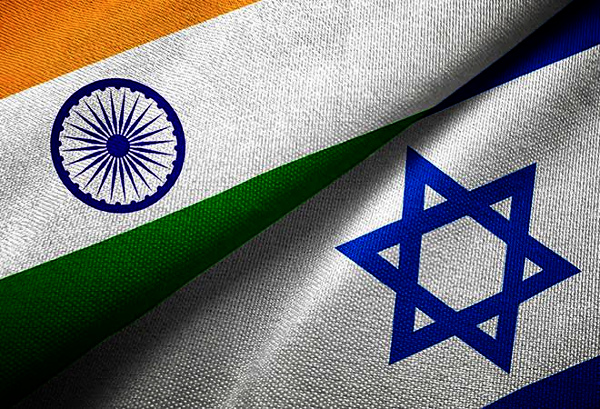
At the invitation of Prime Minister Benjamin Netanyahu, Prime Minister Narendra Modi paid a State Visit to Israel from 25–26 February 2026, accompanied by a high-level delegation of ministers and senior officials. The visit reaffirmed the warmth and strategic depth that have come to define the relationship between India and Israel.
Recalling Prime Minister Modi’s landmark 2017 visit to Israel and Prime Minister Netanyahu’s 2018 visit to India—milestones that reshaped bilateral ties—the two leaders reviewed the remarkable expansion of cooperation across defence, emerging technologies, cybersecurity, agriculture, water management, health, space, and entrepreneurship. Building on this progress, they agreed to elevate the relationship to a new level: a Special Strategic Partnership for Peace, Innovation, and Prosperity.
Together Into the Future
The leaders articulated a shared vision rooted in peace, security, technological advancement, and inclusive growth. They noted the natural complementarity between the two nations: Israel’s global leadership in cutting-edge innovation and India’s scale, talent base, manufacturing strength, and entrepreneurial dynamism.
Both sides committed to integrating capabilities in artificial intelligence, semiconductors, quantum technologies, biotechnology, advanced agriculture, water solutions, defence platforms, and space exploration. This cooperation directly aligns with India’s long-term development vision of Atmanirbhar Bharat and Viksit Bharat 2047, while opening new frontiers for Israeli innovation partnerships.
To ensure measurable outcomes, the Prime Ministers emphasized institutionalized engagement across Government-to-Government, Business-to-Business, and People-to-People frameworks.
Defence and Security
Welcoming the Memorandum of Understanding on Defence Cooperation signed in November 2025, both leaders charted a forward-looking roadmap to deepen collaboration in defence manufacturing, co-development, and strategic security cooperation. The partnership reflects growing trust and shared security interests in a rapidly evolving global environment.
Technology and Innovation
A central pillar of the upgraded partnership is cooperation in Critical and Emerging Technologies (CET). A new initiative led by the National Security Advisors of both countries will coordinate focused collaboration in frontier sectors.
The leaders reviewed the progress of the India–Israel Industrial R&D and Innovation Fund (I4F), jointly implemented by India’s Department of Science and Technology and the Israel Innovation Authority. They agreed to strengthen outreach and promote high-quality joint industrial research partnerships.
The India–Israel Joint Research Calls will see increased funding, with both sides raising contributions to USD 1.5 million each. The initiative enables joint use of research facilities and scientist exchanges, with coordination entrusted to the Joint Scientific Committee. Elevating the Joint Commission on Science and Technology to Ministerial level further reflects the strategic weight assigned to scientific cooperation.
Both sides also agreed to explore “Tech Gateway” mechanisms to accelerate technology validation, pilot projects, and commercialization across innovation ecosystems.
In Artificial Intelligence, the signing of a dedicated MoU marks a major step forward. The leaders emphasized talent exchange, research collaboration, and industry partnerships to harness AI for societal and economic advancement.
In space cooperation, ongoing collaboration between the Israel Space Agency and the Indian Space Research Organisation (ISRO) will expand, with encouragement for deeper industry-to-industry engagement in satellite technologies and space innovation.
A new Horizon Scanning and Strategic Foresight Mechanism will support long-term policy planning by leveraging data, AI, and expert insights to anticipate global technological and economic trends.
Cybersecurity Cooperation
Recognizing cyber resilience as essential to national security and economic stability, the Prime Ministers agreed to launch a multi-year strategic cybersecurity program. Cooperation will include capacity building, AI-integrated cyber defence, applied research, Security-by-Design principles, and regular joint exercises.
Following the inaugural India–Israel Cyber Policy Dialogue in 2025, both leaders welcomed the establishment of an India–Israel Centre of Excellence in Cybersecurity in India.
Trade, Investment, and Financial Connectivity
Economic engagement remains a key driver of the partnership. The signing of the Bilateral Investment Agreement in 2025 is expected to boost investor confidence through enhanced transparency and dispute resolution mechanisms.
Both leaders reaffirmed their commitment to expediting negotiations for a Free Trade Agreement. They also welcomed expanded financial cooperation, including enhanced financial-cyber intelligence exchanges and joint simulations to protect financial ecosystems.
Prime Minister Netanyahu acknowledged India’s fintech revolution, particularly the Unified Payments Interface (UPI). Both sides agreed to explore linking UPI with Israel’s fast payment system, following an MoU between NPCI International and MASAV to examine cross-border payment integration.
Direct air connectivity was identified as essential to scaling economic ties, with encouragement for airlines to expand direct routes between Tel Aviv and major Indian cities.
The two leaders also welcomed the 4th India–Israel CEO Forum, highlighting its role in unlocking investment and sectoral collaboration, and endorsed enhanced arbitration cooperation between business institutions to facilitate smoother dispute resolution.
Agriculture, Water, and Sustainability
Agriculture and water cooperation remains one of the most successful pillars of bilateral engagement. The leaders reviewed progress of 35 operational Centres of Excellence in agriculture across India, along with eight additional centres under development. Over one million Indian farmers have benefited from training and technology transfer initiatives.
The establishment of the India–Israel Innovation Centre for Agriculture (IINCA) and new joint fellowships at Israel’s Volcani Agricultural Research Organization will further boost agricultural research and productivity.
Both sides also agreed to strengthen collaboration in fisheries, aquaculture, wastewater reuse, desalination, river rejuvenation, and climate resilience, promoting sustainable and circular economic models.
Combating Terrorism and Promoting Peace
The leaders unequivocally condemned terrorism in all its forms, including cross-border terrorism. They reaffirmed their resolve as leaders of two vibrant democracies to combat extremism through decisive and coordinated international efforts.
They also exchanged views on regional developments and emphasized the importance of dialogue and durable peace in the broader Middle East, while reaffirming commitments to secure trade routes and freedom of navigation.
Parliamentary, Cultural, and People-to-People Ties
Parliamentary exchanges have strengthened democratic engagement, including the establishment of the India–Israel Parliamentary Friendship Group in India’s Parliament.
Cultural cooperation will expand through cinema collaborations, creative exchanges, and sports engagement. Both leaders acknowledged the important role of Indian workers in Israel and reviewed frameworks ensuring their safety and legal protections. Up to 50,000 additional Indian workers are expected to contribute to Israel’s workforce over the next five years.
Health and Education
The leaders agreed to hold the first Joint Working Group on Health in 2026 to deepen cooperation in healthcare innovation and digital transformation.
In education, new MoUs between universities—including Nalanda University and the Hebrew University of Jerusalem—will promote joint research, exchanges, and AI-driven academic collaboration. The establishment of the India–Israel Academic Cooperation Forum (I2I Forum) will institutionalize annual high-level academic dialogue.
Shaping the Future of Global Connectivity
Both leaders reaffirmed support for transformative multilateral initiatives, including the I2U2 framework and discussions surrounding the India–Middle East–Europe Economic Corridor (IMEC), underscoring shared ambitions for regional connectivity and economic integration.
A Forward-Looking Partnership
The signing of multiple new agreements across AI, cybersecurity, agriculture, fisheries, mining, maritime heritage, arbitration, financial regulation, education, and worker mobility demonstrates the comprehensive character of the upgraded partnership.
Prime Minister Netanyahu and Prime Minister Modi concluded their discussions with a shared commitment to sustained high-level engagement. The newly elevated Special Strategic Partnership reflects not merely diplomatic warmth, but a structured, future-oriented collaboration between two knowledge-driven democracies—dedicated to peace, technological advancement, economic resilience, and shared prosperity.
Source: PIB
You may also like
-
INS Sahyadri and INS Kulish Reach Philippines for ADMM-Plus Maritime Cooperation
-
India–Mongolia Joint Military Exercise Nomadic Elephant 2026 Begins in Pithoragarh
-
India–Thailand Trade Nears $14 Billion in Seven Months as Economic Ties Broaden
-
Japanese Parliamentary Delegation Visits BEL and Reviews Advanced Defence Systems
-
India and Thailand Move Toward UPI–PromptPay Link and Rupee–Baht Settlement to Deepen Economic Integration
