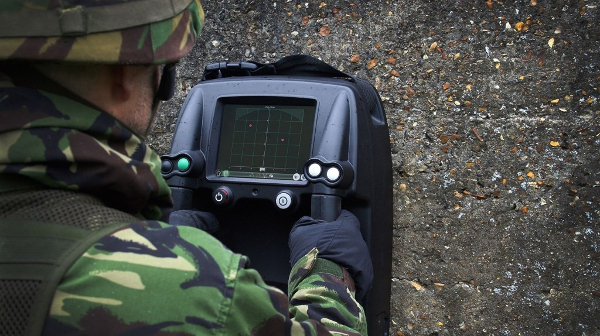
In a major scientific breakthrough, researchers at the Bengaluru-based Indian Institute of Science (IISc) have developed a “through-the-wall” radar (TWR) built on a chip which sizes smaller than a grain of rice, reports The Times of India.
Led by associate professor Gaurab Banerjee of the institute’s Department of Electrical Communication Engineering, the tiny TWR built by the team of researchers contains a transmitter, three receivers, and an advanced frequency synthesiser, all into the small unit.
The small size of the TWR is what is expected to facilitate mass production at a low cost. This gains significance as radars like the TWR developed at IISc can have a wide gamut of applications in sectors ranging from defence, to healthcare, transportation, and agriculture.
“Such radars can have wide-ranging applications in the defence sector, as well as areas such as healthcare, transportation and agriculture,” said a statement by IISc.
According to Banerjee, the development of the TWR by the researchers of IISc has placed India among those very few nations with the capability to put up an entire array of electronics of a radar on a chip.
Source: Swaraja Magazine
Image Courtesy: ElectronicsB2B
You may also like
-
India’s Chip-Design Pipeline Accelerates as C2S Trains 68,000 and Enables 254 Semiconductor Tape-Outs
-
IIT Bhilai Turns Waste PET Bottles Into Reprocessable Engineering Material for 3D Printing
-
A smart cancer drug activating primarily in cancer cells, could replace chemotherapy
-
IIT Mandi Turns Sea Urchin Geometry Into an Antibiotic-Free Defence for 3D-Printed Bone Implants
-
Aheesa’s VIHAAN Achieves First-Pass Silicon, Advancing India’s Indigenous Broadband Chip Effort
