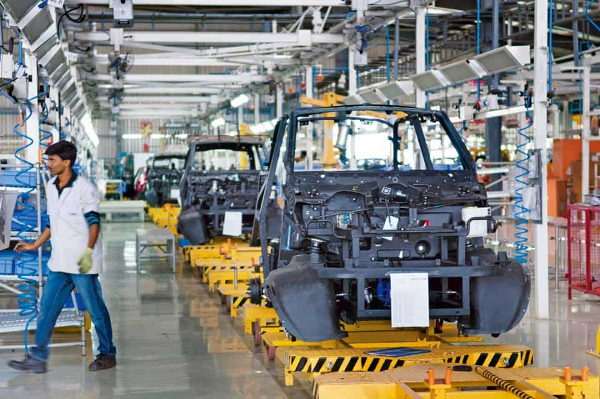
With the announcement of the second phase of the FAME scheme, the government had announced several incentives for electric vehicle (EV) makers. A parallel bid to localise the production of EVs, however, has now resulted in the government putting a localisation content limit on these makes.
As discussed in a meeting of the Department of Heavy Industry on Wednesday, the makers will have to manufacture minimum of 50 percent of components of EVs within the country in order to avail these incentives. The 50 percent bar stands alike for electric four-wheelers electric three-wheelers, two-wheelers as well as e-rickshaws. While in the case of electric buses, the bar drops down to 40 percent.
Applicable from April 1, the norms will apply to the 10,00,000 electric two-wheelers, 5,00,000 three-wheelers, 55,000 four-wheelers as well as 7,000 buses to be covered under the phase 2 of the FAME scheme.
In addition to the incentives to the makers, the second phase will also bring subsidies to the buyers of these EVs, with up to Rs 2.5 lakh discounts on about 60,000 all-electric car units. Majority of the subsidy has been allotted to public transport means like e-rickshaws and electric buses.
Along with the local manufacturing of the EVs, the government has also pushed for an indigenous manufacturing set up for the lithium ion batteries. For this, PM Modi led cabinet approved the National Mission on Transformative Mobility and Battery Storage (NMTMBS) for a Phased Manufacturing Programme (PMP) of EV batteries.
Source: IT
Image Courtesy:HT
You may also like
-
Wayanad Jeerakasala Rice — Kerala’s Aromatic Grain from the High Valleys of the Western Ghats
-
Bharat Forge Secures Long-Term Pratt & Whitney Canada Contract for Critical Aero-Engine Components
-
UltraTech Cement Nears 2 GW Green Power Capacity as Decarbonisation Drive Accelerates
-
GST 2.0 Simplifies Registration and Accelerates Refunds for Indian Businesses
-
India and United States Expand Indian Ocean Cooperation Through Strategic Connectivity and Maritime Initiatives
