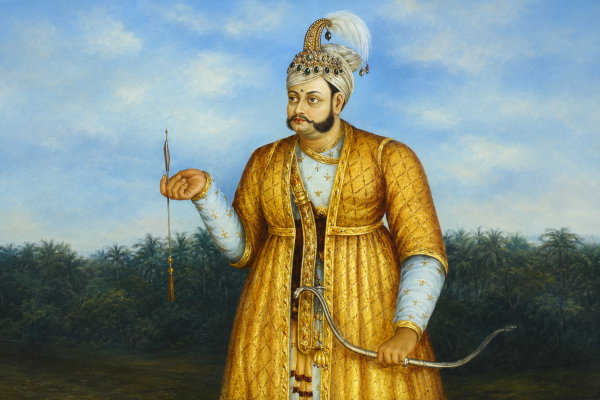
Harsha: The Last Great Emperor of Classical North India
Harsha was born around 590 CE into the Pushyabhuti, or Vardhana, dynasty, whose early base was at Thanesar in present-day Haryana. He was the younger son of Prabhakaravardhana.
News, articles and Essays on Sanatana Dharma, Hinduism and Indian way of life.
Harsha was born around 590 CE into the Pushyabhuti, or Vardhana, dynasty, whose early base was at Thanesar in present-day Haryana. He was the younger son of Prabhakaravardhana.
Rudradaman was the grandson of Chastana, the dynasty’s major early ruler, and the son of Jayadaman. Modern reference works place Rudradaman’s reign roughly around 130 to 150 CE, though exact year-by-year chronology remains difficult, as it often does for this period.
In the vast panorama of ancient Indian history, the story of the Deccan is often
Chapter 3 of Chanakya Niti is like entering a chamber lined with the wisdom of
The historical relationship between ancient Iran and the Indic world represents one of the deepest
The event is supported by the Presidential Foundation for Cultural Initiatives, along with the Ministries of Foreign Affairs and Culture of the Russian Federation, the Embassy of the Russian Federation in India, and Sangeet Natak Akademi under the Ministry of Culture, Government of India.
In the windswept hills of present-day Odisha, carved into living rock, survives the voice of
INSV Kaundinya is no ordinary naval vessel. She is a traditionally constructed stitched ship, built entirely using ancient Indian methods. Instead of modern welding and metal fastenings, wooden planks have been hand-stitched together using coir rope and sealed with natural resins — a technique once used by Indian shipwrights who sailed confidently across vast oceans centuries ago.
Ullal, though small, was strategically located near the mouth of the Netravati River, close to modern Mangaluru. It was a trading hub with commercial connections to Arabia and beyond. When Portuguese authorities demanded tribute and exclusive trading rights, Abbakka refused. Her resistance was not symbolic; it was economic and strategic.
The Union Cabinet, chaired by Prime Minister Narendra Modi, on Monday approved a proposal to