Diplomacy

News articles and essays on the Indian diplomacy at work around the world.

Policy Shift? PM Narendra Modi will Skip NAM Meet 2nd Time in Row

This is the second time in a row that PM Narendra Modi will skip the summit, marking India’s transformation from a non-aligned country to one which is supposedly multi-aligned. Modi became effectively the first Indian PM to skip the meeting of heads of states and governments of NAM nations in 2016 when he gave the 17th summit, in Venezuela that year, the go-by.

India, S Korea Look to Boost Business, Defence Ties

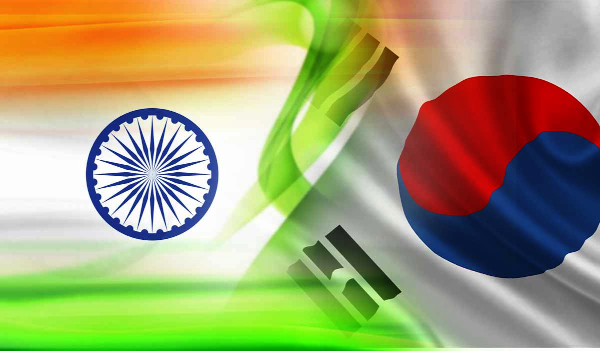
New Delhi India and South Korea are looking to boost their business and defence ties through two upcoming meetings, including a “Strategic Economic Dialogue” this week that will serve as the umbrella for all economic cooperation.

People familiar with developments said Amitabh Kant, CEO of NITI Aayog, the Indian government’s policy think tank, and Lee Ho-seung, advisor on economic affairs to the South Korean president, will lead the dialogue in Delhi on October 24.

By the yearend, the two sides are expected to hold their first official-level “2+2” dialogue between their defence and foreign ministries, the people cited above said. The dates for the 2+2 dialogue, first mooted in a joint statement issued after Prime Minister Narendra Modi’s visit to Seoul in 2015, are currently being finalised.

The two initiatives dovetail with India’s “Act East” policy and South Korea’s “New Southern Policy” and are aimed at giving fresh impetus to economic and security ties.

“The Strategic Economic Dialogue will become an umbrella for all economic cooperation between South Korea and India so that both countries complement each other and reap the benefits of synergised efforts for further sustainable growth,” said a person familiar with planning for the dialogue who declined to be named.

South Korea’s focus is to work with India to usher in the fourth industrial revolution and to use it for the benefit of both sides, the person added.

The dialogue is being held at a time when Samsung and other South Korean majors are exiting from or downsizing their operations in China because of rising production costs and tariffs. Though these firms are keen to invest in India, they face problems because of red tape and cumbersome procedures and this has resulted in greater investments in Southeast Asian countries such as Vietnam and Indonesia, the people said.

The upcoming 2+2 dialogue, in addition to looking at ways to boost regional cooperation, will finalise a “defence industry roadmap” to facilitate South Korean investments in India’s defence manufacturing sector, the people added.

Cooperation in land systems, aero and naval systems, and research and development was discussed during defence minister Rajnath Singh’s visit to South Korea last month.

During the visit, the two sides signed a naval logistics sharing agreement that will help extend the reach of Indian warships. Such agreements cover replenishment of warships at sea and berthing facilities.

Last year, the Indian Army inducted the K9 Vajra 155mm self-propelled howitzers, which are being built by L&T with support from Hanwha Techwin of South Korea.

India, Russia Poised to Take Ties to New Heights

Speaking at the “Indian Defence & Airspace Summit”, Deputy Chief Mission of Russian Embassy Roman Babushkin said advanced level of Russian-Indian military and technical cooperation historically constitute one of the pillars of the strategic partnership between the two countries.

President of India, Ram Nath Kovind, Addressed the India-Philippines Business Conclave and the 4th ASEAN-India Business Summit in Manila

peaking on the occasion, the President said that the potential for the Philippines-India economic collaboration is significant. Both countries share mutual complementarities which can be utilised to deepen trade and investment ties. He said that India’s “Make in India” and next-generation infrastructure programmes and the Philippines’ “Build, Build, Build” infrastructure initiative present immense opportunities for companies and investors on both sides.

U.K. to Post Liaison Officer at Navy’s Information Fusion Centre

The admiral observed that the IFC would enable development of comprehensive Maritime Domain Awareness and sharing of information on vessels of interest between partner nations. “We see this as something which will deliver real value in terms of its output: it will help us interface and integrate, and in so doing, we can all benefit from each other’s best practices and expertise.”