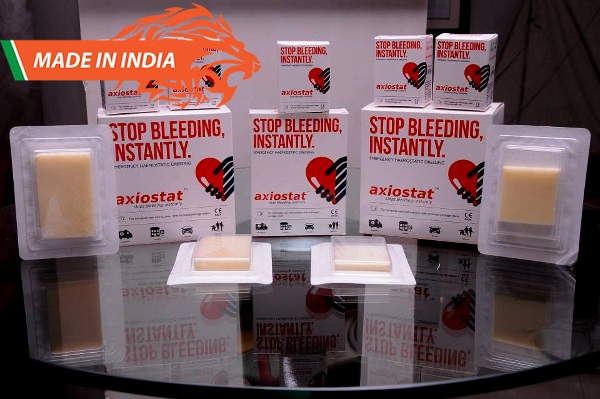
India is preparing to launch a new “Made in India Brand Scheme” as part of a wider push to strengthen domestic manufacturing, close gaps in local production and build greater trust in Indian-made products for both domestic and global markets. The initiative was outlined by Department for Promotion of Industry and Internal Trade Secretary Amardeep Singh Bhatia at the Confederation of Indian Industry Annual Business Summit 2026.
The government is working with industry to identify around 100 products that are either not manufactured in India or are produced in inadequate quantities. The focus is not merely on replacing imports, but on building production capacity in areas where India already has industrial capability but faces technology, scale or supply-chain gaps. According to Bhatia, several “unique and interesting” products have already been identified, including auto-sector items such as axles and motorcycle components.
The proposed Made in India Brand Scheme is expected to give Indian-manufactured goods a stronger identity through a dedicated branding and logo mechanism. The idea is to signal both value addition within India and quality assurance, helping buyers distinguish products that meet defined standards. The scheme follows an encouraging pilot in the steel sector, and the government is expected to consult industry before finalising the sectors where it will be rolled out.
The move comes at a time when India is trying to shift from being a large consumption market to becoming a globally competitive manufacturing base. Over the past few years, the government has pushed production-linked incentive schemes, quality control orders, logistics reforms, infrastructure expansion and free trade agreements to make Indian manufacturing more competitive. The new branding initiative adds another layer to this strategy by linking manufacturing with quality, trust and export-readiness.
A key part of the plan is to address the so-called “missing middle” in manufacturing. This refers to the gap between raw materials and finished goods, where many intermediate products are still imported or produced in limited quantities. Strengthening intermediate goods production can help domestic industries reduce dependence on foreign suppliers, improve supply-chain resilience and increase local value addition. Bhatia said government schemes are trying to address this gap by supporting both larger manufacturing capacity and the growth of smaller firms into stronger industrial players.
The brand scheme is also expected to work alongside existing certification systems rather than create an unnecessary new compliance burden. According to reports, the proposed framework may rely on existing mechanisms such as the Bureau of Indian Standards and other certifying bodies, instead of forcing companies to go through a completely separate approval structure. This could make the scheme easier for industry to adopt while still maintaining credibility.
Quality improvement is another major pillar of the government’s manufacturing strategy. The DPIIT Secretary said the government is working with the Quality Council of India on sector-specific roadmaps to improve the quality of Indian manufactured products. In the first phase, sectors such as textiles, leather, footwear and pharmaceuticals were taken up after consultations with industry, and four more sectors are expected to be chosen for the next phase.
The initiative also fits into India’s broader export ambitions. A Made in India label backed by quality and value-addition standards could help Indian manufacturers compete better in global markets, especially as companies look to diversify supply chains and reduce overdependence on a single manufacturing geography. With India signing and negotiating new free trade agreements, the government believes Indian businesses can use these opportunities to access larger demand in overseas markets.
Bhatia also urged companies to look at India as a long-term investment destination. He said businesses should take advantage of the opportunities being created through policy reforms, trade agreements and growing domestic demand. Under the 14 Production Linked Incentive schemes, investments worth ₹1.88 lakh crore have already been made, while another ₹1.97 lakh crore is planned, according to the DPIIT Secretary.
The government is also looking at the role of artificial intelligence in manufacturing. Bhatia said AI is advancing rapidly and is already influencing productivity and innovation across industries. This indicates that India’s manufacturing push is not just about increasing production volumes, but also about preparing factories and supply chains for a more technology-driven industrial future.
The planned Made in India Brand Scheme therefore represents more than a marketing exercise. It is an attempt to combine domestic production, quality assurance, value addition, technology adoption and export competitiveness under one national manufacturing identity. If implemented effectively, it could help Indian products move beyond low-cost positioning and build a stronger reputation for reliability, scale and quality in global markets.
You may also like
-
Berg Propulsion to Open Mumbai Office as India Shipbuilding Business Expands
-
Indian Steel Gains Wider Duty-Free Access to EU as New Quota Regime Takes Effect
-
NHAI Launches ‘OneTag’ FASTag Portability, Users Can Now Switch Banks Without Replacing Physical Tag
-
India’s Textile Exports Jump 16.1% to ₹29,776 Crore in August, Handicrafts Surge 41%
-
India Begins First Soil Carbon Payments, Over 2,500 Farmers to Receive ₹2.9 Crore
