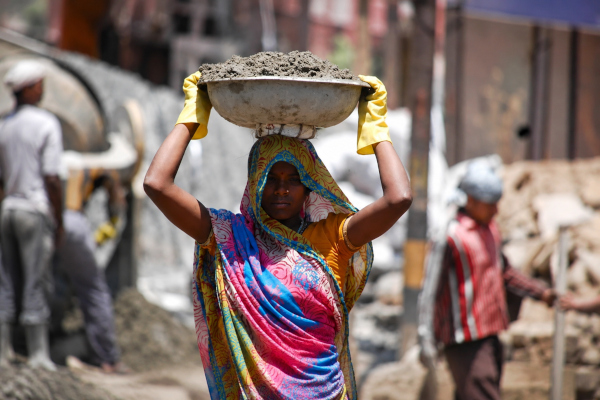
India’s rural employment framework is set for a major legislative transition, with the Government of India notifying the commencement of the Viksit Bharat – Guarantee for Rozgar and Ajeevika Mission (Gramin), or VB-G RAM G Act, 2025, across all rural areas of the country from July 1, 2026. According to the Ministry of Rural Development backgrounder issued through PIB, the new law will replace the Mahatma Gandhi National Rural Employment Guarantee Act, 2005, from the same date, marking one of the biggest changes in India’s rural wage-employment architecture in two decades.
The new Act enhances the statutory employment guarantee from 100 days to 125 days in every financial year for every rural household whose adult members volunteer to undertake unskilled manual work. The government has positioned the law as a shift from a standalone wage-support programme to a broader rural development framework that combines employment generation, durable asset creation, livelihood security, climate resilience and technology-enabled governance.
The VB-G RAM G Act has been framed around the idea of linking rural employment with the long-term vision of Viksit Bharat @2047. Instead of treating wage employment only as income support, the new framework seeks to turn each day of work into a contribution toward village-level infrastructure, water security, productive livelihood assets and disaster preparedness. The Act prioritises works related to irrigation support, groundwater recharge, watershed development, rejuvenation of water bodies, rural roads, school infrastructure, Anganwadi centres, sanitation systems, renewable energy infrastructure, rural markets, storage facilities, cold chains, livestock and fisheries infrastructure, compost units, skill development centres, embankments, cyclone shelters and post-disaster restoration.
The government has also underlined that the transition from MGNREGA to the new Act will be made worker-friendly. Existing e-KYC-verified job cards will remain valid until new Gramin Rozgar Guarantee Cards are issued. Workers without job cards will be able to apply at the Gram Panchayat level, and the PIB backgrounder states that workers cannot be denied employment merely because e-KYC is pending. Employment demand can continue to be made orally, in writing through the existing Form-6 framework, or through digital platforms.
The legal guarantee of timely employment has also been retained and strengthened. If work is not provided within the prescribed timeframe, eligible workers will continue to be entitled to unemployment allowance. The allowance will be payable at not less than one-fourth of the notified wage rate for the first 30 days of the financial year and at not less than one-half of the notified wage rate for the remaining period. This provision is aimed at reinforcing accountability in the implementation system.
Wage payments under the new framework will continue to be made directly into workers’ bank or post office accounts through Direct Benefit Transfer. The Act provides that wages should be paid weekly or within 15 days from the closure of the muster roll. In cases of delayed payment beyond the stipulated period, workers will be entitled to compensation at the rate of 0.05 percent of unpaid wages for every day of delay beyond the sixteenth day after closure of the muster roll.
Technology will play a central role in the new rural employment system. The framework provides for biometric authentication, face-authentication-based attendance, NMMS-enabled worksite attendance, geo-tagging of assets, mobile-based monitoring, real-time dashboards, AI-enabled analytics, digital public infrastructure and spatial planning tools. At the same time, the government has said exception-handling provisions will be built in so that genuine workers are not affected by technical or connectivity-related problems.
The Act also introduces Viksit Gram Panchayat Plans as the core planning framework. Gram Panchayats will identify and prioritise works through Gram Sabhas, with consolidation at the block, district and state levels. The planning system is to be integrated with PM Gati Shakti, GIS platforms and other digital tools, allowing rural works to be planned through a bottom-up model while also aligning them with national infrastructure and development priorities.
A major financial commitment has been announced for the new programme. For 2026–27, the Centre has made a provision of ₹95,692.31 crore as its share under the programme, which the PIB backgrounder describes as the largest Budget Estimate-stage allocation for a rural employment programme so far. Including the estimated state share, the total programme outlay is expected to exceed ₹1.51 lakh crore.
The Act also raises administrative expenditure from 6 percent to 9 percent, which is expected to support capacity building, training, grassroots staffing, remuneration of field functionaries and improved implementation. Programme Officers, Mates, Gram Rozgar Sevaks and other field-level functionaries are expected to play a key role in ensuring the smooth rollout of the new framework across rural India.
The new law includes provisions aimed at protecting both agricultural operations and rural workers. States will be empowered to notify an aggregated pause period of up to 60 days in a financial year during peak sowing and harvesting seasons, so that agricultural labour availability is not disrupted. However, the full 125-day employment guarantee will remain intact and must be provided during the remaining period.
Worker dignity and safety have also been built into the statutory framework. Worksites must provide clean drinking water, shade, rest areas and first-aid facilities. Where five or more children below the age of five are present at a worksite, a woman worker will be appointed for child care and paid at the prescribed wage rate. In case of accidents, workers will have the right to free medical treatment, and in cases requiring hospitalisation, provisions will include accommodation, treatment, medicines and a daily allowance equal to half the wage rate.
Transparency and community oversight are also central to the new system. The Act provides for mandatory Janata Boards at worksites displaying details of sanctioned works, labour estimates, expenditure and material use. It also mandates weekly public disclosures, social audits, grievance redressal mechanisms, geo-referenced monitoring and oversight by central and state-level bodies.
The VB-G RAM G Act therefore represents a broad redesign of India’s rural employment guarantee model. While MGNREGA was built around the legal right to wage employment, the new framework seeks to expand that guarantee into a larger rural transformation mission. By combining 125 days of employment with technology-driven monitoring, village-level planning, water security, climate resilience and durable infrastructure creation, the government is presenting the new Act as a foundation for a more productive and future-ready rural economy.
Reference: PIB
You may also like
-
UPI Completes a Decade as Transaction Value Surges More Than 4,000-Fold
-
AGNIT Semiconductors: Building India’s Gallium-Nitride Chip Capability for Radar, Communications and Power Electronics
-
India and Canada Target Comprehensive Trade Agreement by End of 2026
-
India’s Industrial Output Grows 6.7% in July as Manufacturing, Capital Goods and Power Drive Expansion
-
Sanchar Saathi Helps Recover Record 75,000 Lost and Stolen Mobile Phones in a Single Month
