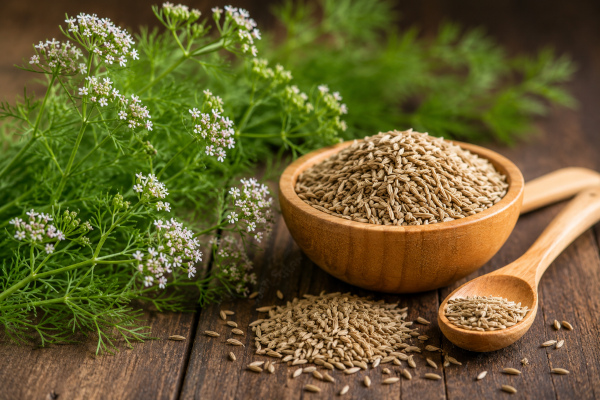
Jeera, known scientifically as Cuminum cyminum, is among the most important medicinal spices used in Ayurveda and traditional Indian food culture. Though commonly viewed today as an everyday kitchen spice used for tempering curries and flavouring dishes, Ayurveda regards jeera as a powerful medicinal substance capable of improving digestion, balancing doshas, enhancing nutrient absorption, supporting metabolism, and strengthening overall vitality. For thousands of years, Indian households have used jeera not merely as a flavouring agent but as a daily preventive medicine integrated naturally into food.
Jeera belongs to the Apiaceae family and is believed to have originated in regions extending from the Mediterranean to South Asia. Over centuries it became deeply embedded in Indian culinary and medicinal systems. Classical Ayurvedic texts describe cumin under names such as “Jeeraka,” with variations including Krishna Jeeraka (black cumin/caraway-related forms) and Shweta Jeeraka (white cumin). The Sanskrit root “Jeer” itself is associated with digestion, reflecting the spice’s ancient reputation as a digestive stimulant.
In Ayurveda, jeera is considered particularly valuable because it works gently yet effectively on the digestive system without excessively aggravating the body. Unlike many heating spices that may cause irritation in sensitive individuals, jeera is generally regarded as balancing, soothing, and suitable for regular consumption.
How to Identify the Jeera Plant
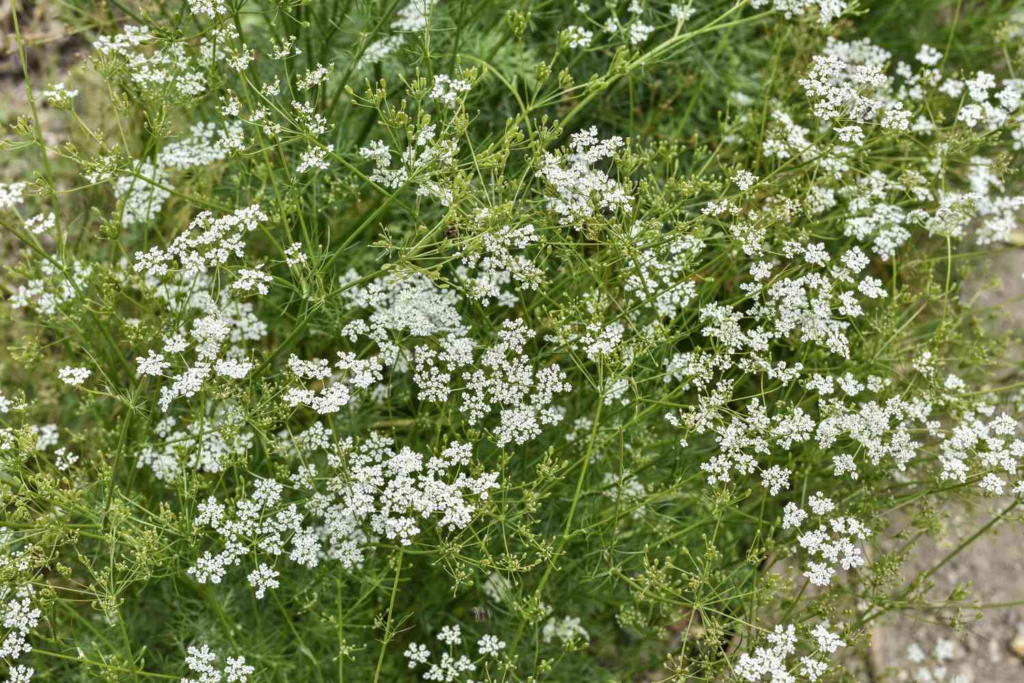
The jeera plant (Cuminum cyminum) is a small, slender annual herb belonging to the parsley family (Apiaceae). It usually grows to a height of around 20–50 centimetres and has a delicate, feathery appearance somewhat similar to fennel or dill. The stems are thin, branched, and lightly grooved, while the leaves are finely divided into narrow thread-like segments, giving the plant a soft and airy look. During flowering, the plant produces small white or pale pink flowers arranged in umbrella-shaped clusters known as umbels, a characteristic feature of the Apiaceae family. After flowering, elongated oval seeds develop, which eventually dry into the familiar brownish-yellow cumin seeds used in cooking and Ayurveda. The seeds have distinctive longitudinal ridges and emit a warm, earthy, slightly peppery aroma when crushed. Jeera is typically cultivated in dry, semi-arid climates and is widely grown in parts of Rajasthan and Gujarat in India. The plant prefers well-drained sandy soil and moderate sunlight, thriving particularly during cooler growing seasons.
Ayurvedic Properties of Jeera
According to Ayurvedic pharmacology:
- Rasa (Taste): Katu (pungent), Tikta (slightly bitter)
- Guna (Qualities): Laghu (light), Ruksha (dry)
- Virya (Potency): Ushna (warming)
- Vipaka (Post-digestive effect): Katu
- Dosha Action: Primarily balances Vata and Kapha; moderate use can help regulate weakened Pitta digestion
Ayurveda considers jeera especially effective in improving “Agni,” the digestive fire responsible for proper digestion, assimilation, and metabolism. Weak digestion is regarded in Ayurveda as the root cause of many diseases because improperly digested food generates “Ama,” toxic metabolic residue that accumulates in tissues and obstructs bodily channels.
Jeera is therefore frequently used to:
- reduce bloating,
- relieve indigestion,
- improve appetite,
- reduce gas formation,
- support absorption,
- and strengthen intestinal function.
Jeera and Digestive Health
The strongest reputation of jeera in Ayurveda is linked to digestion. Jeera stimulates digestive enzyme secretion and supports smooth gastrointestinal activity. It is commonly used after heavy meals because it helps reduce abdominal discomfort and promotes proper breakdown of food.
Jeera water, one of the oldest household Ayurvedic remedies, is widely consumed across India. Traditionally, cumin seeds are boiled in water and consumed warm to aid digestion, reduce bloating, and improve metabolism. In many Ayurvedic households, jeera water is also given after fevers or digestive disturbances to help restore appetite and strength.
The spice is especially valued in conditions such as:
- indigestion,
- flatulence,
- sluggish digestion,
- nausea,
- loss of appetite,
- intestinal discomfort,
- and post-illness digestive weakness.
Jeera in Women’s Health
Ayurveda also uses jeera extensively in women’s health formulations. Traditional postpartum diets across many Indian communities heavily incorporate jeera because it is believed to:
- improve digestion after childbirth,
- support lactation,
- reduce postpartum bloating,
- and help restore strength.
Jeera is often included in herbal decoctions and medicated foods given to new mothers. Some Ayurvedic practitioners also recommend cumin-based preparations for menstrual discomfort associated with weak digestion and Vata imbalance.
Respiratory and Immunity Benefits
Because of its warming and Kapha-reducing nature, jeera is also used in Ayurveda for respiratory support. It is commonly added to formulations intended for:
- mild cough,
- congestion,
- mucus accumulation,
- and weakened digestion during respiratory illness.
Jeera’s volatile oils and phytochemicals may help support antimicrobial activity and improve circulation. Traditional Indian remedies often combine cumin with ginger, black pepper, tulsi, or ajwain in household preparations during seasonal illnesses.
Jeera and Metabolism
Ayurveda recognises the close relationship between digestion and metabolism. Since jeera enhances digestive fire without excessive harshness, it is often included in dietary regimens intended to support healthy metabolism and weight management.
Modern nutritional studies have also examined cumin for:
- antioxidant activity,
- digestive enzyme stimulation,
- lipid metabolism support,
- and possible glucose regulation benefits.
Though Ayurveda does not reduce health to calorie science alone, it strongly emphasises efficient digestion and nutrient utilisation — areas where jeera plays a central role.
Nutritional Value of Jeera
Jeera contains a surprisingly rich nutritional and phytochemical profile despite being consumed in relatively small quantities.
Approximate Nutritional Value of Cumin Seeds (per 100 g)
- Energy: ~375 kcal
- Protein: ~18 g
- Fat: ~22 g
- Carbohydrates: ~44 g
- Dietary Fiber: ~11 g
- Calcium: ~930 mg
- Iron: ~66 mg
- Magnesium: ~366 mg
- Potassium: ~1780 mg
- Phosphorus: ~500 mg
- Zinc: ~5 mg
Jeera also contains:
- essential oils,
- cuminaldehyde,
- terpenes,
- flavonoids,
- antioxidants,
- and aromatic compounds responsible for its medicinal effects and fragrance.
Its iron content is especially notable. Traditional Indian diets often unknowingly benefited from spice-based micronutrient supplementation through daily cooking practices.
Ayurvedic Medicines and Formulations Containing Jeera
Jeera appears in numerous classical Ayurvedic medicines, digestive formulations, churnas, and medicated preparations.
Hingvastak Churna
One of Ayurveda’s best-known digestive formulations, Hingvastak Churna contains jeera along with hing, ginger, black pepper, pippali, and ajwain. It is traditionally used for:
- bloating,
- indigestion,
- abdominal discomfort,
- and weak digestive fire.
Jeerakarishtam
A famous Ayurvedic fermented preparation widely used in women’s health and postpartum recovery. Jeera serves as one of the principal ingredients. It is traditionally prescribed for:
- postnatal recovery,
- digestive weakness,
- appetite stimulation,
- and strengthening after delivery.
Panchakola and Digestive Churnas
Many Ayurvedic digestive powders contain cumin because of its ability to improve Agni while reducing gas and discomfort.
Dasamoolarishtam Variations
Certain regional Ayurvedic formulations combine jeera with restorative herbs for postpartum care and digestive strengthening.
Jeeraka Siddha Water
Medicated cumin water itself is considered a simple but effective Ayurvedic preparation used in homes across India.
Jeera in Indian Food as Preventive Medicine
One of the most remarkable aspects of Indian civilisation is how medicinal knowledge became embedded within ordinary food. Jeera illustrates this beautifully.
In Indian cooking:
- cumin is dry roasted,
- tempered in ghee,
- added to buttermilk,
- mixed into rice,
- included in lentils,
- and combined with yoghurt and herbal drinks.
These culinary practices were not random flavour choices. Ayurveda designed food combinations to improve digestibility and prevent disease. Heavy foods were paired with digestive spices. Cooling foods were balanced with warming ingredients. Fermented preparations included digestive enhancers.
Jeera therefore became both food and medicine simultaneously.
Jeera Water and Traditional Household Remedies
Jeera water remains one of the most widespread traditional wellness remedies in India.
Traditionally used for:
- morning digestion support,
- bloating relief,
- mild detox support,
- hydration during summer,
- appetite restoration,
- and post-fever recovery.
A common preparation involves boiling one teaspoon of cumin seeds in water and allowing it to steep before consumption.
Jeera is also frequently combined with:
- coriander,
- fennel,
- ajwain,
- ginger,
- or black pepper depending on the desired effect.
Jeera in Modern Research
Modern scientific studies increasingly support several traditional uses of cumin. Research has explored:
- digestive stimulation,
- antioxidant activity,
- antimicrobial properties,
- metabolic effects,
- and anti-inflammatory potential.
Some studies suggest cumin may help support:
- digestion,
- lipid regulation,
- blood sugar management,
- and gut microbial balance.
However, Ayurveda traditionally uses jeera not as an isolated pharmaceutical compound but as part of broader dietary and lifestyle systems.
Conclusion
Jeera represents one of the clearest examples of Ayurveda’s genius in integrating medicine into daily life. What appears to be a simple kitchen spice is actually a carefully valued medicinal substance refined through centuries of observation and experience.
In Ayurveda, true health begins with digestion, and jeera stands among the most trusted guardians of digestive balance. Whether consumed in curries, buttermilk, herbal decoctions, medicated formulations, or postpartum preparations, cumin continues to bridge the worlds of nourishment and healing.
Indian culinary traditions long understood something modern nutrition science is gradually rediscovering — that spices are not merely flavour enhancers. They are biological regulators, metabolic supporters, and subtle medicines woven into food itself. Jeera remains one of the finest examples of this ancient wisdom still alive in everyday Indian kitchens.
You may also like
-
Karanja — Ayurveda’s Bitter Oil Tree for Skin, Wounds and Kapha-Vata Balance
-
Bengaluru’s SugarStrings.ai Develops Cheek-Swab DNA Test Screening Thousands of Genetic Disorders
-
Green Pyramid Biotech Turns Sophorolipid Research Into a Natural Food-Safety Platform
-
Ashoka — Saraca asoca: Ayurveda’s Celebrated Tree for Rakta and Women’s Health
-
New Smart Technology can Make Diagnosis of Alzheimer’s disease (AD) More Accessible
