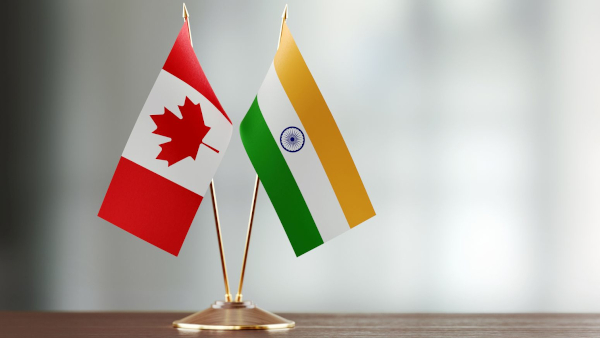
India and Canada have successfully concluded the second round of negotiations for the proposed Comprehensive Economic Partnership Agreement, marking another important step in the rebuilding of economic engagement between the two countries. The negotiations were held from May 4 to May 8, 2026, at Vanijya Bhawan in New Delhi and were hosted by India’s Department of Commerce.
According to the joint statement issued by the Ministry of Commerce and Industry, the discussions were held in line with the Terms of Reference signed by the trade ministers of both countries on March 2, 2026. Both sides described the engagement as constructive and productive, while reaffirming their commitment to an ambitious, balanced and mutually beneficial trade agreement.
The proposed CEPA is expected to cover a wide range of trade and economic areas. During the second round, detailed discussions were held on chapters including trade in goods, trade in services, intellectual property, rules of origin, sanitary and phytosanitary measures, and technical barriers to trade. These areas are central to any modern trade agreement because they decide how products move across borders, how services are delivered, how standards are recognised and how businesses gain predictable market access.
The renewed negotiations are significant because India and Canada have been attempting to give fresh momentum to their trade relationship after a period of diplomatic strain. The Terms of Reference signed on March 2, 2026, provided the framework, format, frequency and approach for the CEPA negotiations. The India-Canada Joint Leaders’ Statement had also recorded the shared commitment of both countries to conclude the talks by the end of 2026.
For India, the CEPA talks come at a time when the country is actively expanding its network of trade partnerships with major economies and economic blocs. New Delhi has been pursuing trade agreements that can improve market access for Indian goods, services and professionals while strengthening domestic manufacturing and export competitiveness. A trade pact with Canada could support sectors such as pharmaceuticals, engineering goods, textiles, agriculture-linked products, IT services and professional services.
Canada also has strong reasons to move the trade process forward. India is one of the world’s fastest-growing major economies and offers a large consumer market, a growing middle class, a deep digital economy and expanding demand for energy, food, education, technology and critical minerals. Canadian government data shows that two-way merchandise trade between Canada and India reached Canadian $13.3 billion in 2024, with Canada’s exports led by vegetables, mineral fuels and oils, and wood pulp, while imports from India included pharmaceutical products, machinery and equipment, and electronics.
The Ministry of External Affairs’ January 2026 bilateral brief also underlined the scale of economic engagement. It stated that bilateral trade in goods between India and Canada was worth Canadian $13.32 billion in 2024, while services trade stood at Canadian $19.61 billion. The brief also noted that more than 600 Canadian companies have a presence in India, while Canadian portfolio investments in India stand at more than Canadian $100 billion.
The next round of negotiations is scheduled to be held in July 2026 in Ottawa, Canada. Both sides have also agreed to continue intersessional engagements in the interim, which means technical-level discussions will continue before the formal third round begins.
The India-Canada CEPA could become an important platform for resetting and expanding bilateral economic ties. If concluded successfully, it can help reduce trade barriers, improve regulatory clarity, expand services trade, create more predictable rules for exporters and encourage investment flows between the two economies. It could also support cooperation in areas such as clean energy, agriculture, education, critical minerals, digital trade and innovation.
The second round of talks therefore marks more than a procedural milestone. It signals that India and Canada are moving toward a more structured economic relationship after recent diplomatic turbulence. The pace of future negotiations will determine whether both sides can translate political intent into a practical trade agreement by the end of 2026.
You may also like
-
India and Uruguay Agree Trade and Connectivity Roadmap as Montevideo Ratifies International Solar Alliance
-
Ramaphosa Calls for New Era in India–South Africa Economic Ties, Targets Green Energy, Minerals and Infrastructure
-
India and Brazil Push for Deeper Strategic Partnership as Trade Target Rises to $30 Billion
-
Modi–Xi Talks at BRICS Put Border Peace, Trade Imbalance and Market Access at Centre of India–China Ties
-
PM Modi Meets PM Abiy Ahmed at BRICS Summit as India and Ethiopia Deepen Strategic Partnership
