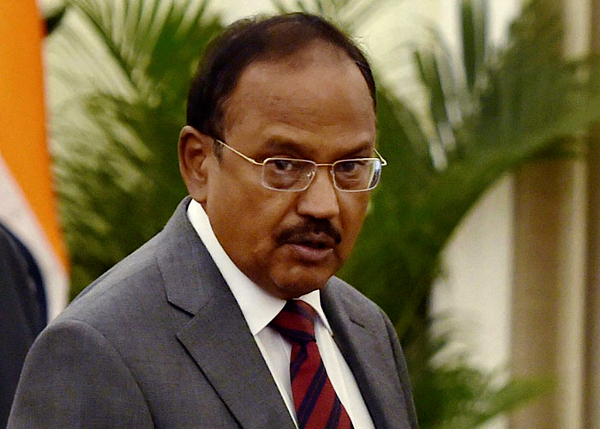
New Delhi, April 24, 2026: National Security Adviser Ajit Doval recently held a significant interaction with prominent members of the Muslim community, where he underlined the importance of national unity, shared citizenship and continued dialogue. The meeting brought together educationists, industrialists, social workers, professionals and community representatives for a discussion on inclusion, opportunity and India’s collective future.
During the interaction, Doval reportedly described India as a large ship in which all citizens travel together, stressing that the country’s future depends on collective responsibility rather than isolated identities. His message was clear: Indians, irrespective of religion or community, are part of the same national journey, and the country can progress only when every section feels invested in that journey.
The meeting was led by businessman and educationist Zafar Sareshwala, who said Doval listened patiently to the participants and conveyed the need for unity among communities. Sareshwala said the delegation sought a level playing field, adding that Muslims should neither face discrimination nor receive special treatment, but should be treated fairly as equal citizens.
Doval is reported to have said that members of the Muslim community should not doubt the intent of the government, while also acknowledging their right to critique government actions. He also pointed to the recruitment of Muslim youth into the Indian Army and paramilitary forces over the past 12 years as an example of participation in national institutions.
A major theme of the discussion was the idea of multiple identities. Doval reportedly said that Muslims, like all Indian citizens, have layered identities — religious, regional, linguistic, professional and national. He cautioned that reducing oneself to only one identity could lead to alienation, while also affirming that Muslims are fully entitled to their religious identity and freedom of worship.
The delegation included several well-known names from business, education, civil society and public life. Among those reported to have attended were AMU Vice-Chancellor Naima Khatoon, Haj Committee of India Chairperson Kausar Jahan, Zahir I. Kazi, Dr Nishat Hussain, Samina Shaikh, Saher Bhamla, Faruk Patel of KP Group, representatives of German Steel, Altaf Sadikot from the Dawoodi Bohra community, and Juned Shariff of Niton Valves.
The NSA also emphasised that engagement should continue with patience, mutual listening and a willingness to accommodate differences. The broader message from the meeting was that national integration cannot be built only through speeches or symbolism; it requires regular communication, confidence-building and practical systems that expand opportunities for all communities.
The meeting carries importance because it comes at a time when community dialogue and social trust remain central to India’s internal stability and growth. By bringing together Muslim professionals, entrepreneurs, scholars and social leaders, the interaction sought to move the conversation away from grievance and suspicion towards participation, responsibility and nation-building.
In essence, Doval’s message was that India’s diversity should not become a source of separation, but a strength that deepens national unity. The phrase “we sail or sink together” captured the core of the discussion: India’s future is shared, and no community can remain outside the country’s journey towards security, prosperity and social harmony.
Sources:
You may also like
-
PM Modi Begins Central Asia Visit With Uzbekistan State Visit and SCO Summit in Kyrgyzstan
-
PM Modi to Meet Vladimir Putin at SCO Summit in Bishkek as India-Russia Engagement Intensifies
-
India and Kuwait Hold Inaugural Joint Defence Committee Meeting in New Delhi
-
India-Canada Economic Partnership Gains Momentum as Both Sides Target C$70 Billion Trade by 2030
-
India-Russia Partnership Broadens Across Energy, Industry and Technology as Both Sides Pursue $100 Billion Trade Goal
