ndia has moved up to third place in the world in renewable energy installed capacity, overtaking Brazil, according to Renewable Energy Statistics 2026 released by the International Renewable Energy Agency with data up to December 2025. The announcement was made by Union Minister for New and Renewable Energy Shri Pralhad Joshi on April 8, 2026.
The minister said India added 55.3 GW of non-fossil fuel power capacity during FY 2025–26, marking the highest annual increase so far. As of March 31, 2026, the country had installed 283.46 GW of non-fossil power capacity, including 274.68 GW from renewable energy and 8.78 GW from nuclear power.
India also recorded a major electricity milestone in July 2025, when renewables met 51.5 percent of total electricity demand of 203 GW, the highest renewable share ever reached in the country’s power generation mix. During 2025–26, total electricity generation stood at 1,845.921 billion units, of which non-fossil sources contributed 538.97 billion units, or 29.2 percent.
The government highlighted that India achieved 50 percent of its cumulative installed electric power capacity from non-fossil sources in June 2025, five years ahead of its 2030 Paris Agreement target. The broader national objective remains 500 GW of installed electricity capacity from non-fossil sources by 2030.
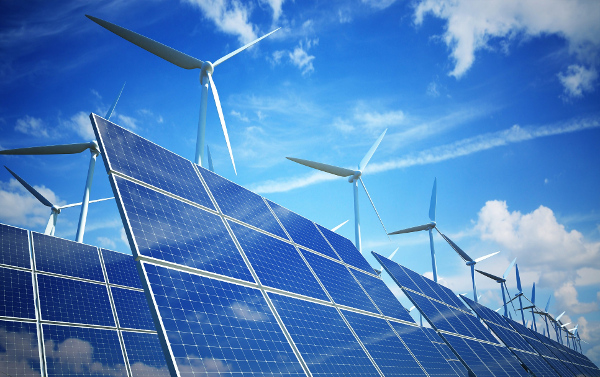
Solar power continued to lead the expansion. India’s installed solar capacity reached 150.26 GW by March 31, 2026, after a record annual addition of 44.61 GW in FY 2025–26. Wind power capacity rose to 56.09 GW, with 6.05 GW added during the year, also the highest annual wind addition on record.
The ministry also underlined the growing role of distributed renewable energy. Of the 44.61 GW solar capacity added in FY 2025–26, 16.31 GW came from distributed solar, including 8.71 GW of rooftop installations and 7.67 GW under PM KUSUM. More than 42 lakh households have benefited from cumulative rooftop solar installations so far.
On the manufacturing side, India’s solar module manufacturing capacity expanded to about 172 GW by March 2026, while wind turbine manufacturing capacity rose to around 24 GW. The government also pointed to policy support measures during the year, including a lower GST rate on renewable energy devices and components, battery storage incentives, import monitoring systems, and regulatory changes aimed at transmission access and renewable purchase compliance.
Taken together, the latest figures show India’s renewable energy sector moving from steady growth to large-scale acceleration, with solar, wind, rooftop systems, and domestic manufacturing all advancing at the same time.
Source: PIB
You may also like
-
India Introduces New CBG Pricing Framework to Strengthen Bioenergy Producers While Shielding Gas Consumers
-
Tata Power Renewables Commissions 72.5 MW Solar Project in Rajasthan to Support Tata Steel’s Decarbonisation
-
NTPC Targets 244 GW by 2037 With ₹16.86-Lakh-Crore Expansion Across India’s Energy Sector
-
UPI Completes a Decade as Transaction Value Surges More Than 4,000-Fold
-
AGNIT Semiconductors: Building India’s Gallium-Nitride Chip Capability for Radar, Communications and Power Electronics
