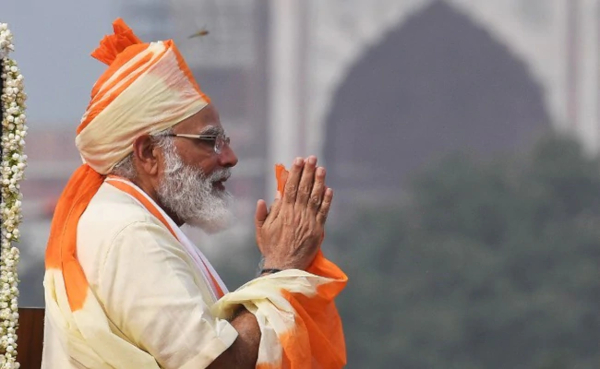
Prime Minister Narendra Modi on Sunday became the longest-serving head of a government in India, completing 8,931 days in office and surpassing the previous record of 8,930 days held by former Sikkim Chief Minister Pawan Kumar Chamling, according to a Press Information Bureau release and multiple same-day news reports.
The milestone combines Modi’s tenure as Chief Minister of Gujarat, which began in October 2001, and his service as Prime Minister since May 2014. The achievement marks one of the longest uninterrupted leadership runs in Indian political history.
Union Home Minister Amit Shah said the milestone was rooted in “service, hard work and unwavering commitment,” and described Modi’s 8,931 days in public life as a reflection of nation-first governance, integrity in action and sustained public service. In remarks shared through the PIB release, Shah said Modi’s years in office had helped shape a distinct political era marked by welfare delivery, development initiatives and India’s rising profile on the global stage.
Shah also said the Prime Minister’s long tenure reflected enduring public trust, noting that Modi had been elected three times as Gujarat chief minister and three times as Prime Minister. News reports on Sunday described the record as a significant political milestone, underscoring the scale and continuity of Modi’s leadership across both state and national office.
The development was widely reported on March 22, 2026, with coverage highlighting that Modi had moved past Chamling’s long-standing record to become India’s longest-serving head of government.
Source: PIB
You may also like
-
Sanchar Saathi Helps Recover Record 75,000 Lost and Stolen Mobile Phones in a Single Month
-
India Recognises Heatwaves and Lightning as Notified Calamities, Expands Disaster Relief Framework to 14 Hazards
-
India Deepens Green Diplomacy With Bhutan and Sri Lanka at UNCCD COP17 in Mongolia
-
India Restored 21.76 Million Hectares of Land, Generated 1.22 Billion Person-Days of Employment During 2011–2020
-
India’s Livestock Disease-Control Drive Cuts FMD and Brucellosis Outbreaks
