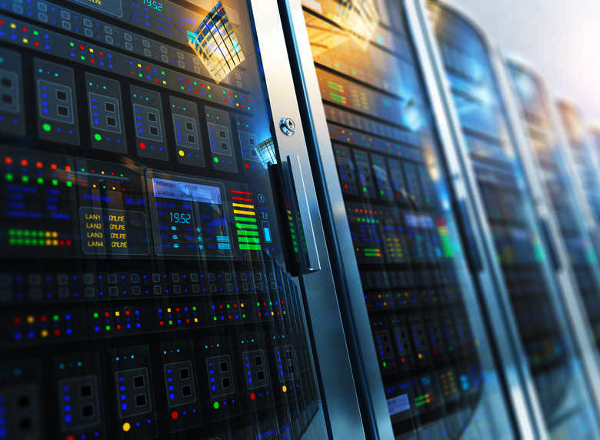
India’s data centre sector is witnessing rapid expansion, with the country’s total data centre capacity increasing from approximately 375 MW in 2020 to around 1,500 MW by 2025. The growth reflects the rising demand for digital infrastructure driven by cloud computing, artificial intelligence, and large-scale data processing.
According to information presented in the Rajya Sabha by Union Minister of State for Electronics and Information Technology Jitin Prasada on March 13, 2026, the government has been actively supporting the expansion of computing infrastructure to meet the needs of emerging technologies.
Strengthening AI Compute Infrastructure
As part of efforts to promote artificial intelligence development, the government has onboarded 38,231 GPUs through 14 empanelled service providers and data centres under the national AI compute capacity framework.
These computing resources are being made available to startups, researchers, academic institutions, and other eligible users at a subsidised average cost of ₹65 per hour, which is roughly one-third of the global average price. The initiative aims to make advanced computing infrastructure more accessible to innovators and research communities across the country.
Expanding Data Centre Hubs
India’s data centre facilities are currently concentrated in several major technology and commercial hubs, including Mumbai, Navi Mumbai, Hyderabad, Bengaluru, Noida, and Jamnagar. These locations provide the connectivity, power infrastructure, and network ecosystems necessary for large-scale data processing operations.
Rising Power Demand from AI Infrastructure
The government is closely monitoring the infrastructure requirements of the growing data centre ecosystem, particularly in relation to electricity and water consumption.
According to data available with the Ministry of Power (India), electricity demand from data centres is projected to reach 13.56 GW by 2031–32. To address this surge, India’s national transmission network is being continuously expanded to ensure stable and reliable power supply across regions.
Nuclear Energy for Future Digital Infrastructure
To strengthen long-term energy security for emerging sectors, Parliament recently passed the Sustainable Harnessing and Advancement of Nuclear Energy for Transforming India Act. The legislation aims to reinforce India’s nuclear energy ecosystem and enable the development of reliable power solutions for high-energy industries such as AI and data centres.
The Act will support the future deployment of small modular reactors (SMRs) and micro nuclear reactors, which could provide stable and sustainable power to energy-intensive digital infrastructure.
Focus on Sustainable Cooling Technologies
Water usage is another critical consideration in the operation of large data centres. The amount of water required largely depends on the cooling technologies deployed.
Regulation and management of groundwater extraction for industrial purposes fall under the guidelines issued by the Ministry of Jal Shakti, including the notification dated September 24, 2020, and its amendment issued on March 29, 2023.
To reduce water consumption and improve efficiency, the industry is increasingly adopting advanced cooling technologies, including:
- Direct-to-chip liquid cooling
- Adiabatic cooling
- Immersion cooling
In addition, companies are deploying high-density server racks to support high-performance computing and AI workloads while improving overall energy and water efficiency.
Building the Backbone of India’s Digital Economy
The rapid growth of data centres underscores their importance as the backbone of India’s digital economy. With expanding AI adoption, increasing internet penetration, and the proliferation of digital services, the demand for computing infrastructure is expected to continue rising in the coming decade.
Government initiatives to expand computing capacity, ensure reliable power supply, and promote sustainable operations are likely to play a key role in supporting India’s ambition to become a major global hub for digital infrastructure and artificial intelligence.
Refernce: PIB
You may also like
-
Southern Railway Achieves 100% Electrification of Entire 5,068-km Broad-Gauge Network
-
India’s First Commercial Silicon-Carbide Fab Moves Ahead in Odisha With ₹3,406-Crore Investment
-
PMAY-U Crosses One Crore Delivered Homes as Urban Housing Programme Expands
-
Lam Research Deepens India Semiconductor Push With ₹10,000-Crore Silicon Manufacturing and R&D Expansion
-
Where China Built on Coal, India Is Building on Sun: How Green Power Support India’s Next Industrial Expansion
