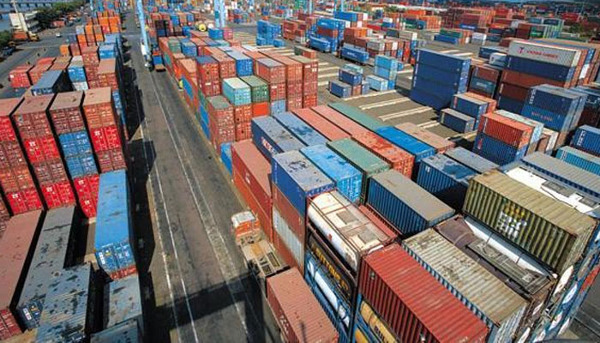
India’s industrial and export performance continues to showcase resilience and strategic transformation, positioning the country as a rising global manufacturing and trading power. According to the latest government assessment, cumulative exports (merchandise + services) from April 2025 to January 2026 reached USD 720.76 billion, registering an estimated 6.15 % year-on-year increase despite challenging global economic conditions. During the same period, services exports alone crossed USD 354.13 billion, growing by 10.57 % over the previous year.
The performance underlines India’s growing export resilience and diversity, supported by robust policies to strengthen domestic supply chains and global integration. As noted in the Economic Survey 2025-26, India’s growth trajectory remains among the fastest in the world, underpinned by stable macroeconomic fundamentals, abundant foreign reserves and a healthy banking system.
Manufacturing and Strategic Sectors: The Engine of Growth
India’s push for import substitution and self-reliance (Aatmanirbharta) has translated into major gains across sectors such as electronics, automotive, pharmaceuticals and defence manufacturing. Over the past decade, targeted initiatives under the Make in India programme and Production-Linked Incentive (PLI) schemes have propelled a manufacturing renaissance in high-value industries.
The electronics manufacturing sector has witnessed notable expansion. Production surged from ₹1.9 lakh crore in 2014-15 to ₹11.3 lakh crore in 2024-25 — nearly a six-fold increase — while electronics exports, especially in smartphones, strengthened India’s position in global supply chains. India now ranks as the second-largest manufacturer of mobile phones in the world, with production climbing from ₹18,000 crore in 2014-15 to ₹5.45 lakh crore in 2024-25, backed by more than 300 operational facilities.
To further boost the sector, Budget 2026-27 announced the launch of the India Semiconductor Mission 2.0 and expanded the Electronics Components Manufacturing Scheme with an increased outlay of ₹40,000 crore. These measures aim to fortify domestic semiconductor design, production of equipment, and supply chains — a strategic priority highlighted amid recent global chip shortages.
Strategic Manufacturing and Self-Reliance in Defence
India’s defence manufacturing sector has also undergone a transformative shift towards self-reliance. Where import dependence previously dominated, at least 65 % of defence equipment is now manufactured domestically. Indigenous defence production climbed from ₹46,429 crore in FY 2014-15 to a record ₹1.54 lakh crore in FY 2024-25.
Enhanced procurement reforms such as the Defence Acquisition Procedure (DAP) 2020 and the Defence Procurement Manual 2025 have improved transparency, speed and innovation in sourcing strategies. The government has set an ambitious target of ₹3 lakh crore in defence manufacturing and ₹50,000 crore in defence exports by 2029, with Indian defence products now reaching more than 100 countries.
Export Diversification: Broadening India’s Global Reach
Export growth was broad-based across multiple product categories in January 2026. Highest year-on-year expansion was recorded in other cereals (+88.5 %), coffee (+36.0 %), iron ore (+31.5 %), meat, dairy & poultry (+17.9 %), marine products (+13.3 %), and engineering goods (+10.4 %). Growth also continued in petroleum products (+8.6 %), textiles and apparel, and automobile exports — reflecting a diversified and resilient export basket.
India’s textile and apparel exports increased to USD 37.75 billion in FY 2024-25, while the automotive sector saw exports rise from approximately 4.13 million units in FY 2020-21 to about 5.36 million units in FY 2024-25, supported by strong overseas demand across multiple vehicle segments.
The country remains a major player in pharmaceuticals and chemicals, ranking eleventh in global pharmaceutical exports by value, and driving medical devices exports from USD 2.5 billion in FY 2020-21 to USD 4.1 billion in FY 2024-25.
Institutional Support and Long-Term Vision
To fortify India’s export ecosystem, the government has rolled out the Export Promotion Mission (EPM) with an outlay of ₹25,060 crore for FY 2025-26 to FY 2030-31. The EPM aims to boost trade finance, logistics support and market readiness — especially for MSMEs and first-time exporters — through initiatives such as affordable export factoring and digital claim processing.
The Union Budget’s focus on infrastructure, special economic zones, ease of doing business and sector-specific reforms further underpins India’s strategic goal of deepening global economic integration while building strong domestic capabilities.
Looking Ahead: Self-Reliance Meets Global Integration
India’s experience shows that enhancing domestic production and export strength can go hand-in-hand when supported by forward-looking policy frameworks. Through structural reforms, investment incentives and diversification strategies, the nation is not only reducing import dependence but also enhancing its position in global markets. As India progresses toward its vision of Viksit Bharat 2047, the country’s expanding manufacturing base and resilient export performance are set to drive growth, create jobs and strengthen its global footprint.
Source: PIB
You may also like
-
India Launches Mission Rangeen Machhli 2031 to Build a Scientific and Export-Ready Ornamental Fisheries Sector
-
India Demonstrates 60% Recycled Asphalt Technology on Chennai–Tirupati Highway
-
German Cable Major LAPP Makes Bhopal Its Largest Manufacturing Facility Worldwide
-
Syrma SGS and Italy’s Elemaster Open Advanced Electronics Manufacturing Hub in Bengaluru
-
Novonesis Bets €600 Million on India With Advanced Enzyme Manufacturing Hub in Maharashtra
