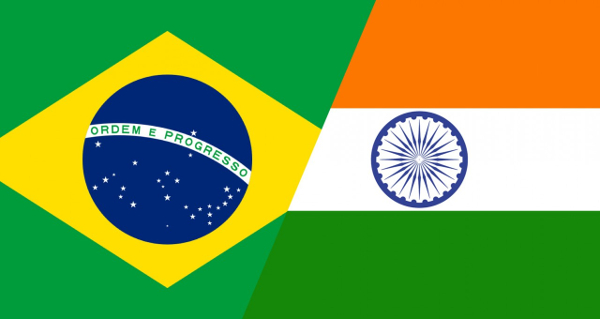
India and Brazil have set their sights on expanding bilateral trade to USD 30 billion annually by 2030, a significant increase from current levels as both countries seek deeper economic cooperation and stronger strategic ties. The announcement came during the state visit of Brazilian President Luiz Inácio Lula da Silva to India, where he and Prime Minister Narendra Modi discussed opportunities to elevate trade, investment and broader partnership frameworks between the two largest democracies of the Global South.
Bilateral merchandise trade between India and Brazil has seen notable growth in recent years, rising to approximately $15 billion in 2025, up about 25 per cent from the previous year, according to official statements from both sides. Despite this momentum, leaders described current figures as “suboptimal”, given the size and complementarities of the two economies, underscoring the ambition behind the new $30 billion target.
In his address at the India-Brazil Business Forum, President Lula highlighted the deep potential for cooperation, noting historical growth from just $2.4 billion in trade in 2006 — when the strategic partnership was formalised — to present levels, and stressing the need to redirect commercial focus toward each other. “We have now resolved to change that behaviour,” he said in New Delhi.
The expanded goal formalises a shift from an earlier bilateral aim of USD 20 billion by 2030, reflecting fresh confidence in long-term collaboration. Both leaders emphasised that the new target aligns with shared economic interests and the broader vision of strengthening South–South cooperation on trade, technology and industrial partnerships.
Beyond setting the trade target, India and Brazil also signed multiple agreements, including cooperation on rare earths and critical minerals — sectors crucial to emerging technologies and clean energy transitions — as well as steel supply chains, digital infrastructure, healthcare, and innovation ecosystems. These accords are expected to not only boost trade in raw materials and manufactured goods but also help diversify supply chains and promote joint industrial projects.
Commerce and Industry Minister Piyush Goyal echoed the sentiment that the bilateral relationship has untapped potential. He pointed to Brazil’s significant natural resource base — including niobium, lithium and iron ore — and India’s strengths in manufacturing, technology and services as complementary pillars that can reshape global value chains between the two countries.
The trade expansion initiative comes at a time of shifting global economic dynamics, with both nations navigating challenges such as tariff uncertainties and geopolitical flux, while also promoting multilateral cooperation on issues like food security, climate action and digital transformation. As Brazil prepares to assume the BRICS presidency in 2026, the renewed focus on economic integration with India signals a broader commitment to collective development goals among emerging powers.
If realised, the USD 30 billion trade target by 2030 would represent a major milestone in India-Brazil relations, building on decades of diplomatic engagement and laying the groundwork for deeper economic integration between two of the world’s fastest-growing major economies.
Reference:AIR
You may also like
-
Hindustan Shipyard Docks Three Vessels Simultaneously in Precision Engineering Milestone
-
BCCL Dispatches First Rake From 5-MTPA Maheshpur Rapid Loading System
-
NPCIL Begins Fuel Loading at RAPP-8 as India’s Fourth Indigenous 700 MWe PHWR Moves Towards Commissioning
-
INS Sahyadri and INS Kulish Reach Philippines for ADMM-Plus Maritime Cooperation
-
FUJIFILM India Dedicates First Serial-Numbered Made-in-India Endoscopy System Through AIIMS New Delhi
