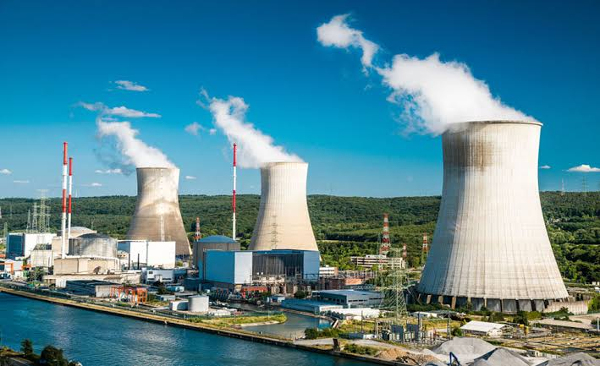
As per the Government, “India’s installed nuclear power capacity has increased by more than 40% in the previous seven years, from 4,780 MW to 6,780 MW.”
“India is following an indigenous three-stage nuclear power programme to provide long-term energy security in a sustainable manner,” stated Dr. Jitendra Singh, Minister of State in the Department of Space and Department of Atomic Energy.
“In addition, Light Water Reactors based on foreign cooperation are also being set up as additionalities. A large expansion programme of nuclear power is being undertaken to provide the country clean electricity,” he said in a written response.
In response to another query, the minister stated that the country’s current annual uranium output is insufficient to cover the yearly fuel requirements of all active uranium-based nuclear power units.
“However, we are continuously exploring the possibility of alternate fuel based on thorium in this regard for which we have enough reserves. Further, the Department is importing uranium from different countries like Canada, Kazakhstan, Uzbekistan and Russia also,” Mr. Singh stated.
“The Atomic Minerals Directorate for Exploration and Research (AMD), a constituent unit of the Department of Atomic Energy (DAE), has the mandate to recognize, assess and augment mineral resources of uranium, thorium, niobium, tantalum, beryllium, lithium, zirconium, titanium and rare earths containing uranium and thorium in the country”, he said.
“As of November, 2021 AMD has established 3,58,496 tonne (t) in situ Uranium Oxide,” he added.
You may also like
-
India to Build First Riverine Lighthouses on Brahmaputra to Boost Inland Waterway Navigation
-
₹4,400 Crore Push for Tamil Nadu: PM Narendra Modi Unveils Major Infrastructure Projects in Madurai
-
₹3,000 Crore Catalyst: How India’s 11 Industrial Corridors Are Redrawing the Manufacturing Map
-
India’s Space Ecosystem Gets Cyber Shield as SIA-India, CERT-In Release Joint Guidelines
-
NHAI to Develop First of its Kind ‘BeeCorridors’ Along the National Highways
