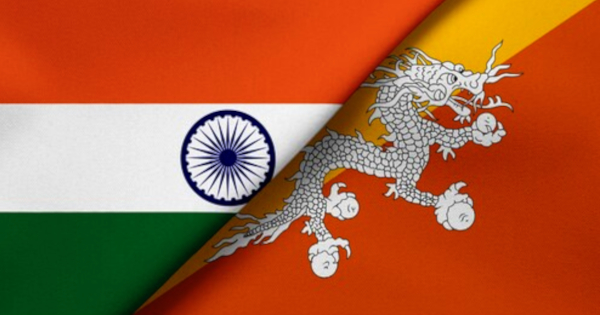
New Delhi/Thimphu, February 27: India and Bhutan have reaffirmed their commitment to deepening cooperation on trans-boundary rivers, hydropower development, and flood management during a high-level visit by an Indian delegation to the Himalayan kingdom.
The delegation was led by Shri V. L. Kantha Rao, Secretary, Department of Water Resources, River Development & Ganga Rejuvenation under the Ministry of Jal Shakti. The team included officials from the department, representatives from the governments of Assam and West Bengal, and experts from WAPCOS Limited. The visit took place from February 24 to 27.
During a Secretary-level bilateral meeting held on February 25, both sides reviewed existing cooperation mechanisms in flood management and flood forecasting across shared river systems. Discussions focused on modernising hydro-meteorological observation networks in Bhutan, strengthening real-time data-sharing systems for flood forecasting, and enhancing technical collaboration to address emerging climate challenges.
Officials also deliberated on strategies to tackle risks arising from climate change, including glacial lake outburst floods (GLOFs) and extreme weather events, which pose increasing threats to downstream regions in India.
Following the meeting, the Indian delegation called on Bhutan’s Minister for Energy and Natural Resources, Gem Tshering, reaffirming the long-standing partnership between the two nations in water resource management and hydropower cooperation.
Review of Key Hydropower Projects
The Indian delegation reviewed progress on the strategically significant Punatsangchhu-I Hydro Electric Project, which is being implemented in partnership with the Government of India. The Secretary also visited the recently commissioned Punatsangchhu-II Hydroelectric Project and held discussions with officials overseeing both projects.
Hydropower cooperation remains a cornerstone of India–Bhutan relations, contributing significantly to Bhutan’s economy while strengthening India’s clean energy security.
In addition to project reviews, the delegation visited the National Center for Hydrology and Meteorology in Thimphu, the 3.5 MLD Water Treatment Plant at Chamgang, and a flood monitoring station near Wangdue Phodrang Dzong. These visits underscored the shared focus on improving water resource management and enhancing climate resilience in the region.
Commitment to Sustainable River Basin Management
The visit highlighted the importance of coordinated management of shared river basins, particularly as climate variability intensifies hydrological risks across the Himalayan region. Both countries reiterated their resolve to promote sustainable and mutually beneficial management of trans-boundary water resources.
India conveyed its continued support for strengthening institutional cooperation, improving flood forecasting systems, and enhancing technical capacity to safeguard communities living along shared river systems.
The engagement marks another step in consolidating India–Bhutan ties, rooted in trust, shared environmental stewardship, and long-standing developmental partnership.
Source: PIB
You may also like
-
India–Finland Ties Enter New Phase as President Alexander Stubb Concludes State Visit to India
-
India–Canada Ties Get Strategic Push as Prime Minister’s Visit Yields Major Agreements Across Trade, Energy and Technology
-
INS Sudarshini Reaches Alexandria After Landmark Suez Canal Transit
-
Global Dance Overture Brings Indo–Russian Cultural Harmony to Kamani Theatre
-
CCS Reviews West Asia Crisis; Focus on Safety of Indian Nationals and Regional Stability
