Research

News on Science, Technology and Research in India

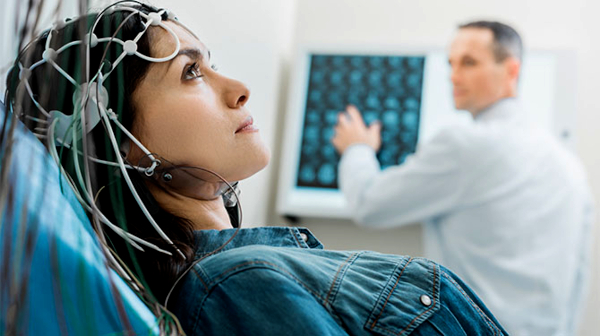
EEG to Minimize Human Error

The new study has shown the potential of EEG to assess the cognitive workload of human operators in a chemical plant control room. The cognitive workload is the level of measurable mental effort that is expended by an individual to perform a task. The high cognitive workload state of workers makes them prone to commit errors that can lead to accidents.

Indian Researches Makes Breakthrough in Developing Better Drugs for Breast Cancer

A new study by the cancer research group at the Department of Biotechnology’s Institute of Life Sciences (DBT-ILS) has resolved the mystery and promises to pave the way for developing better drugs for breast cancer. The researchers have unraveled the molecular mechanism for the phenomenon. It is found that the ERRβ protein is a key substrate of the SCF complex and deregulated activation of the SCF complex due to the NEDDylation of Cullin subunits of the SCF complex, targets ERRβ for degradation in breast cancer.

Indian Astronomers Discover One of the Farthest Star Galaxies in the Universe

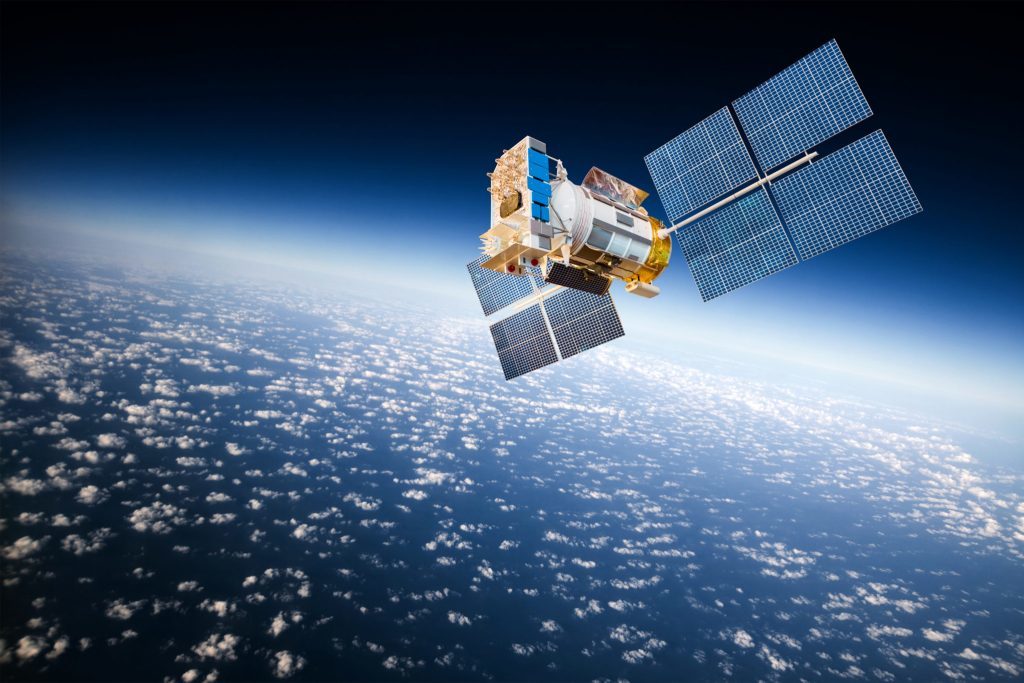
Sharing this information here today, Union Minister of State (Independent Charge), Development of North Eastern Region (DoNER), MoS PMO, Personnel, Public Grievances, Pensions, Atomic Energy and Space, Dr Jitendra Singh said, it is a matter of pride that India’s first Multi-Wavelength Space Observatory “AstroSat” has detected extreme-UV light from a galaxy located 9.3 billion light-years away from Earth.

RRI Scientists Find A New Way for Quantum State Estimation that Can make Crucial Quantum Operations

Scientists experimenting with new ways to manipulate quantum states so that they can be harnessed for computing, communication, and metrology, has found a novel way to characterise and estimate such states. This method of characterisation called Quantum State Interferography, can help make such manipulations simpler so that several crucial operations in quantum technologies become less cumbersome.

Indian Researchers Develop One-Step Laser-Based Fabrication of Self-Cleaning Metallic Surfaces

Scientists from International Advanced Research Centre for Powder Metallurgy & New Materials (ARCI), an autonomous institute of the Department of Science and Technology (DST), Govt. of India, at its Centre for Laser Processing of Materials, have brought out a single-step method to develop super-hydrophobic functional surfaces that have ability to repel water. Such surfaces do not allow water to cling long enough to evaporate and leave behind residue.

IIT Bombay Students Launch Indian Alternative to Scanning Apps

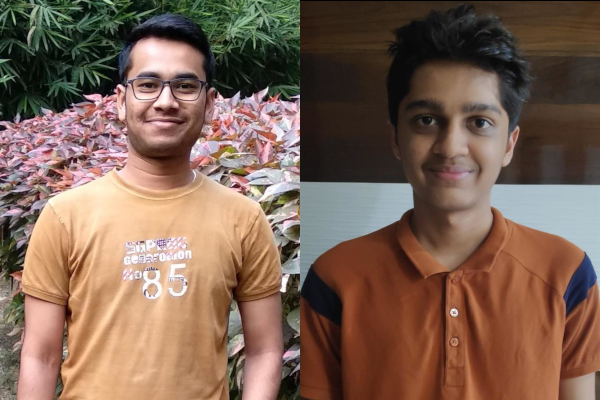
Here comes an indigenous alternative to Chinese document-scanning apps, following Government of India’s decision to ban 59 mobile apps which were prejudicial to sovereignty and integrity of India. AIR Scanner, a free-of-cost mobile application, has been developed Rohit Kumar Chaudhary and Kavin Agrawal, two final-year B.Tech students in the Department of Civil Engineering, IIT Bombay. Their inspiration comes from Prime Minister Shri Narendra Modi’s clarion call for an Aatma Nirbhar Bharat.

Mathematical Modelling for Sharper Images

The researchers have used a grey level indicator-based nonlinear telegraph diffusion model which views the image as an elastic sheet, which when compressed, removes the speckles. The proposed technique uses the benefit of the combined effects of diffusion equation as well as the wave equation. The wave nature of the system preserves the high oscillatory and texture patterns in an image. One of the main advantages of this partial differential equation (PDE)-based approach is that it has a strong theoretical base, which is not always certain for a non-PDE based approach.

A Robust Framework for Water-Theft Prevention

The proposed framework is based on a novel concept called time capacity, which calculates the time required to transport a unit quantity of water between two points. The total time needed to supply water is determined by multiplying this amount by the total volumeof water that has to be transported. “Balancing this calculated total time and total available time in the planning period for fulfilling the tanker delivery order, we have made the frame work computationally efficient to generate optimal tanker routing connections between the watersource and the customer,” explains Prof Gudi. The framework also indicates the tanker size to be used for a specific delivery.