Research

News on Science, Technology and Research in India

Researchers Develop Economical device to Help Detect Asymptomatic COVID-19 Cases

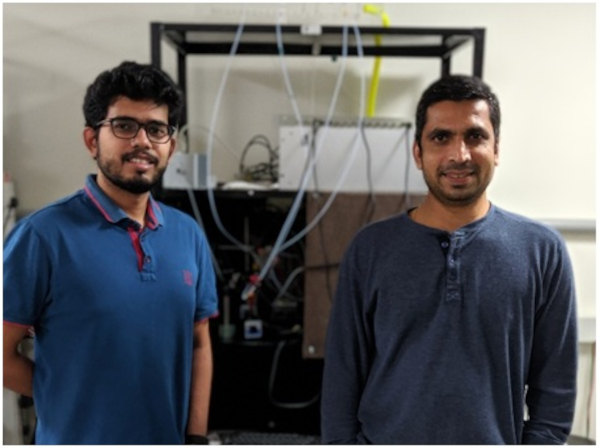
Taking a clue from this, researchers from the Indian Institute of Science Education and Research, Pune (IISER Pune) in collaboration with the BJ Medical College have developed a fast and sensitive device that can help detect asymptomatic COVID-19 patients by testing their sense of smell. By accurately measuring the ability to smell, one could detect an asymptomatic COVID-19 infection caused by SARS-CoV-2 virus.

Researchers Discover tThree New Species of Damselflies in the Western Ghats

The rugged and undulating terrain of the Western Ghats teems with life. Its numerous water bodies — streams, lakes and rivers — are a treasure trove of undiscovered species for scientists. Studies suggest that insects constitute more than half of the currently described species globally. A recent discovery of three new species of damselfly found near water bodies across the Western Ghats adds to the list.

CSIR-IHBT Makes History by Introducing Asafoetida (Heeng) Cultivation in Indian Himalayan Region

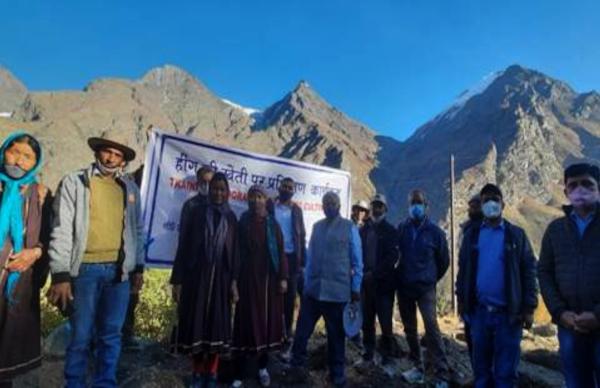
Due to efforts of CSIR constituent laboratory, Institute of Himalayan Bioresource Technology (IHBT), Palampur, a historical shift in farming practices is in the offing with farmers of the remote Lahaul valley in Himachal Pradesh taking up cultivation of asafoetida (Heeng) to utilize vast expanses of waste land in the cold desert conditions of the region.

Scientists Devise Breakthrough Bioremediation Technique to Fight Oil Spillage

The NIOT study found that immobilized bacterial cells had better oil degrading capacity than the free bacterial cells. It was found that they could remove 84% of the oils within 10 days. The free bacterial cells degraded a maximum of 60% of the crude oil at optimized conditions. These findings evince their efficacy in treating accidental bulk discharge of oil in marine environment through nontoxic clean-up technology.

Modulating Pathogen Functions Control Sheath Blight Disease

Scientists are constantly working to find new ways to control various crop diseases. A recent study, conducted by the researchers at the New Delhi based National Institute of Plant Genome Research (NIPGR), has discovered that modulating the functions of pathogen responsible for sheath blight, could be a game changer in the fight against the menacing rice disease.

CSIR-CMERI Develops Sustainable Municipal Solid Waste Processing Facility

Decentralised Waste Management technology developed by CSIR-CMERI can result in drastic reduction of expenditure related to Transportation Logistics and can help reductions in CO2 emissions, by reducing fossil fuel usage. The Scientifically Decentralised Waste Processing Hubs will help multiply outreach for various locations and will also boost the manufacturing potential for the residents of the region.

Research by Indian Scientists Opens up Prospects of Bio-Inspired Materials

Scientists have developed a synthetic material that mimics the dynamic capability of living organisms to adapt to new environments by utilizing simple natural design principles to create complex networks. The new materials developed opens new avenues for smart materials because of their dynamic and adaptive nature. Hence, they would be useful as recyclable polymers for the energy and biotechnology sector.

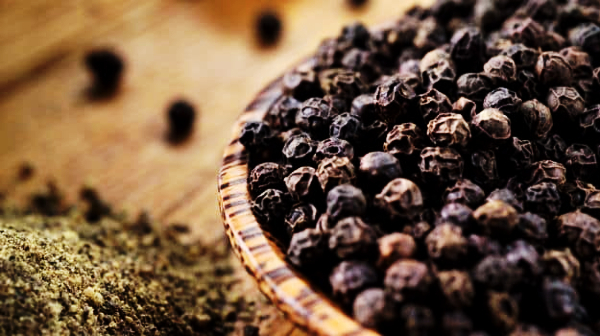
Black Pepper May Hold the Key for Corona Fighting Drug: Indian Scientists

Explaining their work, the leader of the team, Prof. Umakanta Tripathy, said that Coronavirus, like any other virus, uses the proteins on its surface to enter into the cells of the human body. He and his team looked for natural compounds that could bind to these proteins and stop the virus from entering human cells. They used computer-based cutting edge techniques such as molecular docking and molecular dynamics simulation to hunt for potential inhibitors.