Research

News on Science, Technology and Research in India

India Emerges Key Mover of Global S&T Partnerships

Expanding the areas of its foray of global scientific leadership into new and emerging areas of science, India has joined the ‘Global Partnership on Artificial Intelligence (GPAI)’ as a founding member to support the responsible and human-centric development and use of Artificial Intelligence (AI).

Scientists Devise New Method for Accelerated Evaporation of Droplets

Indian Institutute of Technology (IIT), Guwahati researchers have developed an advanced technique for rapid evaporation of droplets. It is a novel method of controlling the overall lifetime of droplet. The inferences drawn from this study could have far-reaching implications ranging from biomedical engineering to biological sample diagnostics, ink-jet printing, surface patterning and many more, say researchers.

India Plans ‘Ease of Doing Science Index’ for High Value Research

In a bid to bring scientific research in India at par with the global standards, the union government is working on a new playbook for a coordinated high impact research funding. As part of this plan, it is working on developing an ‘Ease of Doing Science Index’ to ensure effective use of both disbursed funds (including flexibility of fund utilisation) and the researchers’ time to weed out sub-standard research.

Indian Astronomers Detect Huge Optical Flare in One of the Oldest Astronomic Objects

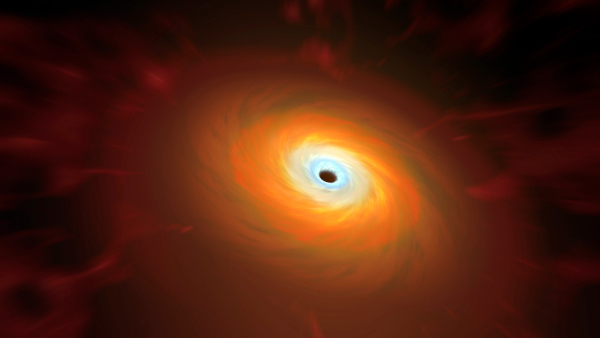
Indian Astronomers have reported one of the strongest flares from a feeding supermassive black hole or blazar called BL Lacertae. Analysis of the flare from this blazar, one of the oldest astronomical objects, can help trace the mass of the black hole and the source of this emission. Such analysis can provide a lead to probe into mysteries and trace events at different stages of evolution of the Universe.

ISRO Plans New Propulsion for Deep Space Missions

RTEG will have less mass than solar cells of equivalent power and allow more compact spacecraft that can navigate easier in space. Many missions of Nasa and Russia, Besides China’s 2013 Chang’e 3 mission to the moon and its rover Yutu had used RTG.