India, Japan Rsearchers Developing Tech to Map Road Health on Smartphone
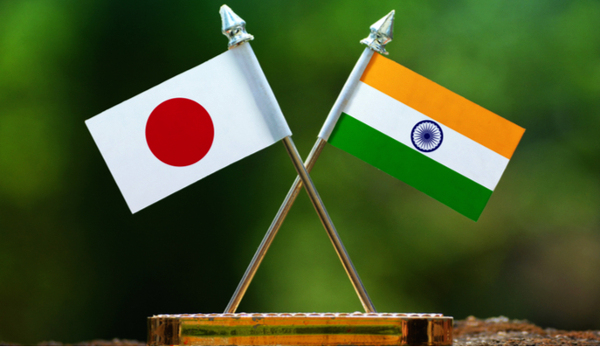
Researchers from India and Japan are working on smartphone-based mapping of road health in both the countries to reduce the accidents caused due to damaged roads.
News on Science, Technology and Research in India
Researchers from India and Japan are working on smartphone-based mapping of road health in both the countries to reduce the accidents caused due to damaged roads.
As part of New Delhi’s space diplomacy, the Indian Space Research Organisation (Isro) is preparing to launch a nano satellite built by engineers from the neighbouring country with the help of Indian scientists in the second PSLV mission that’s in the pipeline.
The Indian Space Research Organisation (Isro) has commissioned a new 18m antenna, which for the first time, allows the space agency to conduct telemetry and command operations on the much faster X band (frequency). So far, Isro only used X band for payload data downloading and used the S band for telemetry and command.
Indian astronomers have developed an algorithm that can increase the accuracy of data from exoplanets by reducing the contamination by the Earth’s atmosphere and the disturbances due to instrumental effects and other factors. This algorithm, called the critical noise treatment algorithm, can help to study the environment of exoplanets with better precision.
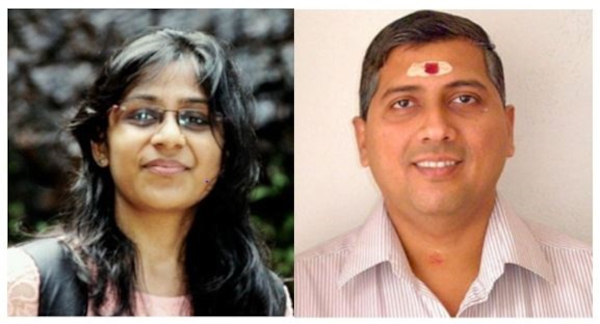
This research was undertaken by Ms Kanchan Aggarwal, who is a PhD Scholar under the guidance of Prof. Arun K Tangirala of the Department of Chemical Engineering, IIT Madras. A report on their study has been published in the science journal PLOS ONE. The research was partially funded by the Board of Research in Nuclear Sciences, an advisory body of the Department of Atomic Energy.
The human gut contains 300-500 types of bacteria that help in digestion, protect us from infections, produce essential vitamins and neurochemicals. In 2011, German scientists classified human beings into three “enterotypes”, depending on the kind of bacteria that dominates the gut – Prevotella, Bacteroides or Ruminococcus.
Seventeen scientists from scientific institutions across India have been awarded the Swarnajayanti Fellowships for their innovative research ideas and the potential of creating impact on R&D in different disciplines.
Indian Astronomers have found a new method to understand the atmosphere of extra solar planets. They have shown that planets going around stars other than the Sun can be studied by observing the polarisation of light and studying polarisation signatures. These polarisation signatures or variations in scattering intensity of light can be observed with existing instruments and expanding the study of planets beyond the solar system using existing instruments.
India is all set to build its first deep sea, hi-tech research vessel at a cost of about ₹ 1,200 crore for purposes including exploration and it would also be used for efforts aimed at securing for the nation its rightful additional continental shelf, a top official said today.
Researchers at the Bengaluru-based Indian Institute of Science (IISc) have developed a low-cost and effective method to detect adulterants in milk, by merely analysing the deposition patterns after evaporation. The team used the method to test for the presence of urea and water, the most common adulterants, and suggest that the technique can be extended to other adulterants also.