Ayurveda

Authentic Ayurveda Medicines and Practices from the Land of Ayurveda

Moringa (Shigru) in Health and Ayurveda

What makes moringa especially powerful from a modern health perspective is its unusual nutrient density. Research reviews describe the leaves as rich in protein for a leafy plant, along with iron, calcium, potassium, carotenoids, polyphenols, and vitamin C, although the exact values vary with soil, climate, and whether the plant is consumed fresh or as powder. This combination helps explain why moringa is often discussed as a functional food rather than just a herb: it nourishes while also delivering bioactive compounds with measurable physiological effects.

Ayush, DBT Launch Joint Clinical Study on Ayurveda as Supportive Therapy for Tuberculosis Treatment

The study, titled Clinical Study on Ayurveda as an Adjunct Therapy for Tuberculosis, was formally announced at a high-level event held at Vigyan Bhawan in New Delhi. The programme brought together ministers, senior officials, scientists, researchers, clinicians and policy stakeholders, underlining the government’s push for evidence-based healthcare solutions that go beyond conventional treatment alone.

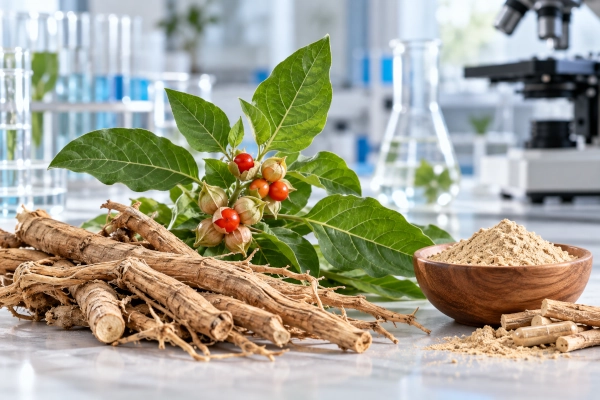
Ashwagandha: The Ancient Ayurvedic Herb Now Going Global

The name itself tells a story. “Ashwa” means horse and “gandha” means smell in Sanskrit. Traditionally, the root was said to have a horse-like odor, and the plant was also associated with the idea of imparting horse-like stamina and vigor. The species name somnifera means “sleep-inducing,” which aligns with the herb’s long traditional reputation as a calming, restorative plant.

Manithakkali: The Quiet Healer in the Backyard

Solanum nigrum belongs to the Solanaceae family, the same large plant family that includes tomato, brinjal, chilli, and potato. It is generally a small herbaceous plant with soft stems, green leaves, tiny white star-like flowers, and clusters of berries that turn dark purple to black when ripe. Reviews note that both the leaves and berries are edible, though the leaves need proper cooking and the plant as a whole must be handled knowledgeably because of its alkaloid content.