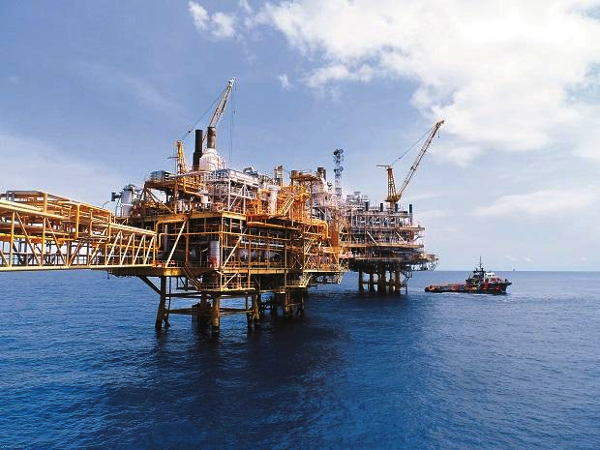
India is preparing one of its most ambitious offshore exploration pushes, with plans to invest over $20 billion in offshore data acquisition to strengthen domestic oil and gas discovery. According to Petroleum Minister Hardeep Singh Puri, the investment will be linked to the government’s Samudra Manthan programme, which aims to move India from uncertain, limited exploration toward a more data-led search for hydrocarbons beneath its offshore sedimentary basins.
The centre of this new strategy is seismic data. In oil and gas exploration, seismic surveys act like the first map of the underground world. They help identify rock formations, possible reservoirs, traps and geological structures that may hold hydrocarbons. Without high-quality data, exploration becomes expensive guesswork; with better data, companies can make sharper decisions on where to drill, how deep to go and whether a basin has serious commercial potential.
Puri said the government is laying a major thrust on “ROCKS” through heavy investments because data is crucial for the future of India’s energy sector. The Business Standard report says the government wants to use seismic data acquisition to unlock discoveries in India’s sedimentary basins, especially in unexplored deepwater and ultra-deepwater areas.
This matters because India’s energy import dependence remains extremely high. Business Standard reported that India’s crude oil import dependence stood at 89% in FY26, while natural gas import dependence stood at 51%. It also noted that India’s crude oil production declined for the eleventh consecutive year in 2025-26, while natural gas output declined for the second straight year, largely due to natural decline from existing fields and lack of major new discoveries.
That is the strategic urgency behind Samudra Manthan. India’s energy demand is rising, but domestic output has not kept pace. Existing producing fields are ageing, and older reservoirs are naturally depleting. Unless new reserves are discovered and developed, India’s energy security will remain heavily exposed to global price shocks, supply disruptions and geopolitical instability in oil-producing regions.
The government’s bet is that India’s offshore basins, especially deepwater and frontier regions, may still hold significant untapped hydrocarbon potential. The Directorate General of Hydrocarbons says India has 26 sedimentary basins covering around 3.4 million sq km, spread across onshore areas, shallow water and deepwater regions up to the Exclusive Economic Zone. A large share of this geological space remains underexplored compared with mature hydrocarbon provinces elsewhere in the world.
The new push also builds on recent exploration-policy reforms. Puri has highlighted changes such as amendments to the Oilfields Regulation and Development framework, overhaul of petroleum and natural gas rules, updated revenue-sharing contracts and the release of around one million sq km of earlier “no-go” areas for exploration. These changes are meant to make India’s upstream sector more attractive to investors and technology partners.
The government’s earlier Data Driven Exploration Conference under Samudra Manthan also made the same point: exploration should no longer remain a closed, uncertain exercise. PIB said the conference was convened by the Directorate General of Hydrocarbons to engage industry on strengthening India’s exploration outcomes through a stronger data ecosystem. Puri’s message was that India is moving from “blind exploration” to “data-driven discovery.”
The financial scale is significant. Business Standard reported that state-run upstream companies have already invested more than $0.5 billion in seismic data acquisition over the past eight years and drilled around 6,500 wells despite financial challenges. The proposed $20-billion-plus push would therefore represent a much larger and more aggressive phase of offshore exploration preparedness.
For companies such as ONGC, Oil India and private or global energy firms, better seismic data could reduce exploration risk. In deepwater oil and gas, drilling a well is extremely expensive. Investors are more likely to commit capital when the geological information is clearer, the regulatory framework is predictable and the government shares or facilitates high-quality basin data.
The geopolitical context also cannot be ignored. India imports most of its crude oil, and disruptions in West Asia, shipping lanes or global energy markets can directly affect domestic inflation, refinery economics and energy planning. A successful offshore exploration programme will not eliminate imports overnight, but even incremental domestic discoveries can improve supply security, support gas-based growth and reduce vulnerability over the long term.
Samudra Manthan therefore should be seen as both an energy-security project and a technology-data project. It is not merely about drilling more wells. It is about mapping India’s offshore geology with modern tools, opening frontier basins to serious exploration, attracting global and domestic investors, and creating a more scientific upstream ecosystem.
If the plan succeeds, India could move from being a largely import-dependent energy consumer to a country that at least extracts more value from its own geological potential. The challenge will be execution: acquiring high-quality seismic data, making it accessible to credible explorers, ensuring faster clearances, maintaining environmental safeguards and converting promising structures into actual discoveries.
The $20-billion offshore data push is therefore a major signal. India is not waiting passively for energy markets to remain stable. It is trying to search deeper, map better and discover more at home. In a world where energy security is increasingly tied to national resilience, Samudra Manthan could become one of the most important upstream energy missions of the decade.
Reference:
PIB — Data Driven Exploration Conference under Samudra Manthan
https://www.pib.gov.in/PressReleasePage.aspx?PRID=2253223
Directorate General of Hydrocarbons — India’s sedimentary basins
https://www.dghindia.gov.in/index.php/page?pageId=66
PIB — OALP IX, exploration acreage and reduction of no-go areas
https://www.pib.gov.in/PressReleaseIframePage.aspx?PRID=2121952
You may also like
-
Government Guarantees Zero Charges on UPI Payments Up to ₹2,000 Under New Notification
-
India Remains World’s Largest Remittance Recipient as Inflows Reach $151 Billion: IFAD
-
CarbonCraft Design Turns Industrial Carbon and Construction Waste Into Building Materials
-
India and MERCOSUR Move Toward Paperless Trade With Electronic Certificates of Origin
-
Inbound Aerospace Turns to Australia to Test India’s Recoverable Re-Entry Spacecraft
