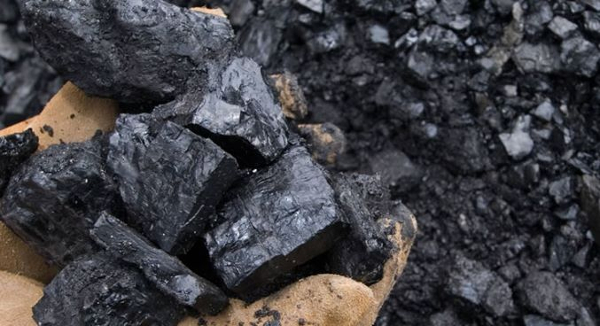
India’s coal story is usually told through the language of power plants, railway rakes, thermal generation and emissions. But a new chapter is now emerging — one in which coal is not merely burned for electricity, but converted into a strategic industrial feedstock for fertilisers, fuels, chemicals, synthetic gas and future hydrogen pathways. That shift is called coal gasification, and it has suddenly moved from a technical policy idea to a major national industrial mission.
The immediate trigger is the Union Cabinet’s approval of a ₹37,500 crore scheme to promote surface coal and lignite gasification projects. The scheme is designed to accelerate India’s target of gasifying 100 million tonnes of coal by 2030, while the latest package itself aims to support nearly 75 million tonnes of coal and lignite gasification capacity. The government expects this programme to mobilise ₹2.5 lakh crore to ₹3 lakh crore in investment and create around 50,000 direct and indirect jobs across coal-bearing regions.
At its simplest, coal gasification is the process of converting coal into synthesis gas, or syngas. Instead of burning coal directly in air, the coal is reacted at high temperature with controlled amounts of oxygen and steam. This produces a gas mixture mainly containing carbon monoxide and hydrogen, along with carbon dioxide, methane and other components depending on the coal quality and gasifier design. Once cleaned and processed, this syngas becomes a building block for several downstream industries — ammonia, urea, methanol, dimethyl ether, synthetic natural gas, hydrogen, ammonium nitrate and even certain petrochemical intermediates.
This is why coal gasification matters for India. The country has one of the world’s largest coal reserves, estimated by the government at around 401 billion tonnes, along with lignite reserves of about 47 billion tonnes. Coal still accounts for more than 55% of India’s energy mix. But India also imports large quantities of high-value industrial inputs such as LNG, urea, ammonia and methanol. According to the Cabinet note, India imports more than 50% of its LNG, around 20% of urea, nearly all of its ammonia requirement and roughly 80–90% of methanol. The import bill for products that can be partly substituted through coal gasification — LNG, urea, ammonium nitrate, ammonia, coking coal, methanol, DME and related items — stood at approximately ₹2.77 lakh crore in FY2025.
That makes coal gasification not merely an energy project, but an import-substitution strategy. India does not want to remain permanently exposed to global volatility in gas, fertiliser, methanol and petrochemical markets. The West Asian crisis, repeated shipping disruptions, LNG price swings and global fertiliser shocks have shown how vulnerable large import-dependent economies can become when energy and chemical supply chains are disturbed. Coal gasification gives India a way to convert a domestic resource into industrial molecules that are currently imported at high cost.
The fertiliser angle is especially important. India is one of the world’s largest consumers of fertilisers, and urea remains central to the country’s agricultural system. Traditionally, urea production depends heavily on natural gas as feedstock. Coal gasification offers an alternative route: coal can be converted into syngas, syngas can be processed into hydrogen, hydrogen can be combined with nitrogen to produce ammonia, and ammonia can then be used to manufacture urea. This is the logic behind projects such as Talcher Fertilizers Limited in Odisha, which is designed around a coal gasification unit, a 2,200 tonnes-per-day ammonia plant and a 3,850 tonnes-per-day urea plant, with an expected output of 1.27 million tonnes per annum of neem-coated prilled urea.
Methanol is another major opportunity. Methanol is used in chemicals, fuels, solvents, formaldehyde, acetic acid and other industrial applications. India currently imports most of its methanol requirement. Coal-to-methanol projects could therefore reduce import dependence while creating a domestic methanol economy. Methanol can also be blended with fuels, used in marine fuel applications, and converted into other chemicals. Dimethyl ether, or DME, is another important derivative; it can be used as a cleaner-burning LPG substitute or blending component, especially for cooking and industrial fuel applications.
For the power sector, coal gasification also opens the door to synthetic natural gas and integrated gasification combined cycle systems. In a conventional coal power plant, coal is burned directly to generate steam and electricity. In gasification-based systems, coal is first converted into syngas, which can then be cleaned and used in turbines or industrial applications. The advantage is greater flexibility: one coal gasification complex can be designed to produce multiple outputs depending on market demand — power, chemicals, fertilisers, hydrogen or synthetic fuels.
The newly approved scheme is important because coal gasification plants are capital-intensive. These projects require gasifiers, oxygen plants, syngas cleaning systems, water-gas shift reactors, acid gas removal units, methanol or ammonia synthesis loops, waste-handling infrastructure and environmental control systems. The Cabinet-approved framework provides financial incentives up to 20% of plant and machinery cost. Incentives will be released in four milestone-linked instalments, while single-project assistance is capped at ₹5,000 crore. The scheme is also technology-agnostic, which means companies can choose suitable technologies while the government encourages indigenous development.
The policy certainty is equally significant. The government has extended coal linkage tenure up to 30 years under the “Production of Syngas leading to Coal Gasification” sub-sector in the Non-Regulated Sector linkage auction framework. For investors, this matters because a gasification plant cannot run on uncertain coal supply. Long-term feedstock security is the backbone of project finance in this sector. Without predictable coal linkage, even a technically sound project can struggle to attract lenders, EPC partners and downstream buyers.
Coal India and other public-sector players are expected to play a major role, but the opportunity is broader than public-sector investment alone. The scheme is designed to attract private capital, technology providers, engineering companies, chemical producers, fertiliser manufacturers, equipment makers and industrial gas companies. Earlier, Coal India had signed MoUs with BHEL, GAIL and Indian Oil for large-scale coal-to-chemical projects through the surface coal gasification route. The new ₹37,500 crore incentive structure gives that ecosystem a much stronger financial push.
There is also an indigenous technology dimension. India’s high-ash coal is more difficult to gasify than many lower-ash coals used elsewhere. That means India cannot simply copy global designs without adaptation. Gasifiers must be able to handle domestic coal quality, ash behaviour, slagging characteristics, moisture levels and operational variability. If Indian companies and research institutions crack this challenge at scale, the country could build a domestic clean-coal technology ecosystem rather than remaining dependent on imported engineering packages. The Cabinet note specifically says the scheme is expected to strengthen domestic surface coal gasification capability and reduce reliance on foreign EPC contractors.
However, coal gasification should not be treated as a magic environmental solution. It is cleaner in certain respects than direct coal combustion because pollutants can be removed from syngas before final use, and it enables more controlled conversion into industrial products. But it is still a coal-based process. Without carbon capture, utilisation and storage, coal gasification can remain carbon-intensive, especially when used for hydrogen production. The International Energy Agency notes that coal is the largest single source of global CO₂ emissions, and any future coal-based industrial pathway must therefore be judged by its carbon-management design, not merely by the word “gasification.”
That is why the next phase of India’s coal gasification journey must integrate carbon capture, water management, ash utilisation, sulphur recovery and strict environmental monitoring. Gasification plants need substantial water, oxygen and waste-handling infrastructure. Poorly designed projects can create local environmental stress. Well-designed projects, however, can capture concentrated CO₂ streams more efficiently than dispersed emissions from conventional combustion systems, while also recovering sulphur and other by-products. The long-term success of the mission will depend on whether India builds these plants as modern chemical complexes, not as old-style coal facilities with a new label.
Strategically, the case for coal gasification rests on three pillars. The first is energy security: using domestic coal to reduce exposure to imported gas and chemicals. The second is industrial self-reliance: creating Indian capacity in methanol, ammonia, urea, synthetic gas, ammonium nitrate and chemical intermediates. The third is regional development: many gasification projects are likely to be located in coal-bearing states, bringing investment, jobs, logistics activity and downstream manufacturing to regions that have historically supplied raw coal but not always captured higher industrial value.
The risks are real. Projects can face cost overruns, technology delays, coal-quality issues, environmental scrutiny and market-price uncertainty. If global LNG or methanol prices fall sharply, project economics may be tested. If carbon regulations tighten, coal-derived products may face pressure unless paired with carbon capture or cleaner process design. If domestic technology fails to mature, India may again become dependent on foreign gasifier suppliers. For the mission to succeed, the government will have to ensure transparent bidding, realistic project timelines, offtake agreements, strong environmental safeguards and a steady push for indigenous R&D.
Even with those challenges, coal gasification marks a major shift in how India thinks about coal. The old model saw coal mainly as fuel for electricity. The new model sees coal as a carbon-rich raw material that can be converted into molecules for fertilisers, fuels, chemicals and industrial gases. This does not replace renewable energy, green hydrogen or electrification. Rather, it addresses a different problem: India’s dependence on imported industrial feedstocks that cannot be solved by solar panels alone.
Coal gasification therefore sits at the intersection of energy security, industrial policy and chemical manufacturing. If executed well, it can help India reduce import bills, create new industrial clusters, revive coal-region economies and build domestic capability in high-value chemical chains. If executed poorly, it risks becoming another capital-heavy programme trapped between environmental criticism and commercial uncertainty. The difference will lie in technology discipline, carbon management, project execution and the ability to convert policy intent into bankable, operating plants.
India’s coal reserves are not going away. The real question is whether the country uses them only as a fuel of the past, or also as a controlled industrial feedstock for a more self-reliant manufacturing future. Coal gasification is India’s attempt to answer that question — not by abandoning the energy transition, but by making its existing resource base work harder, cleaner and more strategically for the economy.
Sources:
https://www.pib.gov.in/PressReleasePage.aspx?PRID=2260621
https://pib.gov.in/Pressreleaseshare.aspx?PRID=1867202
https://tflonline.co.in/ourProject
https://coal.nic.in/en/major-statistics/coal-reserves
https://www.iea.org/fuels-and-technologies/coal
You may also like
-
Pace Robotics Moves Construction Automation From Pilot Stage to Commercial Deployment
-
Hindustan Shipyard Docks Three Vessels Simultaneously in Precision Engineering Milestone
-
BCCL Dispatches First Rake From 5-MTPA Maheshpur Rapid Loading System
-
NPCIL Begins Fuel Loading at RAPP-8 as India’s Fourth Indigenous 700 MWe PHWR Moves Towards Commissioning
-
FUJIFILM India Dedicates First Serial-Numbered Made-in-India Endoscopy System Through AIIMS New Delhi
