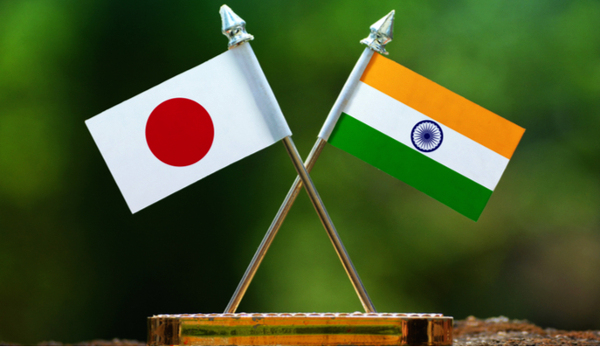
India and Japan are moving to deepen cooperation in critical minerals, semiconductors, information and communication technology, clean energy and pharmaceuticals, marking another step in the transformation of their relationship from a conventional economic partnership into a broader economic-security alliance. The latest discussions took place under the 2nd India-Japan Economic Security Dialogue, held in New Delhi on May 11, 2026, and were followed by reporting that both sides are seeking closer collaboration in future-facing industrial sectors.
The dialogue was co-chaired by India’s Foreign Secretary Vikram Misri, Japan’s Vice Minister for Foreign Affairs Takehiro Funakoshi, and Japan’s Vice Minister for International Affairs in the Ministry of Economy, Trade and Industry, Takehiko Matsuo. According to the Ministry of External Affairs, senior representatives from India’s National Security Council Secretariat, Ministry of Mines, Ministry of New and Renewable Energy, MeitY, Ministry of Heavy Industries, Department of Telecom, Department of Pharmaceuticals, Department of Atomic Energy and DPIIT attended the meeting, showing how wide the economic-security agenda has become.
At the centre of the discussions was a shared concern: modern economic power now depends on trusted supply chains for minerals, chips, telecom systems, artificial intelligence, clean energy equipment and advanced manufacturing. The MEA said both sides discussed industrial and technological collaboration in five major sectors — critical minerals, semiconductors, ICT including AI and telecom, clean energy and pharmaceuticals — and agreed on the need for stronger public-private partnerships to protect economic interests and build resilient supply chains.
This matters because critical minerals have become the raw-material backbone of the new industrial age. Lithium, cobalt, nickel, graphite and rare-earth elements are essential for electric vehicles, batteries, wind turbines, electronics, defence systems and semiconductor manufacturing. For India, securing reliable access to these minerals is vital for its energy transition and manufacturing ambitions. For Japan, which has long depended on imported raw materials and high-precision industrial supply chains, diversification has become an economic-security priority.
Semiconductors form the second major pillar of the India-Japan conversation. Chips are no longer just a component for computers and smartphones; they are embedded in vehicles, power grids, medical devices, defence platforms, telecom networks, satellites and artificial intelligence infrastructure. India wants to position itself as a semiconductor manufacturing and design hub, while Japan brings decades of expertise in materials, precision equipment, specialty chemicals, manufacturing systems and electronics supply chains. IBEF noted that India’s expanding semiconductor ecosystem, skilled workforce and growing digital infrastructure present opportunities for Japanese investment and technology partnerships.
The ICT dimension is equally important. The MEA specifically referred to ICT cooperation including AI and telecom, while IBEF highlighted broader opportunities in digital infrastructure and emerging technologies. This gives the partnership a strategic edge because telecom networks, data infrastructure and AI systems are increasingly viewed as critical national assets rather than ordinary commercial sectors.
India and Japan are also trying to connect this cooperation with clean energy and pharmaceuticals. Clean energy requires minerals, electronics, grid systems, battery storage and advanced manufacturing, while pharmaceuticals depend on secure supply chains, research collaboration and regulatory trust. By placing all these sectors under an economic-security dialogue, both governments are acknowledging that the future of growth will depend on the ability to build secure, diversified and technologically advanced industrial ecosystems.
The timing is significant. Global supply chains have become more fragile because of geopolitical tensions, export controls, concentration of mineral processing, semiconductor chokepoints and rising competition over green technologies. India and Japan are trying to reduce exposure to concentrated global supply chains by building alternative partnerships among trusted economies. IBEF described the discussions as part of a broader effort to strengthen supply-chain resilience and deepen strategic economic engagement.
The India-Japan Economic Security Dialogue itself is part of a framework created under the Economic Security Initiative announced by the Prime Ministers of India and Japan during the 15th Annual Summit in Tokyo in August 2025. The MEA described economic security as a key pillar of the India-Japan Special Strategic and Global Partnership, indicating that the two countries now see technology, industry and supply chains as central to their diplomatic relationship.
Private-sector participation will be essential for this plan to work. The MEA noted that both sides appreciated recommendations made during the Private Sector Dialogue held by the Confederation of Indian Industry and Keidanren on March 26, 2026. This is important because minerals, semiconductors and ICT cannot be built only through government declarations; they require companies, investors, manufacturers, research institutions and technology suppliers to work together across borders.
For India, the partnership can support its larger goal of becoming a major hub for advanced manufacturing, electronics, renewable-energy systems, digital infrastructure and semiconductor production. For Japan, India offers scale, a large market, engineering talent, policy momentum and a strategic manufacturing base outside over-concentrated supply chains. IBEF noted that enhanced cooperation in critical minerals and semiconductors could support electric vehicles, renewable energy systems and advanced electronics manufacturing in both countries.
The dialogue also fits into the wider Indo-Pacific context. India and Japan already cooperate on infrastructure, connectivity, investment and strategic affairs, but the new focus on economic security adds another layer to the relationship. Instead of seeing trade and technology as separate from national security, both sides are now treating supply chains, minerals, chips and digital networks as strategic assets.
The road ahead will depend on execution. India and Japan will need to move from policy-level alignment to actual projects: mineral sourcing agreements, semiconductor supply-chain partnerships, investment in electronics manufacturing, AI and telecom collaboration, joint research, startup linkages, skills development and industry-to-industry deals. The official dialogue has created the framework; the next phase must turn that framework into factories, supply contracts, technology transfer, research networks and market-ready products.
In essence, the India-Japan push in critical minerals, semiconductors and ICT is not just another bilateral trade discussion. It reflects a larger shift in the global economy, where countries are racing to secure the building blocks of the future. For India and Japan, cooperation in these sectors offers a way to build resilience, reduce strategic dependence, strengthen advanced manufacturing and shape a trusted technology ecosystem in Asia.
You may also like
-
India’s Non-Fossil Power Capacity Overtakes Fossil Sources as Total Installed Capacity Reaches 552 GW
-
India Removes Registration Barrier for Export Shipments Up to ₹3 Lakh in Major MSME Trade Reform
-
Sber Says India-Russia Payments Now Settle Within Minutes as Local-Currency Trade Infrastructure Expands
-
Bengaluru’s Kerael Robotics Develops Indigenous Propulsion for Heavy-Lift UAV Platform Targeting 2,500-kg Payloads
-
India’s First Commercial Silicon-Carbide Fab Moves Ahead in Odisha With ₹3,406-Crore Investment
