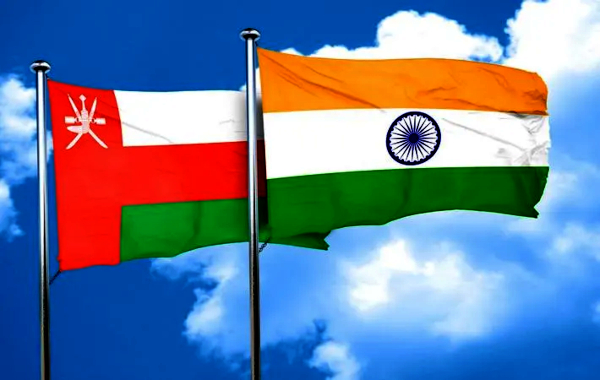
The India-Oman Comprehensive Economic Partnership Agreement is expected to come into force from June 1, 2026, giving fresh momentum to New Delhi’s expanding trade engagement with the Gulf region. Commerce and Industry Minister Piyush Goyal said the pact is likely to become operational after a positive meeting with the Omani team, which is in India to discuss ways to strengthen trade and investment ties.
The agreement was signed in December 2025 and is designed to deepen economic cooperation between the two countries through market access, tariff reduction, services trade, investment, professional mobility and regulatory collaboration. Official details released after the signing described the CEPA as a major milestone in India’s strategic engagement with the Gulf region.
For Indian exporters, the biggest gain is access to the Omani market on preferential terms. The pact is expected to provide duty-free access to around 98 per cent of India’s exports to Oman, covering important sectors such as textiles, agricultural goods, leather products, pharmaceuticals, engineering goods, medical devices, automobiles, plastics, furniture, gems and jewellery.
India, in return, will reduce tariffs on selected Omani products, including dates, marble and petrochemical items. This makes the agreement a two-way trade framework rather than a one-sided export push, with both countries aiming to build stronger commercial flows across goods, services and investment.
The timing is important because India-Oman trade has already crossed a significant threshold. Bilateral trade rose by more than 18 per cent year-on-year to USD 10.61 billion in 2024-25, according to the report, while official government material also places India-Oman trade at USD 10.61 billion in FY 2024-25.
The CEPA also carries wider strategic value. Oman is one of India’s closest partners in the Gulf, and the agreement comes at a time when India is trying to diversify export markets, build resilient supply chains and expand trade agreements with economies that complement Indian manufacturing and services. Reuters earlier reported that the pact gives Indian goods such as gems, textiles, pharmaceuticals and automobiles wider access to Oman, while India will liberalise tariffs on a large share of imports from Oman by value.
Beyond tariffs, the agreement also includes provisions that could help businesses reduce non-tariff barriers. Government information on the pact says it facilitates mutual recognition arrangements for Halal certification, acceptance of India’s NPOP certification for organic products, and cooperation in standards and conformity assessment. These areas are crucial because exporters often face regulatory delays even after tariffs are reduced.
Goyal also held a meeting with Pankaj Khimji, Adviser for Foreign Trade and International Cooperation at Oman’s Ministry of Commerce, Industry and Investment Promotion. The engagement indicates that both sides are now focused on implementation, business utilisation and investment follow-through rather than simply the formal signing of the agreement.
The Oman pact fits into India’s larger free trade agreement strategy. Goyal also said India could conclude a good trade agreement with Chile if it receives favourable access in critical minerals and mining, an area linked to India’s electronics, automobile and solar manufacturing ambitions.
If the India-Oman CEPA comes into effect on June 1 as expected, it will open a new phase in India’s Gulf trade policy. For Indian exporters, it offers lower duties and a stronger foothold in an important West Asian market. For Oman, it creates a deeper economic bridge with one of the world’s fastest-growing major economies. For both countries, the agreement strengthens a long-standing partnership with a sharper commercial and strategic purpose.
You may also like
-
Lam Research Deepens India Semiconductor Push With ₹10,000-Crore Silicon Manufacturing and R&D Expansion
-
PM Vishwakarma Reaches 30-Lakh Artisan Registration Target as Scheme Completes Three Years
-
Oil India Turns to Advanced Technology to Unlock Historic Heavy-Oil Discovery North of Brahmaputra
-
Aule Space: Indian Autonomous Docking Technology for Satellite Life Extension and Orbital Servicing
-
India’s EV Transition Gains Ground as New Mobility Index Links Electrification to Energy Security
