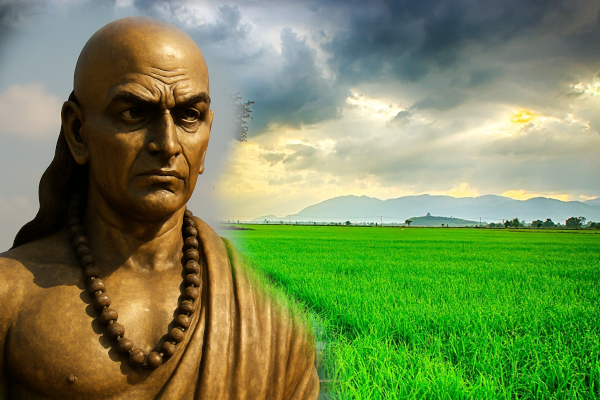
Chapter 2 of Chanakya Niti continues the sage’s sharp, unapologetic exploration of human nature, relationships, and the moral compass necessary for stable personal and political life. With each verse, Chanakya blends practicality with timeless wisdom, offering blunt truths about behavior, loyalty, discipline, and survival.
This chapter reflects a deep understanding of how power, affection, deceit, and ambition interact in daily life. It warns against superficial appearances and emphasizes the need for discernment—be it in choosing friends, managing children, dealing with spouses, or maintaining secrecy in plans. Chanakya repeatedly advocates for discipline over indulgence, showing that unchecked affection, laziness, or misplaced trust can lead to destruction.
The verse on educating children and disciplining students reveals a belief in constructive sternness as a tool for cultivating strong character. Verses on friendship highlight the importance of sincerity and caution against sweet talkers with hidden malice. Others reflect on the pain of poverty, betrayal, humiliation, and misfortune—stating plainly how these can burn the spirit more than fire itself.
One of the most enduring themes in this chapter is the impermanence of life. Chanakya reminds us that beauty fades, wealth is fleeting, and even kings fall if devoid of strategy and wisdom. Yet he doesn’t advocate fatalism. Instead, he teaches resilience—urging individuals to choose their companions wisely, remain rooted in knowledge, and act with clear foresight.
Ultimately, Chapter 2 is not just a critique of human flaws—it’s a survival guide. It instructs readers to live with alertness, to place value on virtue over emotion, and to recognize the subtle dynamics that govern families, societies, and kingdoms. In Chanakya’s world, wisdom is not luxury—it is necessity, and ignorance is the greatest danger of all.
What is Chapter 2 About
Chapter 2 of Chanakya Niti offers a pragmatic dissection of human tendencies, emphasizing the need for vigilance, discretion, and strategy—qualities that are as vital in personal life as they are in international diplomacy. Chanakya highlights the flaws that arise from unchecked emotion—greed, impulsiveness, falsehood, and misplaced trust. He warns that relationships, if not anchored in understanding and control, can become vulnerabilities.
The chapter teaches how to identify and avoid deceptive allies, much like modern states must assess international partnerships beyond surface-level rhetoric. A friend who speaks sweetly yet acts against you in secret, Chanakya warns, is like poison hidden in a pot of milk—a metaphor still resonant in the era of strategic alliances and covert interests.
He stresses the need to guard one’s plans, a sentiment mirrored in today’s confidential statecraft and diplomatic negotiations. Just as premature leaks can derail policy, so too can openly discussed intentions invite sabotage.
Chanakya’s counsel on discerning allies, maintaining secrecy, and exercising timely firmness serves as a timeless guidebook—not just for rulers of ancient courts, but for nations navigating the complexities of modern geopolitics. His words underscore that wisdom, not emotion, must guide those who seek stability, influence, and lasting success.
Chapter 2- Sloka 1
अनृतं साहसं माया मूर्खत्वमतिलोभिता ।
अशौचत्वं निर्दयत्वं स्त्रीणां दोषाः स्वभावजाः ॥ ०२-०१
Anṛtaṁ sāhasaṁ māyā mūrkhatvam atilobhitā |
Aśaucatvaṁ nirdayatvaṁ strīṇāṁ doṣāḥ svabhāvajāḥ || 02-01
Line 1
- अनृतं (anṛtam) – falsehood / lying
- साहसं (sāhasam) – recklessness / rashness
- माया (māyā) – deceit / cunning behavior
- मूर्खत्वम् (mūrkhatvam) – foolishness / ignorance
- अतिलोभिता (atilobhitā) – excessive greed / intense desire
Line 2
- अशौचत्वं (aśaucatvam) – uncleanliness / lack of purity
- निर्दयत्वं (nirdayatvam) – cruelty / mercilessness
- स्त्रीणां (strīṇām) – of women
- दोषाः (doṣāḥ) – faults / defects
- स्वभावजाः (svabhāvajāḥ) – born of nature / inherent by disposition
Chanakya Says:
अनृतं (anṛtam)– Falsehood / lying
Chanakya identifies dishonesty as a natural flaw. He implies that in certain situations, people may resort to falsehood instinctively—especially when driven by emotion or self-interest. This may reflect his observations in political and domestic life.
साहसं माया मूर्खत्वम् अतिलोभिता (sāhasam māyā mūrkhatvam atilobhitā)– Recklessness, deceit, foolishness, and excessive greed
These four qualities are listed as dangerous behavioral flaws. Recklessness leads to uncalculated risk, deceit erodes trust, foolishness clouds judgment, and greed drives unethical choices. Together, they paint a profile of someone who may appear unpredictable or untrustworthy in positions of influence or intimacy.
अशौचत्वं निर्दयत्वं (aśaucatvam nirdayatvam) – Uncleanliness and cruelty
Chanakya refers here to both physical and moral impurity. Uncleanliness might indicate a lack of discipline or care, while cruelty suggests a hardened heart—incapable of empathy. These traits make harmonious living or fair governance difficult.
स्त्रीणां दोषाः स्वभावजाः (strīṇāṁ doṣāḥ svabhāvajāḥ)– These are natural flaws of women
This is a controversial line that reflects the gendered worldview of ancient times. Chanakya generalizes these traits as being inherent in women, which modern readers must approach with critical context. It is important to understand this as a product of its time, possibly shaped by royal court politics, and not a universal truth.
Falsehood, recklessness, deceit, ignorance, extreme greed, uncleanliness, and cruelty — these are the natural flaws found in women.
Explanation:
Chanakya was a realist and strategist, not a moral philosopher. He may have observed that emotional manipulation, ambition, or unpredictability was often used by palace women or spies to influence powerful men — sometimes endangering entire kingdoms. So, he likely included women not to insult, but to warn leaders against being easily swayed by beauty, persuasion, charm, or emotion. Like Machiavelli in the West, Chanakya often used sharp generalizations to drive home strategic points. While modern readers see this as unfair or sexist (and rightly so), in Chanakya’s world, such blunt warnings were tools to protect rulers from weakness, not necessarily a reflection of personal hatred or bias.
Chanakya, known for his sharp insights into human nature and statecraft, presents here a list of behavioral flaws he observed as commonly found, particularly in women, based on his time and experience. To modern readers, this verse may seem harsh or biased, but it can be interpreted more broadly as a reflection on tendencies found in emotional or unguarded behavior, not as a blanket statement about all women.
When he speaks of falsehood, recklessness, deceit, and foolishness, these are traits often arising not from malice, but from intense emotion, fear, or insecurity. People—regardless of gender—sometimes lie or act rashly when overwhelmed. Excessive greed, uncleanliness, and cruelty too may stem from unmet needs, trauma, or survival instinct.
Rather than viewing these as gender-specific, a modern reading could understand this as a warning to recognize and manage these human tendencies, especially in positions of trust, love, or leadership. Chanakya’s deeper message is about awareness and caution—to look beyond surface beauty or charm, and to assess character through action and consistency.
In diplomacy, too, such flaws—if unchecked—can weaken alliances, cause miscommunication, or even betrayal. Emotional intelligence, restraint, and discernment are as necessary in personal relationships as they are in politics.
Chanakya isn’t condemning—he’s alerting us: emotional extremes can cloud judgment, and wisdom lies in recognizing and managing these impulses.
In Short
In a modern reading, the verse can be stripped of its gendered language and understood as a warning against emotional extremes — traits like deceit, impulsiveness, and greed — that can be found in any individual regardless of gender. The deeper lesson Chanakya imparts is about awareness: that trust must be earned, emotions must be managed, and appearances must be examined critically.
In essence, Chanakya urges the reader — especially those in power — to guard themselves not just from external enemies, but also from the subtle internal influences that cloud reason. His words, while shaped by his era, still resonate in today’s world of politics, diplomacy, and personal conduct, where clarity, control, and character remain the foundations of wise leadership.
The Fall of Queen Kaikeyi – A Study in Emotion, Manipulation, and the Ruin of Dharma
Among the queens of King Dasharatha, Kaikeyi was the most beloved. She was beautiful, brave, and once even accompanied the king to battle, saving his life in a moment of great danger. For this, Dasharatha granted her two boons — to be claimed whenever she wished. But Kaikeyi, content and loving toward Rama, never saw the need to use them. She adored Rama as her own, and the royal family lived in peace.
However, beneath this harmony lay seeds of insecurity and latent ambition — which would soon be awakened by Manthara, Kaikeyi’s elderly maid and confidante. When news spread that Rama, the eldest son of Queen Kaushalya, would be crowned king, Ayodhya rejoiced. But Manthara saw this as a threat. Twisting reality, she painted a picture of danger and exclusion: “If Rama becomes king, Kaikeyi will become a servant in Kaushalya’s court, and your son Bharata will be cast aside forever.”
Kaikeyi, once wise and composed, began to unravel. Her mind, once governed by reason, was now flooded with fear, envy, and ambition. She became the embodiment of what Chanakya warned against: sāhasam (recklessness) in demanding Rama’s exile without thought, māyā (deceit) in hiding her intentions until the last moment, mūrkhatvam (foolishness) in misunderstanding the true nature of dharma, and atilobhitā (excessive desire) in wanting power for her son at the cost of justice.
In a dramatic confrontation, Kaikeyi approached King Dasharatha in the royal chamber and reminded him of the two boons he had once promised. Dasharatha, bound by honor, agreed to fulfill them. Kaikeyi then made her demand — send Rama to the forest for 14 years, and crown Bharata as king in his place.
Dasharatha was shattered. He pleaded, wept, and cursed his fate. But Kaikeyi stood firm, now consumed by a distorted sense of justice. What had begun as a whisper of insecurity had become a fire of destruction. Her transformation was so complete, so swift, that even her own son Bharata was horrified when he returned and learned of the events. Bharata refused to accept the throne and blamed his mother for bringing disgrace to their family and kingdom.
The result was devastating: Rama was exiled, the king died of heartbreak, and Kaikeyi was left in silent misery — having lost the respect of her son, the love of her husband, and the honor of her people.
Chanakya’s verse comes alive in this tale.
He wasn’t condemning women per se, but warning that unchecked emotions, manipulation, and impulsive decisions — especially in positions of influence — can destroy the most stable foundations. Kaikeyi, once a queen of virtue, fell not because she was evil, but because she let external influence override inner wisdom.
This episode is not merely about one woman’s fall; it is a timeless lesson — in homes, politics, and diplomacy, discernment and restraint must guard the gates of power.
The Downfall of Kaiser Wilhelm II: A Chanakyan Warning in Modern History
History is filled with empires that rose to greatness only to crumble under the weight of flawed leadership. One such example is the German Empire under Kaiser Wilhelm II, whose impulsive decisions and unchecked ambition precipitated not only his own downfall but also plunged the world into one of the bloodiest conflicts in history—World War I. Viewed through the timeless lens of Chanakya Niti, particularly the verse “अनृतं साहसं माया मूर्खत्वम् अतिलोभिता। अशौचत्वं निर्दयत्वं स्त्रीणां दोषाः स्वभावजाः ॥”, we see not just a critique of human behavior in ancient India, but a warning that still resonates in the political missteps of modern times.
Kaiser Wilhelm II came to power in 1888, inheriting a Germany that was powerful yet diplomatically balanced. The foundations of this stability had been laid by Otto von Bismarck, the Iron Chancellor, whose understanding of European politics was unmatched. But Wilhelm, driven by a mixture of insecurity and vanity—hallmarks of mūrkhatvam (foolishness) and sāhasam (recklessness)—quickly dismissed Bismarck in 1890. Believing he could reshape Europe with personal charm and military might, Wilhelm abandoned Bismarck’s cautious diplomacy and began building up the German navy to rival Britain’s, needlessly provoking one of Europe’s most stable powers.
In the years that followed, Wilhelm’s foreign policy veered between arrogance and anxiety. His impetuous nature often led him to contradict his own ministers, alienate allies, and misjudge adversaries. He severed diplomatic threads one by one, dissolving the Reinsurance Treaty with Russia, cozying up to Austria-Hungary, and inadvertently pushing France, Britain, and Russia closer together. His behavior reflected not just recklessness but atilobhitā—a craving for imperial grandeur that blinded him to the balance of power around him.
The final straw came with the assassination of Archduke Franz Ferdinand in Sarajevo in 1914. Austria-Hungary sought revenge on Serbia, but feared retaliation from Russia. Wilhelm, without considering the wider consequences, gave Austria a “blank cheque”—his unconditional support. This rash promise, a classic act of anṛtam (unwise or false commitment), revealed a dangerous misunderstanding of geopolitics. Within weeks, the great powers of Europe were at war, drawn into a cataclysm triggered by pride, alliances, and miscalculations. Millions would die in the trenches of France, the snowfields of Russia, and the deserts of the Middle East, all while the German emperor drifted further into isolation and denial.
Chanakya’s warning about traits like deceit, foolishness, and cruelty isn’t limited to one gender or one era—it’s a mirror to the destructive tendencies that emerge when emotion overwhelms reason. Wilhelm’s decisions bore all the hallmarks: the deceit of self and others (māyā), rash diplomacy (sāhasam), prideful ignorance (mūrkhatvam), and a cruel disregard for human life (nirdayatvam). Even in his personal character, he was known for mood swings, dramatic speeches, and a desperate need for approval—behaviors that made him vulnerable to flattery and poor counsel. The traits Chanakya grouped under inherent flaws were manifest not in a palace courtesan but in the hands of an emperor.
By 1918, Germany was starving, revolution was brewing, and the army was in retreat. Wilhelm abdicated and fled to the Netherlands, where he spent his final years in exile, reduced from emperor to irrelevant observer. The once-mighty German Empire lay in ruins, broken not by a superior army but by its own leader’s unchecked ego and emotional volatility. Chanakya might have said, “Na vishvaset kumitre”—do not trust the wrong friend. Wilhelm trusted Austria too much, provoked Britain and Russia carelessly, and isolated Germany through one failed decision after another.
In the end, the fall of Kaiser Wilhelm II is not merely a case of military defeat; it is a cautionary tale echoing the ancient wisdom of Chanakya. Power without prudence, ambition without strategy, and leadership without self-awareness are fatal. The verse, though shaped in a different time and context, strikes at the same universal truth:
it is not external enemies that destroy great men and empires, but the unchecked flaws within. Those who rule must first conquer themselves—or risk dragging their kingdoms into the abyss.
Chapter 2- Sloka 2
भोज्यं भोजनशक्तिश्च रतिशक्तिर्वराङ्गना ।
विभवो दानशक्तिश्च नाल्पस्य तपसः फलम्॥ ०२-०२
Bhojyaṁ bhojana-śaktiś ca rati-śaktir varāṅganā |
Vibhavo dāna-śaktiś ca nālpasya tapasaḥ phalam || 2.2
Line 1
- भोज्यं (bhojyaṁ) – food / that which is to be eaten
- भोजनशक्तिः (bhojana-śaktiḥ) – capacity to eat / digestive power
- च (ca) – and
- रतिशक्तिः (rati-śaktiḥ) – sexual vigor / capacity for pleasure
- वराङ्गना (varāṅganā) – a beautiful woman / ideal consort
Line 2
- विभवः (vibhavaḥ) – wealth / prosperity
- दानशक्तिः (dāna-śaktiḥ) – capacity to give / ability to be charitable
- च (ca) – and
- न (na) – not
- अल्पस्य (alpasya) – of a small / insignificant (person or effort)
- तपसः (tapasaḥ) – of austerity / penance
- फलम् (phalam) – result / fruit
Chanakya Says:
भोज्यं (bhojyaṁ) – Edible food
Chanakya begins by emphasizing that food, no matter how nutritious or rich, has value only when it is edible, properly prepared, and suited to the one consuming it. Something may be luxurious or expensive, but if it cannot be consumed or digested, it is as good as useless. This highlights the importance of practicality and suitability over mere possession.
भोजनशक्तिश्च (bhojana-śaktiś ca)– And the ability to eat / digestive power
It’s not enough to have access to food; one must also have the capacity to consume and digest it. In a broader sense, this suggests that opportunities or wealth are meaningful only when one is equipped to use them wisely. A person lacking the physical, mental, or emotional ability to enjoy what they have is as deprived as one who has nothing.
रतिशक्तिः वराङ्गना (rati-śaktiḥ varāṅganā) – Sexual vigor and a beautiful woman
Here, Chanakya speaks of pleasure and companionship, but the deeper meaning is about compatibility and mutual ability. A beautiful partner (varāṅganā) is a gift, but its value depends on one’s own ability (rati-śaktiḥ) to share, connect, and enjoy that relationship. Without inner strength or health, external beauty or luxury cannot be truly appreciated or sustained.
विभवो दानशक्तिश्च नाल्पस्य तपसः फलम् (vibhavo dāna-śaktiś ca nālpasya tapasaḥ phalam)
– Wealth and the power to give are not the fruits of small effort or weak penance
Chanakya ends the verse with a sharp truth: significant wealth and true generosity don’t come to those who make half-hearted efforts. He reminds us that greatness—be it in wealth, virtue, or influence—is the result of deep austerity, discipline, and commitment. Superficial efforts cannot yield lasting or noble results. This mirrors real life, where those who give the most often carry the weight of long sacrifice.
Edible food, the capacity to eat it, sexual vigor, a beautiful woman, wealth, and the ability to give in charity — these do not arise from weak or small effort. They are the results of intense and meaningful tapas (austerity or effort) and are not attainable by those who engage in shallow or half-hearted practices.
Explanation
In this verse, Chanakya draws attention to six desirable elements of life — food, the ability to enjoy it, physical pleasure, companionship, wealth, and generosity — and tells us that none of these arise from weak or shallow efforts. Each requires strength, discipline, and deep commitment. This is not just a commentary on material life, but a subtle philosophical reminder about the value of sincere effort and inner capability.
Let’s begin with food. Having food (भोज्यं) is only half the blessing — having the ability to eat and digest it (भोजनशक्तिः) is equally important. In real life, this represents not just physical nourishment, but also our ability to enjoy and benefit from what we possess. There are people who have lavish resources but lack health, peace of mind, or stability to enjoy them. Thus, abundance without the strength to use it is meaningless.
Similarly, sexual vigor (रतिशक्तिः) and a beautiful partner (वराङ्गना) together symbolize desire and fulfillment. But Chanakya warns us that beauty or pleasure in itself does not lead to happiness. Without emotional maturity, health, and alignment, these blessings can become burdens. A mismatch between desire and capacity often leads to frustration, jealousy, or imbalance — whether in relationships, careers, or ambitions.
Next, he speaks of wealth (विभवः) and the power to give (दानशक्तिः). In Chanakya’s view, mere possession of wealth does not make a person great — the true measure of character is one’s ability to give without fear or attachment. And that generosity, he insists, is not the fruit of laziness, accident, or casual virtue. It is the result of sustained, mindful effort — of tapasyā, the burning away of ego, greed, and selfishness.
Ultimately, Chanakya sums it up with “नाल्पस्य तपसः फलम्” — the fruit of half-hearted effort is small or insignificant. Comfort, enjoyment, vitality, and prosperity don’t simply fall into one’s lap. They are the results of steady, deliberate work. A person cannot expect lasting success or satisfaction from minimal commitment — whether it’s in education, profession, relationships, or spiritual practice. Real rewards come only when the effort matches the goal.
In a modern context, this verse reminds us that success without skill, luxury without health, and love without maturity are hollow gifts. If we want to enjoy life’s blessings fully, we must invest ourselves fully — not with superficial energy, but with discipline, clarity, and depth.
In essence, Chanakya urges us to stop chasing appearances and instead build capacity. Don’t just seek wealth — build the strength to use it well. Don’t just wish for a partner — develop the ability to love and grow with one. Don’t just consume — nourish yourself. Because in this world, half-hearted effort earns half-fulfilled lives.
Raja Bhoja: The Monarch Who Gave, Even in His Ruin
In the annals of Indian history, the name Raja Bhoja resonates not merely as a king, but as an ideal — a monarch who ruled not only with strength, but with wisdom, poetry, and spiritual grace. His court was the envy of civilizations, and his name became a symbol of royal excellence. Yet what truly immortalized him was not the vastness of his empire or the glitter of his crown, but how he held onto dharma and generosity even when fate stripped him of all earthly power.
Raja Bhoja of the Paramara dynasty ruled Malwa in the 11th century CE from his capital at Dhar. His reign is remembered for cultural brilliance. Under him, temples rose, scholars thrived, and Sanskrit literature reached a golden age. Bhoja was himself a philosopher-king — he wrote treatises on poetics (Śṛṅgāra-Prakāśa), polity (Rāja-Mārtaṇḍa), medicine, architecture, and astronomy. His vision of kingship was holistic: the ruler was a guardian of culture, not just a wielder of the sword.
But history is not kind to even the noblest. Bhoja’s later years saw his kingdom invaded by enemies and betrayed by allies. The Kalachuris, aided by other rival dynasties, defeated him. His wealth dwindled. His court disbanded. The mighty king who once presided over the grandest assemblies now sat beneath trees, conducting what little court he could, with the same dignity and devotion he had shown on the throne.
And here lies the soul of the story.
Even in decline, Bhoja never ceased to give. The stories of his final years say that he continued to feed wandering ascetics and sages, that he sold his personal ornaments to organize a yajña (sacrifice) not for political comeback, but for lokakalyāṇa — the welfare of the people and the land. In a world that revered him once for what he possessed, Bhoja taught by example that true greatness lies in what one gives, even when one has nothing left.
It is here that Chanakya’s verse echoes like an ancient drumbeat:
“भोज्यं भोजनशक्तिश्च रतिशक्तिर्वराङ्गना ।
विभवो दानशक्तिश्च नाल्पस्य तपसः फलम्॥”
(The food we eat, the power to enjoy it, pleasure, beauty, wealth, and the strength to give — these do not arise from small efforts. They are the fruit of deep, lifelong tapasya.)
Bhoja’s दानशक्ति (power to give) was not rooted in treasury but in inner fire. His vibhava (wealth) was no longer in gold or land, but in character, learning, and sacrifice. When he could no longer command armies, he still commanded respect. When the world offered him ruin, he responded with restraint and generosity — the mark of a true yogi in a king’s robes.
He did not wage a desperate war to reclaim his crown. He waged a subtler war — against despair, against selfishness, against the instinct to retreat from dharma when dharma no longer rewards you. That quiet war, won without fanfare, made him eternal.
Today, Raja Bhoja lives in Indian memory not as a tragic figure, but as a king whose tapas was greater than his palace. He reminds us, as Chanakya did, that the fruits of life — joy, wealth, love, and charity — are never the results of shallow existence. They are earned through long-standing discipline, deep character, and the unwavering ability to stand tall when life bends you low.
And that is why, long after kingdoms fade and stones fall to dust, the name Bhoja still commands reverence — for he ruled with nothing, yet gave everything.
Sardar Patel: The Silent Tapasvi Who United Bharath
In 1947, as India stood on the brink of freedom, it was anything but unified. The subcontinent was dotted with over 565 princely states, each with varying ambitions — some willing to accede to India, others hoping for independence or alignment with Pakistan. What seemed like a moment of triumph threatened to spiral into national fragmentation.
It was Sardar Vallabhbhai Patel, India’s first Home Minister, who undertook the daunting task of integrating these kingdoms into the Indian Union. It wasn’t accomplished through conquest or coercion alone. Patel’s success came from years of strategic diplomacy, psychological insight, and immense political tapasya — the kind of slow-burning, internal effort that Chanakya revered.
He worked with tact and firmness. With V.P. Menon, he used dialogue, legal frameworks, personal persuasion — convincing rulers who were reluctant, like those of Junagadh, Hyderabad, and Kashmir, to accept accession. He bore immense political stress, often sidelined by Nehru’s global diplomacy or Gandhi’s spiritual politics, yet he remained focused, grounded, and relentless — a true karmayogi.
Patel’s “reward” was not power, not personal wealth, not public adoration. His vibhava was the legacy of a united India. His दानशक्ति was the silent, tireless giving of his will and wisdom to ensure national cohesion. His efforts did not bear fruit overnight. But they built a foundation so strong that even after seven decades, India’s borders still reflect the shape he envisioned.
This is precisely what Chanakya Niti 2.2 teaches:
- Capability (shakti) — whether to enjoy, rule, or give — arises from deep character and discipline.
- True power and generosity, in the long run, are the fruits of intense, focused effort, often invisible to the masses.
- The success of unifying India was not a fluke of history, but the reward of one man’s inner strength, patience, and strategic vision.
Patel didn’t wield headlines, but he wielded Chanakya’s spirit. His diplomacy wasn’t glamorous, but it was durable — just as Chanakya would prescribe: restraint when possible, firmness when necessary, and tapasya always.
Chapter 2- Sloka 3
यस्य पुत्रो वशीभूतो भार्या छन्दानुगामिनी ।
विभवे यश्च सन्तुष्टस्तस्य स्वर्ग इहैव हि ॥ २.३ ॥
yasya putro vaśībhūto bhāryā chandānugāminī |
vibhave yaś ca santuṣṭas tasya svarga ihaiva hi ||
Line 1
- यस्य (yasya) – whose
- पुत्रः (putraḥ) – son
- वशीभूतः (vaśībhūtaḥ) – obedient, self-controlled, under discipline
- भार्या (bhāryā) – wife
- छन्दानुगामिनी (chandānugāminī) – follows his will/desire, is agreeable
Line 2
- विभवे (vibhave) – in wealth, circumstances
- यः (yaḥ) – who
- सन्तुष्टः (santuṣṭaḥ) – is content
- तस्य (tasya) – for him
- स्वर्गः (svargaḥ) – heaven
- इहैव (iha eva) – right here, in this very world
- हि (hi) – indeed
Chanakya Says
यस्य पुत्रो वशीभूतः
(yasya putro vaśībhūtaḥ)
“One whose son is obedient or self-controlled”
Here, Chanakya begins by pointing to the importance of discipline and values in the next generation. A vaśībhūta son is not just blindly obedient — the term implies one who is in control of himself, respects his parents, and follows dharma. He is morally anchored and lives with restraint, not driven by whims. Such a child brings peace to the family, as opposed to a rebellious or wayward offspring who can cause endless anxiety and grief.
भार्या छन्दानुगामिनी
(bhāryā chandānugāminī)
“A wife who is agreeable to his wishes”
This line refers to domestic harmony, which was a central theme in ancient Indian thought. Chandānugāminī literally means “one who follows his desire or intent.” It doesn’t imply blind submission, but mutual understanding and willingness to cooperate in household decisions and lifestyle. It’s a portrayal of a balanced, supportive relationship, where love and companionship flourish through shared purpose — vital for a stable life.
विभवे यश्च सन्तुष्टः
(vibhave yaś ca santuṣṭaḥ)
“One who is content with his wealth”
This is a key value in Indian philosophy — santoṣa (contentment). A person who is satisfied with what he has — whether much or little — lives in peace, unlike the one constantly chasing more. The term vibhava refers not just to material wealth but all one’s possessions, circumstances, and social status. Chanakya emphasizes that true happiness lies in acceptance, not accumulation.
तस्य स्वर्ग इहैव हि
(tasya svarga ihaiva hi)
“For him, heaven is right here on earth”
This is the beautiful conclusion. If a man has the three qualities above — a well-guided son, a supportive spouse, and contentment in life — he doesn’t need to wait for paradise after death. His life itself becomes svarga (heaven). This is a deeply earthly, human-centric vision of fulfillment — heaven is not in another world, but in the inner and domestic balance we create for ourselves here and now.
He whose son is obedient, whose wife is agreeable to his wishes, and who is content with his wealth — for him, heaven exists here itself (on earth).
Explanation
This verse from Chanakya Niti offers a remarkably practical and grounded definition of earthly bliss. Rather than describing heaven as a distant spiritual realm, Chanakya brings it down to the daily emotional and domestic realities of life. For a man (or by extension, any householder), peace and contentment arise not from riches alone but from harmonious relationships and mental satisfaction.
- An obedient son symbolizes not authoritarian control, but a child who respects values, listens to wisdom, and upholds family dharma.
- A wife who follows the husband’s wishes (छन्दानुगामिनी) implies marital harmony and mutual understanding, not blind subservience. In context, it refers to a companionable, supportive relationship where both move together in shared intent.
- Contentment with wealth (vibhave santuṣṭaḥ) is perhaps the most timeless lesson — a reminder that happiness is not in how much one has, but in how well one accepts and utilizes what one has.
When these three conditions align — disciplined children, understanding partner, and inner contentment — then heaven is not a distant hope, but a lived experience. Chanakya, ever the realist, emphasizes that bliss is not beyond life, but within it, for those who manage their inner expectations and outer relationships wisely.
In today’s complex and fast-paced world, success is often confused with ambition, possession, and relentless competition. But Chanakya, from centuries ago, offers a grounded vision of peace — not as an external utopia, but a domestic and inner state achieved through balance and maturity. His verse applies not only to individuals, but also — metaphorically — to leaders, diplomats, and statesmen.
“Yasya putro vashibhūtaḥ” — In the modern family, a child who is emotionally balanced, respectful, and thoughtful reflects the values of his upbringing. It doesn’t mean total obedience, but someone who has developed the self-discipline and maturity to make wise choices. In diplomatic terms, it parallels a nation’s younger generation that upholds its cultural integrity, is law-abiding, and maintains social cohesion — the true strength of any republic. A country with responsible youth is secure at home and respected abroad.
“Bhāryā chandānugāminī” — A partner who aligns with one’s intent signifies emotional compatibility and mutual understanding in a relationship. It’s about a home free from constant conflict, where both partners share decisions, values, and vision. In diplomacy, this reflects internal unity within a government — harmony between ministries, cooperation among allies, and synergy in leadership. A state divided by infighting, like a home in conflict, cannot focus on progress or foreign strategy.
“Vibhave yaś ca santuṣṭaḥ” — Contentment with wealth today is a rare virtue. Social media and consumer culture fuel endless comparison, yet true satisfaction lies in the wise use of what one has. A person who lives within means, contributes to society, and avoids debt is truly free. In statecraft, this reflects fiscal prudence and strategic restraint — a nation that avoids overextension, balances ambition with sustainability, and respects its economic limits gains long-term stability. Even powerful nations that lack contentment and overreach — militarily or financially — often collapse under their own weight.
“Tasya svarga ihaiva hi” — Such a person — or such a state — does not wait for some elusive reward. The very structure of harmony, discipline, and gratitude creates a life or a society that feels like heaven here and now. A well-governed country with social trust, family values, and economic balance experiences peace — far more valuable than mere affluence or military might.
Chanakya’s wisdom speaks to the core of modern leadership — both personal and political. Peace, whether at home or in diplomacy, is not a product of conquests or luxuries, but of self-mastery, trust, and balance. Leaders who foster disciplined youth, build cooperative alliances, and exercise contentment with power — they create a world where heaven is not a dream, but a lived reality.
Rama’s Exile and the Forest Life
When King Dasharatha announced that Rama, his eldest and most beloved son, was to be exiled for fourteen years, the entire kingdom of Ayodhya fell into shock. Courtiers whispered in disbelief, the people wept in the streets, and Dasharatha himself trembled under the weight of his promise to Kaikeyi. Yet the one man who stood calm amidst the storm was Rama. With a smile soft and eyes unwavering, he bowed before his father and said, “I am yours to command.” He asked no questions, voiced no protest. There was no anger, no resistance. He touched the feet of his elders and prepared for exile as if it were a pilgrimage.
In that moment, Rama embodied a truth far older than his own story — a truth Chanakya would later encapsulate in his teachings:
“यस्य पुत्रो वशीभूतो भार्या छन्दानुगामिनी ।
विभवे यश्च सन्तुष्टस्तस्य स्वर्ग इहैव हि ॥”
He whose son is obedient, whose wife is in harmony, and who is content with his means — for him, heaven is right here on earth.
Rama was not merely obedient — he was vaśībhūta, one who had conquered his own desires. His loyalty to his father was not blind, but rooted in the deeper fabric of dharma — duty over comfort, honour over entitlement. He did not bend to exile; he made exile noble.
When Sita heard of Rama’s departure, she too insisted on going. “My place is beside you,” she said. “Palaces mean nothing if I am without you. And no forest can frighten me, if I walk it with your hand in mine.” Rama tried to dissuade her, spoke of thorns, beasts, and hardships — but Sita stood firm, not as a burden, but as a partner. She was not compelled by law, but drawn by love. She became the very image of chandānugāminī bhāryā — a wife who follows not out of submission, but out of spiritual harmony.
The royal garments were shed, the gold was left behind, and Rama walked into the forest dressed in bark. He had no bed, no servants, and no title. Yet he smiled, unfazed by the fall of fortune. In the shade of forest trees and the songs of hermits, he found a stillness richer than Ayodhya’s grandeur. He was santuṣṭaḥ vibhave — content with his lot, joyful even in lack. The hut he built with Sita and Lakshmana was not built of wealth, but of peace.
In that humble clearing in Chitrakoot, without kingdom or crown, Rama lived as a king in spirit. A son whose every step was guided by his father’s will, a wife whose love made every thorn a flower, and a mind untouched by desire — he had attained what sages seek and kings seldom find.
Indeed, as Chanakya says:
“तस्य स्वर्ग इहैव हि” — for such a man, heaven exists here and now.
Heaven was not in the skies for Rama — it lay in the quiet rustle of leaves, in Sita’s warm glance, in the obedience that asked for nothing in return, and in the joy that came not from possession, but from presence.
Rama’s exile was not a loss — it was a revelation. It showed that true wealth lies not in gold or territory, but in dharma lived fully: an obedient heart, a devoted companion, and contentment in one’s path. In every way, Rama fulfilled Chanakya’s vision of earthly paradise.
Swarga in Simplicity: How Dr. Kalam Embodied Chanakya’s Ideal Life
Dr. Kalam was not born into wealth or power. His father, Jainulabdeen, was a boat owner and an Imam in the coastal town of Rameswaram. From his childhood, Kalam was deeply disciplined, rising before dawn, helping with newspapers, and studying by the flicker of kerosene lamps. The vaśībhūtaḥ quality, as Chanakya calls it — a mind trained in self-restraint — was ingrained in him early. He never needed to be commanded; he led himself through inner discipline, not external pressure.
Though he remained a bachelor all his life, his household relationships — with his brothers, elders, and mentees — reflected the same harmonious alignment that Chanakya refers to with “chandānugāminī bhāryā”. His personal relationships were gentle, supportive, and quietly mutual. People around him often said that he never raised his voice, never argued harshly, and always sought common ground. Even in Rashtrapati Bhavan, he treated his staff like family — maintaining an atmosphere of trust and cooperation.
The most striking aspect, however, was his contentment. Despite holding the highest office in the country, Dr. Kalam never amassed wealth or privileges. After retiring, he returned to a simple house, cooked his own food, and owned little. His bank balance remained modest. He travelled with a small bag, lived out of a single suitcase, and slept peacefully — not because he had little, but because he needed little. This is the spirit of “vibhave santuṣṭaḥ“ — one who is content with what he has.
And so, Dr. Kalam lived in “svarga ihaiva hi” — a heaven on earth, built not with gold but with goodness, discipline, harmony, and simplicity. His life is remembered not for luxury or fame, but for serenity and purpose. Even global dignitaries spoke of the peace they felt in his presence.
Like Chanakya’s ideal man, Kalam lived in alignment — of action, values, and relationships. He had no palace, but he had peace. He had no heirs, but he left behind a generation of inspired youth. His heaven was not after death — it was in every moment of integrity he lived.
Chapter 2- Sloka 4
ते पुत्रा ये पितुर्भक्ताः स पिता यस्तु पोषकः ।
तन्मित्रं यत्र विश्वासः सा भार्या यत्र निर्वृतिः ॥ ०२-०४
Te putrā ye pitur-bhaktāḥ, sa pitā yastu poṣakaḥ |
Tan-mitraṁ yatra viśvāsaḥ, sā bhāryā yatra nirvṛtiḥ ||
Line 1
- ते पुत्राः (te putrāḥ) – they are sons
- ये पितुः भक्ताः (ye pituḥ bhaktāḥ) – who are devoted to their father
- स पिता (sa pitā) – he is a father
- यः तु पोषकः (yaḥ tu poṣakaḥ) – who provides and nurtures
Line 2
- तत् मित्रं (tat mitraṁ) – that is a friend
- यत्र विश्वासः (yatra viśvāsaḥ) – where there is trust
- सा भार्या (sā bhāryā) – she is a wife
- यत्र निर्वृतिः (yatra nirvṛtiḥ) – where there is peace/contentment
Chanakya Says
ते पुत्राः ये पितुर्भक्ताः (Te putrāḥ ye pitur bhaktāḥ)
“They alone are sons who are devoted to their father.”
Being a son isn’t defined merely by birth. True sons are those who show love, obedience, and gratitude to their fathers. Devotion, respect, and carrying forward family dharma are what define real filial duty.
स पिता यः तु पोषकः(Sa pitā yaḥ tu poṣakaḥ)
“He alone is a father who nurtures and sustains.”
Just producing children doesn’t make someone a father. A real father provides emotional, material, and moral support — he nourishes, guides, and shapes the child’s future. It’s a responsibility, not a label.
तन् मित्रं यत्र विश्वासः (Tan mitraṁ yatra viśvāsaḥ)
“That is a friend in whom there is trust.”
Friendship, in Chanakya’s eyes, is measured by trust, not proximity. A friend is not someone who flatters or socializes with you, but one in whom you can confide without fear — someone whose loyalty is proven.
4. सा भार्या यत्र निर्वृतिः (Sā bhāryā yatra nirvṛtiḥ)
“She is a wife in whose presence there is peace.”
The true measure of a spouse is not physical beauty or wealth, but the tranquility she brings. A wife is a life partner — if her presence brings emotional comfort, support, and inner peace, then she is a real wife.
“They alone are sons who are devoted to their father;
He alone is a father who truly nourishes and cares;
That is a true friend in whom there is trust;
And she is truly a wife in whose presence there is peace.”
Explanation
In today’s interconnected world — from homes to boardrooms, from friendships to international diplomacy — the labels we use (son, father, friend, spouse, ally) often lack substance unless backed by action. Chanakya, centuries ago, laid down a timeless filter: don’t go by titles, go by truthful behavior.
In modern family life, a “son” may be an NRI working abroad, rarely visiting, and treating his parents as legal responsibilities rather than emotional anchors. But Chanakya wouldn’t call him a putra unless he’s present in spirit — through care, concern, and active support. Likewise, a father isn’t one just because he fathered a child. In today’s reality, fathers who leave children emotionally unsupported or physically abandoned are unfortunately common. Chanakya’s definition applies only to those who nurture, educate, and guide — even in the face of difficulty.
In corporate or political life, the line “tan mitraṁ yatra viśvāsaḥ” (that is a friend in whom there is trust) rings even louder. Governments call each other “strategic partners,” but we know that true alliances — like that of the U.S. and the U.K., or India and Bhutan — are based not on paper agreements, but deep, consistent trust, even in adverse times. Similarly, in business, a partner who leaks strategy, breaches contracts, or shifts loyalties quickly is not a mitra — merely a temporary collaborator.
Perhaps the most subtle and realistic is Chanakya’s insight into marriage: “sā bhāryā yatra nirvṛtiḥ” — she is a wife in whose presence there is nirvṛtiḥ, or deep inner contentment. In an era of increasing emotional distance, marital strife, and performative love, this strikes a chord. A spouse today is often chosen for compatibility on paper — income, looks, status — but peace is rarely discussed. In the diplomatic world too, many countries maintain formal alliances (like marriages of convenience), but there is no peaceful coexistence, only underlying friction — like India-China relations today.
Thus, Chanakya’s verse is not about ancient household roles alone — it is a sharp commentary on the real value of relationships, both personal and diplomatic. Titles mean nothing if devotion, trust, nurturing, and peace are missing. Whether you’re managing a family, a team, or a nation — what matters is the quality of bonds, not the names we give them.
Chanakya is drawing a line between role and reality.
You can wear the badge, but unless you act with duty, trust, and care — you’re just wearing a title, not living it.
The Vow of Bhishma
In the vast epic of the Mahabharata, amid the intricacies of dharma, duty, and destiny, the story of Bhishma stands as an eternal testament to the ideals that Chanakya later distilled into a single verse. In his second chapter, Chanakya declares: “Those are sons who are devoted to their father; he is a father who nurtures and protects; he alone is a friend in whom there is trust; and she is a wife with whom one finds peace.” While these words offer wisdom for all ages, nowhere are they more poignantly lived than in the sacrifice and solemn vow of Devavrata, later known as Bhishma.
Born to King Shantanu and the river goddess Ganga, Devavrata was a child of celestial origin, raised with knowledge, strength, and virtue. As he grew, he proved himself in every manner—militarily skilled, morally upright, and intellectually formidable. He was clearly the heir to the throne of Hastinapura, and the pride of his father. Yet destiny would demand of him something far greater than royal prowess: a surrender of self.
When Shantanu fell in love with a fisherwoman named Satyavati, he faced a dilemma. Her father agreed to the marriage on one condition—that only Satyavati’s sons would inherit the throne. Shantanu, torn between love and his duty to his firstborn, refused the demand and withdrew into sorrow.
“ते पुत्रा ये पितुर्भक्ताः” — “They alone are sons who are devoted to their father.”
Devavrata, discovering the cause of his father’s anguish, approached the fisherman and voluntarily renounced his claim to the throne. But the fisherman remained unconvinced, fearing that Devavrata’s sons might one day challenge Satyavati’s lineage.
In response, Devavrata made a vow so terrible and so absolute that the heavens trembled—he vowed never to marry and to remain celibate for life. With that sacrifice, he not only secured his father’s happiness but also surrendered all personal joys, ambitions, and future legacy. That moment transformed him from Devavrata to Bhishma—“the one of the terrible vow.”
If ever there was a son who fulfilled the spirit of Chanakya’s words, it was Bhishma. He exemplified devotion, not in emotion alone, but in action that demanded the forfeiture of everything a prince might desire. His sacrifice was not transactional; it was total. In doing so, he elevated the concept of filial duty to a divine act of dharma. And King Shantanu, though overwhelmed by this gesture, did not merely accept the gift in silence. He blessed Bhishma with the boon of iccha-mrityu—the ability to choose the moment of his own death—ensuring that his son would live with honor and fall only when he willed it.
“स पिता यस्तु पोषकः” — “He alone is a father who nurtures and protects.”
Shantanu, too, fulfilled the role of the nurturing father—not merely by giving life but by recognizing the magnitude of his son’s sacrifice and empowering him in return.
Bhishma’s role in the Mahabharata did not end there. He became the pillar of the Kuru dynasty, the guardian of its throne through generations, and the conscience of its court. Kings came and went, but Bhishma remained—silent yet watchful, loyal yet bound, principled yet tormented. His allegiance to the throne made him fight for the Kauravas, even when he knew their cause was unjust.
“तन्मित्रं यत्र विश्वासः” — “He is a friend in whom there is trust.”
Yet such was the trust in his righteousness that even the Pandavas, his battlefield opponents, revered him. He never struck below the belt, never wielded his power unfairly, and when the time came, it was to Bhishma that Yudhishthira turned for guidance on statecraft and dharma.
In him also lived the idea of true friendship—not the kind born of convenience or flattery, but one founded on unshakeable trust. His loyalty to Hastinapura was above personal bias. He served not because he was compelled, but because he had once promised that the kingdom’s wellbeing would be his life’s mission. In his presence, kings found counsel, warriors found strength, and citizens found reassurance. He was a friend to the throne and a guardian to its people.
“सा भार्या यत्र निर्वृतिः” — “She is a wife in whom one finds peace and contentment.”
Though Bhishma never married, his life offers a deeper understanding of the final line of Chanakya’s verse—that peace and contentment define a true wife. For Bhishma, peace came not from companionship, but from unwavering fidelity to his vow. His inner serenity, despite his solitude, was profound. He had made peace with his destiny, and that acceptance became his companion. His life was not filled with sensory pleasures or romantic fulfillment, yet there was a quiet dignity in his solitude, a kind of inner nirvana that only the most resolute souls attain.
Thus, Bhishma lived the very ideal that Chanakya proclaimed centuries later. He was the son who placed his father’s happiness above all; the nurtured and, in turn, nurturing guardian of a kingdom; the friend whom both allies and enemies could trust; and a man who found liberation in loyalty to his vow. His life reminds us that relationships are not merely defined by blood or law, but by the depth of responsibility, the courage to sacrifice, and the tranquility found in righteous living.
In the corridors of Hastinapura, Bhishma did not merely walk as a prince; he moved as a philosophy made flesh—a living embodiment of dharma, a mirror to Chanakya’s eternal truths.
Not Just a General—A Father, Friend, and Flame of Dharma
In the winter of 1971, when the Indian subcontinent stood on the brink of war, one man carried on his shoulders the hopes of a nation, the burden of strategy, and the soul of leadership—Field Marshal Sam Hormusji Framji Jamshedji Manekshaw. He was not merely the Chief of Army Staff; he was the spiritual guardian of India’s defense, the man who stood with resolve, calm, and unmatched wit in the face of pressure from both the enemy and the political establishment. In his actions and his words, one finds a living expression of Chanakya’s timeless truth: “ते पुत्रा ये पितुर्भक्ताः स पिता यस्तु पोषकः । तन्मित्रं यत्र विश्वासः सा भार्या यत्र निर्वृतिः ॥”
When Prime Minister Indira Gandhi pressed for immediate military intervention to support the Bengali population against Pakistani oppression in East Pakistan, Manekshaw did not buckle under pressure. Instead, with steady resolve, he said: “I guarantee you victory, Madam—but only when I am ready.” His concern was not defiance; it was for the lives of his men and the readiness of his army. “स पिता यस्तु पोषकः”—a true father is one who nurtures and protects. Manekshaw was exactly that to the Indian Army—protective, prudent, and willing to shoulder responsibility rather than seek glory.
His soldiers revered him—not for flamboyance, but for a loyalty that ran both ways. He knew his battalions, their hardships, their hunger, their morale. And they, in return, followed his orders with the love and loyalty of sons. In this, the verse finds perfect echo: “ते पुत्रा ये पितुर्भक्ताः”—true sons are those who serve with unwavering devotion. Under his leadership, Indian soldiers went into battle not as pawns, but as warriors who trusted the judgment of their chief like that of a father.
Perhaps the most telling reflection of “तन्मित्रं यत्र विश्वासः”—a friend in whom there is trust—was Indira Gandhi’s faith in him. Despite political pressure, global tension, and the stakes of war, she stood by his timing, his call, and his method. Manekshaw repaid that trust not just with military victory but with statesmanship. He ensured the humane surrender of 93,000 Pakistani troops—the largest surrender since World War II—without bloodshed or dishonor. His diplomacy ensured India emerged not as a conqueror but a liberator.
As for “सा भार्या यत्र निर्वृतिः”, Manekshaw’s peace did not come from domestic comforts, but from his unwavering bond with his uniform, his command, and his conscience. He found fulfillment in doing his duty without compromise. Even after retirement, he stayed far from politics, content in the knowledge that he had served India with honor. His nirvṛtiḥ lay not in titles or accolades but in the knowledge that he had led with truth, trust, and courage.
Thus, in the commanding calm of Sam Manekshaw, in his bond with his men, and in the steel of his resolve, Chanakya’s Niti breathes—not in the scholar’s scroll but on the battlefield, in the heart of a soldier who became more than a general—he became a moral compass for a nation at war.
Chapter 2- Sloka 5
परोक्षे कार्यहन्तारं प्रत्यक्षे प्रियवादिनम्।
वर्जयेत्तादृशं मित्रं विषकुम्भं पयोमुखम्॥ ०२-०५
Parokṣe kāryahantāraṁ pratyakṣe priyavādinam |
Varjayet tādṛśaṁ mitraṁ viṣakumbhaṁ payomukham ||
Line 1
- ते पुत्राः (te putrāḥ) – they are sons
- ये पितुः भक्ताः (ye pituḥ bhaktāḥ) – who are devoted to their father
- स पिता (sa pitā) – he is a father
- यः तु पोषकः (yaḥ tu poṣakaḥ) – who provides and nurtures
Line 2
- तत् मित्रं (tat mitraṁ) – that is a friend
- यत्र विश्वासः (yatra viśvāsaḥ) – where there is trust
- सा भार्या (sā bhāryā) – she is a wife
- यत्र निर्वृतिः (yatra nirvṛtiḥ) – where there is peace/contentment
Chanakya Says
परोक्षे कार्यहन्तारम्(parokṣe kārya-hantāram)
“One who destroys your work in your absence.”
- परोक्षे (parokṣe) – behind your back / when you’re not present
- कार्यहन्तारम् (kārya-hantāram) – one who harms or sabotages your work
This line refers to a person who behaves destructively in secret — someone who covertly opposes your progress, breaks your trust, and damages your interests without confronting you openly.
प्रत्यक्षे प्रियवादिनम्n(pratyakṣe priya-vādinam)
“But speaks sweetly in your presence.”
- प्रत्यक्षे (pratyakṣe) – in front of you / to your face
- प्रियवादिनम् (priya-vādinam) – one who speaks affectionately / pleasantly
Such a person acts friendly, flattering, or charming when you’re around, masking their real intentions. It’s a direct warning against hypocrites or manipulators.
वर्जयेत् तादृशं मित्रम् (varjayet tādṛśaṁ mitram)
“One should abandon such a friend.”
- वर्जयेत् (varjayet) – one should abandon / shun
- तादृशं (tādṛśam) – of such kind / like that
- मित्रम् (mitram) – friend
Chanakya doesn’t advise reforming such people — he says: cut them off. The verse is brutally clear that this type of “friend” is not a friend at all, and continuing the relationship is dangerous.
विषकुम्भं पयोमुखम् (viṣa-kumbhaṁ payo-mukham)
“Like a pot of poison with milk at the mouth.”
- विषकुम्भम् (viṣa-kumbham) – a pot full of poison
- पयोमुखम् (payo-mukham) – with milk at the mouth / surface
This is a powerful metaphor. Such a person appears sweet and nourishing on the outside (like milk), but is inwardly filled with malice (like poison). It warns us: Do not judge people by words or appearances alone.
“One who destroys your work in secret but speaks sweetly in your presence should be abandoned — they are like a pot of poison with milk at the mouth.”
Explanation
In a world where appearances are carefully curated and charm is often mistaken for character, Chanakya’s ancient wisdom remains strikingly relevant. He writes, “परोक्षे कार्यहन्तारं प्रत्यक्षे प्रियवादिनम्। वर्जयेत्तादृशं मित्रं विषकुम्भं पयोमुखम्॥” — “He who harms your work in your absence but speaks sweetly in your presence should be abandoned, for such a friend is like a pot of poison with milk on top.”
This verse is a sharp warning against hypocrisy and deceptive friendships. We often come across people who are polite, supportive, and even complimentary when they’re around us. They attend our celebrations, send warm messages, and pretend to be on our side. But behind the scenes, they manipulate situations, sow doubts, take credit for our work, or quietly campaign against our growth. Their friendliness is only surface-deep, masking deeply rooted envy, insecurity, or malice.
Chanakya doesn’t suggest confronting such people or attempting to reform them. His advice is direct: “Varjayet tādṛśaṁ mitram”—abandon such people, walk away. Do not keep such individuals in your life, no matter how charming or socially influential they may be. Because the real harm they cause is subtle, slow, and often unnoticed until it’s too late. Like poison hidden under a layer of milk, their sweetness is the bait — and you’re the one who drinks.
In professional settings, such individuals can derail careers while pretending to support. In personal life, they leave you emotionally drained while acting like well-wishers. The message is clear: judge people by their actions when you’re not in the room, not by how they behave when you’re watching.
In a time where false friends are often dressed in smiles and likes, this verse is not just relevant — it’s essential.
The Smiling Saboteur: Chanakya’s Warning and the Hidden Enemies of the Mauryan Court
In the Chanakya Niti, one of the most striking verses warns rulers and individuals alike:
परोक्षे कार्यहन्तारं प्रत्यक्षे प्रियवादिनम्।
वर्जयेत्तादृशं मित्रं विषकुम्भं पयोमुखम्॥
“He who destroys your work behind your back but flatters you in front — such a friend should be abandoned, like a pot full of poison with milk on top.”
This verse found vivid expression in the early days of Chandragupta Maurya’s reign, when the young emperor, under the guidance of Chanakya, had just overthrown the powerful but corrupt Nanda dynasty. While the war had ended and a new administration was forming, the real danger was far from over. It now lurked in the shadows of the royal court — in the form of traitors disguised as loyalists.
Among the most dangerous of these were former Nanda officials who had retained their positions in the new regime. Outwardly, they expressed admiration for Chandragupta, praised Chanakya’s intellect, and pledged allegiance to the Mauryan throne. But secretly, they were loyal to the exiled Nanda order and the formidable Amatya Rākṣasa, the ousted prime minister who continued his resistance underground.
Chanakya, a master of espionage and human psychology, grew suspicious of these overly polite courtiers. He orchestrated a clever plan: he leaked false information regarding troop movements and state strategies through select individuals. Not lon“Do not place trust in a bad friend, and not even fully in a good friend. Because if that friend ever turns against you in anger, he may reveal all your secrets.”g after, enemy factions — still loyal to the Nandas — responded to that false intelligence, exposing the leak.
One such exposed official, purportedly an economic advisor, had forged treasury ledgers and delayed the disbursement of grain during a regional drought — a move that would have destabilized Chandragupta’s popularity among the people. When interrogated, the official insisted he had made a clerical error, maintaining his pleasant demeanor and flattery till the very end.
Chanakya saw right through it. His response was firm:
“A serpent is dangerous not just because of its fangs, but because of the silence before it strikes. This man smiled too often, and acted too little.”
The man was removed quietly, but the message was loud and clear. In Chanakya’s court, loyalty was proven through action, not honeyed words. He repeatedly warned Chandragupta that such people — who speak well in person but harm policy and morale behind the curtain — are more dangerous than enemies on the battlefield.
This episode reflects the very soul of Chanakya Niti 2.5. Deceitful individuals often operate with a charming mask, and their betrayal comes not with a sword, but with a smile. Just as poison hidden beneath milk will kill without warning, so too will these saboteurs rot the foundation of trust if not detected and removed.
Chanakya’s genius lay not just in defeating external foes, but in identifying the “milk-lipped poison pots” within the palace.
And in every generation since, his warning has echoed: Judge a man not by his praise in your presence, but by the silence of his deeds when you’re not watching.
Kargil: The Poison Behind the Smile – A Chanakyan Lens on Betrayal
“परोक्षे कार्यहन्तारं प्रत्यक्षे प्रियवादिनम्।
वर्जयेत्तादृशं मित्रं विषकुम्भं पयोमुखम्॥”
“He who destroys your work behind your back but flatters you to your face should be abandoned—he is like a pot of poison with milk at the mouth.”
Few moments in modern Indian history reflect this verse from Chanakya Niti more powerfully than the betrayal that unfolded during the Kargil War of 1999. At the heart of this war was not just a military conflict—it was a brutal diplomatic deception masked by smiles, handshakes, and the illusion of peace.
In February 1999, Indian Prime Minister Atal Bihari Vajpayee, in a courageous and unprecedented move, traveled to Lahore to meet his Pakistani counterpart, Nawaz Sharif. The two leaders signed the Lahore Declaration, committing to peaceful dialogue, nuclear restraint, and confidence-building measures. Images of Vajpayee laying flowers at Minar-e-Pakistan—the symbol of Pakistan’s birth—were broadcast worldwide. For the Indian people and the international community, it seemed that a new chapter of subcontinental diplomacy had begun.
But even as these hopeful gestures were unfolding, something treacherous was brewing in the Kargil sector of Jammu and Kashmir. The Pakistan Army, under the leadership of General Pervez Musharraf, had already begun infiltrating Indian territory as early as March 1999—just weeks after the Lahore visit. Pakistani soldiers, disguised as insurgents, took control of high-altitude Indian posts in the Dras, Kargil, and Batalik sectors while Indian troops, following traditional winter withdrawal, were unaware of the breach.
This betrayal was the embodiment of Chanakya’s warning. “Viṣakumbhaṁ payomukham”—a pot of poison with milk on top. While the civilian government of Pakistan extended a hand of friendship, the military was digging trenches and stockpiling ammunition on Indian soil. Their goal was strategic and sinister: to cut off the vital NH-1A supply route to Siachen and force international attention on the Kashmir dispute.
When the Indian Army discovered the infiltration in May 1999, it triggered a full-scale military response. Over the next two months, in brutal high-altitude warfare, India launched Operation Vijay, reclaiming every inch of the infiltrated territory. Over 500 Indian soldiers were martyred, including heroes like Captain Vikram Batra, Major Padmapani Acharya, and Grenadier Yogendra Yadav.
Internationally, India stood firm. Despite the immense provocation, Vajpayee chose not to cross the Line of Control, demonstrating India’s commitment to restraint and principle. The global community, seeing Pakistan’s duplicity, backed India. Even U.S. President Bill Clinton urged Sharif to withdraw unconditionally.
In retrospect, Vajpayee’s pain wasn’t just military—it was personal. He had trusted, extended goodwill, and was met with betrayal. The lesson echoed Chanakya’s ancient wisdom: Beware of the sweet-tongued who act against you in secret. Diplomacy is not about words—it is about consistent intent. Peace built on deception is more dangerous than declared war.
India emerged stronger from Kargil. But it never forgot. And as Chanakya reminds us: even milk, if poured over poison, becomes death.
Chapter 2- Sloka 6
न विश्वसेत्कुमित्रे च मित्रे चापि न विश्वसेत्।
कदाचित्कुपितं मित्रं सर्वं गुह्यं प्रकाशयेत्॥ ०२-०६
Line 1:
- न (na) – not
- विश्वसेत् (viśvaset) – should trust
- कुमित्रे (ku-mitre) – a false friend / bad friend
- च (ca) – and
- मित्रे (mitre) – in a friend / even a good friend
- चापि (ca api) – and also
- न (na) – not
- विश्वसेत् (viśvaset) – should trust
Line 2:
- कदाचित् (kadācit) – at any time / someday
- कुपितं (kupitaṁ) – angry / offended
- मित्रं (mitraṁ) – friend
- सर्वं (sarvaṁ) – all / everything
- गुह्यं (guhyaṁ) – secret / confidential matter
- प्रकाशयेत् (prakāśayet) – may reveal / expose
Chanakya Says
न विश्वसेत् कुमित्रे (na viśvaset kumitre)
“Do not trust a bad friend.”
This is direct and unambiguous. A bad friend (कुमित्र) is someone who is dishonest, envious, manipulative, or selfish. Trusting such a person is self-destructive — they may use your vulnerabilities against you, mislead you, or abandon you when you need them most. Chanakya’s advice: Avoid such people completely.
मित्रे च अपि न विश्वसेत् (mitre ca api na viśvaset)
“Not even in a good friend should one place complete trust.”
Even a genuinely good friend, over time, may change due to circumstances, misunderstanding, ego, or anger. Chanakya’s point is not to be paranoid, but to exercise discretion — keep some part of your inner world private. Don’t become so emotionally dependent on someone that if the relationship sours, you are left vulnerable.
कदाचित् कुपितं मित्रं (kadācit kupitaṁ mitraṁ)
“Because that friend may become angry someday.”
Friendships and relationships can turn due to conflicts, betrayal (real or perceived), jealousy, or emotional imbalance. Even the best friend may one day feel offended or hurt, and when anger clouds judgment, restraint can disappear. Chanakya warns us to anticipate human nature — no bond is immune to change.
सर्वं गुह्यं प्रकाशयेत् (sarvaṁ guhyaṁ prakāśayet)
“And in anger, they may reveal all your secrets.”
This is the heart of the verse. The danger is not just emotional — it’s strategic. If someone knows your personal secrets, weaknesses, or plans, and then turns hostile, they may leak or misuse that information. This could destroy friendships, careers, or reputations. Chanakya urges guarded openness — share wisely, not emotionally.
“Do not place trust in a bad friend, and not even fully in a good friend. Because if that friend ever turns against you in anger, he may reveal all your secrets.”
Explanation
Trust is the foundation of all human relationships—but Chanakya, the master strategist, reminds us to tread carefully. In his Niti Shastra, he warns:
“न विश्वसेत्कुमित्रे च मित्रे चापि न विश्वसेत्।
कदाचित्कुपितं मित्रं सर्वं गुह्यं प्रकाशयेत्॥”
“Do not trust a bad friend—and not even fully in a good one. Because if that friend ever becomes angry, he may reveal all your secrets.”
Chanakya isn’t promoting cynicism. He’s teaching realism. A bad friend may obviously betray you—but even a good friend, in a moment of anger, ego, or emotional hurt, can turn dangerous. Secrets once shared can’t be taken back.
In modern life, we see this all the time. Trusted friends become adversaries. Business partners leak sensitive information. Political allies shift sides and expose confidential discussions. Personal fallouts end in public humiliation on social media. These aren’t accidents—they are what Chanakya anticipated.
That is why he urges: don’t reveal everything to anyone—not even your closest companion. Emotions change, and with them, loyalties can waver. The key is measured trust—to care, to love, but not to hand over your vulnerabilities completely.
Even the sincerest relationship must have boundaries. This is not mistrust; it’s self-protection. Share wisely. Keep something reserved for yourself. As Chanakya suggests, even the dearest friend may, one day, become a stranger.
In a world where anger can make people forget years of goodwill, discretion is not fear—it’s foresight. Trust is strength when balanced with caution. And Chanakya didn’t teach detachment—he taught survival, leadership, and how to endure in a world where loyalties shift with time.
The Tragedy of Perunthachan and His Son: A Tale of Genius, Jealousy, and Betrayal
Among the hundreds of recorded history in Kerala’s Aithihyamala, none is more poignant and psychologically complex than that of Perunthachan—the legendary master carpenter whose genius built temples and palaces, and whose life remains a timeless allegory for pride, trust, and betrayal.
Perunthachan was not just a craftsman; he was an artist-philosopher, revered across the land. He possessed not only unmatched skill but also a deep understanding of sacred geometry and traditional science. Kings, priests, and commoners admired him alike. When he had a son, people assumed the legacy would pass nobly to the next generation. The boy, in fact, grew to be exceptionally gifted—so much so that his fame began to match, and then slowly overshadow, his father’s.
What began as a father’s pride turned silently into envy. The boy was not just learning his father’s craft—he was improving it, innovating it. The world noticed. Patrons whispered that the son would surpass the father.
Here lies the tragic seed of the story—and the heart of Chanakya’s warning:
“न विश्वसेत्कुमित्रे च मित्रे चापि न विश्वसेत्।
कदाचित्कुपितं मित्रं सर्वं गुह्यं प्रकाशयेत्॥”
“Do not trust a bad friend—and not even fully in a good one. For if that friend ever becomes angry, he may reveal or destroy all your secrets.”
Perunthachan was no enemy. He was the boy’s greatest mentor, guide, and protector. But the son, trusting him blindly, shared everything—from design secrets to personal insights. He never imagined that his own father could turn against him, even subtly.
One day, while the son worked on a sacred water tank for a temple, he offered a structural suggestion that deviated slightly from tradition. It was brilliant. But it wounded his father’s pride. As the son worked beneath a raised platform, Perunthachan stood above with a chisel—the very symbol of their shared craft. In a moment of stillness, the chisel slipped—or was let go. It fatally struck the boy.
Witnesses watched in horror. The father’s face was unreadable. He is said to have muttered:
“Even the finest idol must be broken… if it threatens to eclipse the maker.”
It was a moment that fulfilled Chanakya’s verse with haunting precision. The one person who knew the son’s strengths—and held his deepest trust—used that very trust to end him. Not in rage, not in madness, but in quiet, calculated sorrow.
“कदाचित्कुपितं मित्रं सर्वं गुह्यं प्रकाशयेत्”
“Someday, even a friend, if turned, may expose or destroy all you’ve shared.”
Chanakya’s Words in Action
This tale, though centuries old, holds eternal relevance. It teaches us that even those closest to us—parents, friends, mentors—are human. And human nature, when wounded by ego or jealousy, can become unpredictable.Chanakya didn’t preach paranoia. He preached prudence. His verse isn’t a denial of love or friendship—it’s a call to safeguard your most sacred self, even among those you love deeply.Because as the master teacher reminds us:
“न विश्वसेत्कुमित्रे… मित्रे चापि न विश्वसेत्” —
Not even the truest friend deserves complete trust. Not always.
The GPS Denial: A Chanakyan Lesson from the Kargil War
n the summer of 1999, as Indian soldiers battled to reclaim high-altitude posts infiltrated by Pakistani troops in the Kargil sector, India faced not just an enemy entrenched in its mountains, but also an unexpected strategic denial from a supposed friend. At the time, the United States of America, which controlled the world’s most advanced GPS satellite network, was approached by India with a request for access to precise GPS data over the conflict zone. The request was straightforward: Indian defense forces needed real-time satellite imagery and geospatial intelligence to locate enemy positions accurately in the rugged terrain where conventional reconnaissance struggled. However, in a move that left Indian planners stunned, the United States refused to share the data. Whether out of caution, pressure from its then-ally Pakistan, or broader geopolitical calculation, Washington’s denial came at a critical moment when lives were being lost, and every piece of intelligence could tilt the battle.
Chanakya, more than two thousand years earlier, had cautioned in his Niti Shastra: “na viśvaset kumitre ca mitre cāpi na viśvaset, kadācit kupitaṁ mitraṁ sarvaṁ guhyaṁ prakāśayet.” — “Do not trust a bad friend, and not even fully in a good one. For if that friend becomes angry or threatened, he may reveal or withhold all your secrets.” This ancient Sanskrit verse, composed in the halls of the Mauryan empire, found bitter relevance on the Himalayan slopes of Kargil. India had long hoped to deepen ties with the West, especially after the Cold War. The United States had been warming up to India diplomatically, and the two nations were beginning to explore mutual economic and strategic cooperation. But when it truly mattered, the partnership was found lacking in resolve. Trust, especially in international affairs, proved to be transactional.
This denial served as a strategic wake-up call. India recognized that over-reliance on foreign powers for critical infrastructure—especially in defense—was a vulnerability that could not be ignored. The incident catalyzed a quiet but firm resolve within India’s scientific and defense establishment to build indigenous capabilities. Thus was born the Indian Regional Navigation Satellite System, later named NavIC, aimed at providing India with its own reliable and sovereign alternative to GPS. Today, NavIC is operational and supports both civilian and military applications, ensuring that India will never again be caught unprepared or dependent on the goodwill of another state in such crucial matters.
The Kargil experience was not just a military lesson—it was a diplomatic one. India realized that friendships in geopolitics are often governed by interests, not sentiment. As Chanakya warned, even a friend—if threatened, angered, or c”One should not speak of a task that is still only a thought in the mind. It must be protected through careful counsel and secrecy — and only then should it be put into action.”ompelled—can turn away or act against your interest. A nation must never place its survival in the hands of another’s approval. Independence in critical sectors is not pride—it is policy.
In retrospect, the denial of GPS access by the U.S. during Kargil did not defeat India; instead, it propelled a long-term shift toward technological sovereignIndia realized that friendships in geopolitics are often governed by interests, not sentiment.ty and strategic clarity. It proved that Chanakya’s words, though spoken in an ancient kingdom, remain startlingly relevant in the halls of modern diplomacy. The wise trust cautiously, prepare thoroughly, and never let loyalty to an ally override loyalty to one’s own national interests.
Chapter 2- Sloka 7
मनसा चिन्तितं कार्यं वाचा नैव प्रकाशयेत्।
मन्त्रेण रक्षयेद्गूढं कार्ये चापि नियोजयेत्॥ ०२-०७
Manasā chintitaṁ kāryaṁ vācā naiva prakāśayet।
Mantreṇa rakṣayed gūḍhaṁ kārye chāpi niyojayet॥
Line 1:
- मनसा (manasā) – by the mind / in the mind
- चिन्तितं (chintitaṁ) – contemplated / thought about
- कार्यं (kāryaṁ) – task / plan / action
- वाचा (vācā) – by speech / through words
- नैव (na eva) – not at all / never
- प्रकाशयेत् (prakāśayet) – should reveal / should expose
Line 2:
- मन्त्रेण (mantreṇa) – through counsel / with secrecy or strategy
- रक्षयेत् (rakṣayet) – should protect / should guard
- गूढं (gūḍhaṁ) – secret / hidden / confidential
- कार्ये (kārye) – in action / in execution
- चापि (ca api) – and also / even then
- नियोजयेत् (niyojayet) – should engage / should implement / should carry out
Chanakya Says
1. मनसा चिन्तितं कार्यं (manasā chintitaṁ kāryaṁ)
“A task that is conceived in the mind…”
This phrase refers to any plan, ambition, strategy, or idea that originates in your thoughts. Chanakya highlights the sacredness of thought — every great action begins as a seed in the mind. Before anything becomes real, it exists in your imagination. Hence, your internal planning space must be protected and respected, not thrown open to external noise.
Don’t announce your goals, ambitions, or strategies before they’re matured. Keep your dreams close until they are ready to face the world.
2. वाचा नैव प्रकाशयेत् (vācā naiva prakāśayet)
“…should not be revealed through speech.”
This is the caution: do not speak prematurely. Talking too much about your ideas can attract opposition, envy, mockery, or sabotage. Loose words can turn plans into vulnerabilities. Even well-meaning friends might misinterpret, leak, or dissuade you. Silence is power. Words, once spoken, can never be retrieved — and strategy lost is hard to rebuild.
Practical wisdom: Whether it’s a business plan, a diplomatic mission, or even personal goals — resist the urge to share too soon. Let actions speak, not speculation.
3. मन्त्रेण रक्षयेद्गूढं (mantreṇa rakṣayed gūḍhaṁ)
“Protect the confidential plan through counsel and secrecy.”
Here, “मन्त्र” (mantra) does not mean a chant — it means secret counsel, intelligent planning, or confidential consultation. A plan that must be executed should be shielded, and if necessary, discussed only with trusted, wise advisors — never with the crowd. Chanakya was a master of this — gathering intelligence, planning in shadows, and revealing only in action.
Strategic insight: The wise protect their ideas the way kings protect their kingdoms — with walls of discretion and doors that open only to the worthy.
4. कार्ये चापि नियोजयेत् (kārye chāpi niyojayet)
“And then, it should be put into action.”
After protecting the idea and refining it through strategy, the time comes for decisive execution. Plans have no power if they remain only in the mind. Once protected and polished, execute without hesitation or delay. This is where many fail — they talk too much, plan too long, and act too late. Chanakya advocates silent planning, secret consultation, and sharp action.
Execution is everything: The final success comes not from intention, but implementation — calmly, confidently, and without prior noise.
“One should not speak of a task that is still only a thought in the mind. It must be protected through careful counsel and secrecy — and only then should it be put into action.”
Explanation
In this verse, Chanakya offers profound strategic guidance on how to handle ideas and intentions. He warns that a task or plan, once conceived in the mind, should never be carelessly spoken about. The moment a thought is voiced prematurely, it begins to lose its power and invites risks—envy, criticism, opposition, or even sabotage. Great undertakings, whether personal goals or political maneuvers, require silence in their infancy.
Speech is not always strength; often, it is a leak. When plans are still fragile and unformed, they must be protected from exposure. Chanakya advises that secrecy is not cowardice—it is wisdom. Just as a seed needs to remain underground before sprouting, a strategy must be guarded until it is strong enough to stand in the light.
But silence alone is not enough. A wise person must use mantra—a word that here implies secret counsel, trusted advice, and intelligent planning. The plan must be refined in the company of those few who are discreet and loyal. Without careful consultation, even the best ideas can collapse due to overlooked risks.
Finally, comes the call to action. Once protected and sharpened through strategy, the plan must be executed with precision. Many people falter between thinking and doing. They either talk too much or hesitate too long. Chanakya’s path is clear: think deeply, speak sparingly, plan wisely, and act decisively.
This verse holds eternal relevance—from ancient courts to modern boardrooms. Whether it’s diplomacy, warfare, or entrepreneurship, the principle remains the same: Guard your vision in silence, nurture it through strategy, and reveal it only through action. In Chanakya’s world, power belongs not to the loudest, but to the most silent strategist.
The River That Roared in Silence: How Pulakeshin II Stopped the Great Harsha
History often remembers kings who shouted their ambitions, marched in grandeur, and left behind monuments of arrogance. But occasionally, it remembers the one who stayed silent, prepared in shadows, and let the river speak for him. Pulakeshin II, the great Chalukya ruler of Vatapi, was one such sovereign—a man who exemplified the very wisdom that Chanakya, centuries earlier, had inscribed into India’s political soul:
“Manasā chintitaṁ kāryaṁ vācā naiva prakāśayet; mantreṇa rakṣayed gūḍhaṁ kārye chāpi niyojayet.”
A plan born in the mind should not be declared in speech; it must be guarded with counsel and executed through action.
In the early 7th century CE, Harshavardhana of Kannauj had united vast territories in northern India and now looked southward, toward the Deccan. His army was massive, his ambition legendary. Many kings bowed before him. But Pulakeshin did not. Nor did he send insults, defiance, or threats. He said nothing.
While the court of Harsha sang songs of conquest, Pulakeshin quietly fortified his frontiers. He built hidden outposts near the Narmada. He trained his men in the tactics of river warfare. He mapped the terrain and gathered intelligence—never announcing, never alerting.
When Harsha finally marched south with his powerful forces, expecting a swift victory, he found the Narmada’s banks alive with resistance. Pulakeshin was already there, waiting, his army spread like the calm before a monsoon. Harsha’s men, used to northern plains, struggled against the Chalukyan formations. The battle was brutal—but brief. Harsha was decisively defeated and forced to retreat, never again attempting to cross the Narmada.
There were no declarations of triumph from Pulakeshin. No parades. Only a rock inscription at Aihole that quietly noted: “Harsha’s pride was broken on the banks of the Narmada.”
Pulakeshin’s victory was not just military—it was philosophical. He had practiced restraint over noise, planning over posturing, timing over tension. The battle was won long before it was fought. It was won in counsel rooms, along secret river posts, in the disciplined minds of his generals. Pulakeshin never showed his hand until the moment to strike had come—and then, he struck with finality.
In every way, he lived the Niti of Chanakya.
He did not speak of strategy. He executed it.
He did not announce resistance. He embodied it.
He did not boast of war. He prepared for it—and ended it.
In a world drunk on declarations, Pulakeshin teaches us that true strength moves without sound, that rivers can roar without speaking, and that power, when hidden well, hits hardest when finally revealed.
The Pokhran-II Nuclear Tests (1998): India’s Silent Detonation
In the burning deserts of Pokhran, beneath shifting dunes and scorching sun, India prepared to shake the world — not with noise, but with silence. On 11 May 1998, as the global community went about its business, India conducted a series of nuclear tests that caught even the most advanced intelligence agencies completely off-guard. There were no threats, no warnings, no bluster. Only the sudden echo of power, controlled and calculated.
It was the modern embodiment of an ancient truth — the very essence of Chanakya Niti:
“मनसा चिन्तितं कार्यं वाचा नैव प्रकाशयेत्। मन्त्रेण रक्षयेद्गूढं कार्ये चापि नियोजयेत्॥”
(A task conceived in the mind should not be revealed in speech. It must be protected through counsel and executed with precision.)
The roots of this operation lay deep in the mind of India’s leadership — Prime Minister Atal Bihari Vajpayee, Dr. A.P.J. Abdul Kalam, and the nuclear scientific community. The desire to test had long existed, but in a post-Cold War world, global scrutiny was intense. American satellites hovered in the sky. Sanctions loomed large. Trust was minimal. One loose word, one premature step, and the entire operation could collapse.
So they chose silence.
Only a select group of scientists, intelligence officers, and top army officials were entrusted with the truth. No files were circulated. No digital communication was used. Even senior ministers were kept in the dark until execution neared. This was strategy concealed, counsel protected.
Preparation happened under the radar — literally. The movement of materials was disguised as civil construction. Scientists wore army uniforms and took up residence at military outposts. Testing shafts were dug at night. Equipment was camouflaged with sand and nets. All activity halted during satellite flyovers. While the world believed India was idle, the desert buzzed with quiet purpose.
Then came the moment. At 3:45 PM on May 11, 1998, the desert floor trembled. A nuclear device exploded beneath the earth — silent on the surface, but thunderous in its implications. Within two days, five nuclear devices had been tested. India had become a declared nuclear power.
The world reacted with shock and disbelief. The CIA, considered the best intelligence agency in the world, admitted it had been blindsided. Global powers scrambled. But the mission was complete. Not a single detail had leaked. Not a step had faltered.
This was Chanakya’s teaching brought to life — a mission that lived in the mind, protected by secrecy, and revealed only in decisive action. There was no rhetoric, no posturing. Just pure, disciplined execution.
India’s message to the world was not shouted. It was demonstrated.
In an age of loud diplomacy and reactive politics, Pokhran-II remains a testament to the power of quiet conviction — a reminder that true strength does not announce itself. It acts.
And when it does, the world listens — not to what is said, but to what is done.
Chapter 2- Sloka 8
कष्टं च खलु मूर्खत्वं कष्टं च खलु यौवनम्।
कष्टात्कष्टतरं चैव परगेहनिवासनम्॥ ०२-०८
kaṣṭaṁ ca khalu mūrkhatvaṁ kaṣṭaṁ ca khalu yauvanam |
kaṣṭāt kaṣṭataraṁ caiva parageha-nivāsanam ||
Line 1:
- कष्टं (kaṣṭam) – painful / suffering / difficult
- च (ca) – and
- खलु (khalu) – indeed / truly / certainly
- मूर्खत्वं (mūrkhatvaṁ) – foolishness / ignorance / being a fool
- कष्टं (kaṣṭam) – painful / difficult
- च (ca) – and
- खलु (khalu) – indeed / certainly
- यौवनम् (yauvanam) – youth / young age
Line 2:
- कष्टात् (kaṣṭāt) – than pain / from suffering
- कष्टतरं (kaṣṭataraṁ) – more painful / even more difficult
- चैव (ca eva) – and indeed / and certainly
- परगेहनिवासनम् (parageha-nivāsanam) – living in another’s house
- पर (para) – another / foreign
- गृह (geha) – house
- निवासनम् (nivāsanam) – dwelling / residing / staying
Chanakya Says
1. कष्टं च खलु मूर्खत्वं (kaṣṭaṁ ca khalu mūrkhatvaṁ)
“Foolishness is indeed painful.”
This line draws attention to the torment caused by ignorance. A fool suffers because he does not understand his circumstances, misjudges others, and repeatedly makes poor decisions. He becomes vulnerable to manipulation, ridicule, and failure — not because of fate, but because of a lack of awareness and insight.
Ignorance is not bliss. It is a chain that limits growth, respect, and opportunity. Cultivate wisdom — because nothing causes deeper regret than mistakes born from foolishness.
2. कष्टं च खलु यौवनम् (kaṣṭaṁ ca khalu yauvanam)
“Youth too is indeed painful.”
Though youth is often celebrated, Chanakya highlights its hidden pain. Youth is a storm — filled with energy, pride, desire, and confusion. Decisions are impulsive, emotions run wild, and the future feels both overwhelming and distant. Without guidance, youth can lead one into deep suffering — from broken relationships to lifelong consequences.
Youth is like fire — brilliant, but dangerous when uncontrolled. Discipline, mentorship, and self-awareness are essential to turn youthful energy into achievement rather than regret.
3. कष्टात् कष्टतरं चैव (kaṣṭāt kaṣṭataraṁ caiva)
“Even more painful than all of these…”
Here, Chanakya is raising the emotional tension — moving from personal weaknesses to something more existential. He says that while ignorance and youth are difficult, there is one condition that surpasses both in hardship — one that attacks a person’s dignity and peace at the deepest level.
Life has many forms of pain — but some cut deeper than internal struggle. There is suffering that comes from a loss of autonomy, identity, and space.
4. परगेहनिवासनम् (parageha-nivāsanam)
“…is living in another’s house.”
This final punch reveals Chanakya’s core warning. To live in someone else’s house — dependent, constrained, and without one’s own space — is the greatest suffering. It is a loss of freedom, privacy, and security. One lives by another’s rules, tolerates their moods, and carries the invisible burden of not belonging.
Dependency breeds discomfort. Whether due to poverty, exile, or helplessness, living in another’s home — no matter how kind the host — erodes confidence. Chanakya’s advice is timeless: strive for self-reliance, for there is no greater peace than having your own roof and your own rules.
“Foolishness is painful, youth is painful, but more painful than both is living in another’s house.”
Explanation
Foolishness, though often dismissed lightly, is a dangerous affliction—one that invites suffering not just upon the individual, but also those who depend on him. A fool misreads situations, trusts the wrong people, and fails to anticipate consequences. In personal life, this leads to disgrace or ruin; in statecraft, it leads to catastrophe. A foolish advisor can sink a government, a foolish general can lose a war, and a foolish diplomat can isolate a nation. Closely following this is the suffering of youth—not because youth itself is a curse, but because it arrives unaccompanied by wisdom. Youth is bold but blind, strong but impulsive. It challenges authority without understanding its value, and often burns its own future in the fire of pride or unchecked desire. Nations, too, go through youth-like phases—revolutionary, restless, desperate to assert identity. Many post-colonial states have suffered from this adolescent stage of nationalism, where economic planning is clouded by ideological rigidity, and foreign relations are damaged by bravado. Yet, Chanakya says, there is a suffering deeper than both ignorance and youthful arrogance: the agony of living under someone else’s roof. For an individual, it is the erosion of autonomy—having to bend one’s will to another’s rules, smile through humiliation, and survive without dignity. But on a national scale, this translates into strategic dependence—when a country cannot make decisions without the approval of more powerful states. In today’s world, this is seen when nations must align their policies with donor countries or be bound by military alliances that leave no room for independent action. Strategic autonomy is lost, and foreign embassies begin to dictate domestic policy under the guise of “development” or “security.” Whether it is a satellite state in a superpower’s shadow or a debt-trapped economy beholden to lenders, living in a “foreign house” diplomatically is no different than sleeping under a stranger’s roof: vulnerable, voiceless, and shackled. Chanakya’s verse, though ancient, is brutally modern—it is a call for individuals to seek wisdom, nations to act with maturity, and both to avoid the humiliating dependence that comes when one’s roof belongs to another.
The Fall of the Artist-Emperor: Huizong of Song and the Pain of Living in Another’s House
“कष्टं च खलु मूर्खत्वं कष्टं च खलु यौवनम्।
कष्टात्कष्टतरं चैव परगेहनिवासनम्॥”
“Foolishness is painful, youth is painful, but more painful than both is living in another’s house.”
— Chanakya Niti, Chapter 2, Verse 8
History remembers the grandeur of emperors, their conquests, and their golden ages — but it rarely pauses long enough to hear the fading footsteps of a monarch in exile. One of the most poignant such tales is that of Emperor Huizong of the Northern Song Dynasty — a ruler of unparalleled artistic brilliance whose empire crumbled under the weight of his foolishness, his misplaced priorities, and ultimately, his forced dependence on foreign mercy.
Born in 1082, Zhao Ji ascended the throne as Huizong, Emperor of the Song dynasty, ruling over one of the most culturally refined eras in Chinese history. A master of calligraphy, painting, poetry, and music, he transformed his court into a haven for scholars and artists. Under his patronage, art reached aesthetic heights the Chinese world had never seen. The emperor himself developed the “Slender Gold” style of calligraphy — elegant, delicate, and sophisticated. Yet, as his brush danced over silk, storm clouds gathered silently beyond the Great Wall.
While Huizong celebrated culture, he neglected defense. He trusted corrupt ministers and remained blind to the ambitions of the Jurchen Jin Dynasty, rising in the north. Instead of strengthening alliances or preparing for war, he focused on temple construction, Daoist rituals, and the pursuit of immortality. His governance became a theatre of ritual and detachment — a canvas painted in denial.
In 1126, the unthinkable happened. The Jin army invaded the capital Kaifeng. As panic spread, Huizong — unfit to manage a crisis — abdicated in favor of his son, Emperor Qinzong, and fled the palace in shame. But the abdication was no salvation. The Jin army breached the city, looted its treasures, and captured the entire imperial family in what became known as the Jingkang Incident.
Thus began the final chapter in Huizong’s life — not as emperor, but as a captive in a foreign land.
Stripped of all titles and honor, he was deported to the frigid north, where the once-great emperor lived the rest of his days as a prisoner of the Jin. No longer did he dwell in golden halls — he was confined to humble quarters, subject to the whims of captors, his identity reduced to a memory. The emperor who once composed poetry beneath cherry blossoms now sat beneath another’s roof, feeding on humiliation.
This was Chanakya’s truth made flesh.
Foolishness brought him low — for he trusted the wrong men, ignored real threats, and ruled with dreams over strategy.
His youthful passions — for immortality, aesthetic perfection, and mysticism — blinded him to the empire’s decay.
But the final blow was the deepest: the pain of living not as king, not even as commoner, but as a dependent — in a foreign land, at the mercy of former enemies.
Huizong died in 1135, far from home, his last days swallowed by snow and silence. He left behind no empire — only scrolls, forgotten towers, and the sorrow of a kingdom lost to time.
The Fall of King Farouk: A Monarch in Exile, A Crown Without a Country
In the grand palaces of Cairo, surrounded by gold, porcelain, and imported perfumes, King Farouk I of Egypt once ruled as a living symbol of monarchy, wealth, and youth. Crowned in 1936 at the age of sixteen, Farouk inherited not only the throne of Egypt but also the illusions of invincibility that so often accompany youth and unchecked power. His reign began with promise. Handsome, European-educated, and popular among the elite, he was hailed as a moderniser—a bridge between the East and West, between Islamic tradition and Western progress. But behind the glamour and royal etiquette was a growing disconnection from the real pulse of his country.
Farouk’s reign soon descended into extravagance and excess. He collected rare coins, cars, and antiques with obsession, feasted while his people suffered under economic hardship, and increasingly withdrew into the comforts of his palaces. His governance became a symbol of detachment. This was precisely the kind of blindness Chanakya warned against—what he called मूर्खत्वं—foolishness. Not foolishness in the sense of low intelligence, but the inability to see beyond personal comfort, the refusal to heed counsel, and the loss of touch with the realities of the people. Farouk trusted corrupt advisors, ignored the discontent in the army, and failed to anticipate the rising tide of Egyptian nationalism.
By the late 1940s, the king’s youthful ego and self-assurance had taken firm root. He dismissed criticism, removed honest ministers, and surrounded himself with flatterers. This was the painful fruit of यौवनम्—the recklessness and arrogance of youth. His behavior became impulsive, his decision-making erratic. The 1948 Arab-Israeli war ended in humiliation for Egypt, and the military—once loyal—began to lose patience. But Farouk remained convinced that the throne was unshakable, that his name and crown would command eternal loyalty. He mistook silence for support and underestimated the determination of his own officers.
In July 1952, the Free Officers Movement, led by men like Gamal Abdel Nasser and Muhammad Naguib, launched a bloodless coup. Cairo fell without a fight. Farouk, stunned but still hoping for a return, abdicated in favor of his infant son Fuad II and boarded the royal yacht El Mahroussa. As the yacht left Egyptian waters, the last king of Egypt entered the final and most painful phase of his life. No longer a monarch, he became a guest in foreign lands—first Italy, then Monaco, and later, briefly, France. Though he retained some wealth, he had lost everything that gave it meaning.
Farouk’s exile was not violent, but it was suffocating. He lived in apartments and villas that were luxurious by ordinary standards, yet hollow for a man who once commanded a kingdom. He was under surveillance, received with cold courtesy, and mocked by European tabloids. He spent his days in restaurants, casinos, and private clubs, slowly losing his health and reputation. This is the deepest truth of Chanakya’s final line—परगेहनिवासनम्—the sorrow of living in another’s house. Farouk was no longer master of his fate. He was dependent, politically irrelevant, a relic of a forgotten monarchy. The dignity of sovereignty had slipped through his fingers, and all that remained was borrowed time and space.
He died in 1965 after collapsing during a meal in Rome. Though his body was eventually returned to Egypt, there was no national mourning. The land he once ruled had moved on. His legacy was reduced to gossip, scandal, and historical footnotes. Yet in his fall lies the living essence of Chanakya’s ancient wisdom. Foolishness had eroded his rule. Youth had blinded him to reality. But far more than defeat or death, it was the exile, the loss of independence, the quiet dependency on foreign kindness, that became his ultimate suffering.
Farouk’s story is not just the tale of a fallen king. It is a mirror held up to every ruler, every leader, every individual who confuses power with permanence. It proves that true pain lies not in the battlefield or the courtroom, but in the slow erosion of dignity when one no longer controls their own space, their own fate. As Chanakya foresaw long before Farouk was born, there is no suffering greater than living under another’s roof—for it is the sorrow not of death, but of living after power is lost, without a place to call one’s own.
Chapter 2- Sloka 9
शैले शैले च माणिक्यं मौक्तिकं न गजे गजे ।
साधवो न हि सर्वत्र चन्दनं न वने वने ॥ ०२-०९
śaile śaile ca māṇikyaṁ, mauktikaṁ na gaje gaje|
sādhavo na hi sarvatra, candanaṁ na vane vane||
Line 1
- शैले शैले (śaile śaile) – in every mountain / among all mountains
- च (ca) – and / also
- माणिक्यं (māṇikyaṁ) – rubies / precious gems
- मौक्तिकं (mauktikaṁ) – pearls
- न (na) – not
- गजे गजे (gaje gaje) – in every elephant / on every elephant
Line 2
- साधवः (sādhavaḥ) – noble men / virtuous people / saints
- न हि (na hi) – not indeed / truly not
- सर्वत्र (sarvatra) – everywhere / in every place
- चन्दनं (candanaṁ) – sandalwood
- न (na) – not
- वने वने (vane vane) – in every forest
Chanakya Says
शैले शैले च माणिक्यं (śaile śaile ca māṇikyaṁ)
“Rubies are not found on every mountain.”
Just because something looks grand or vast, it doesn’t mean it holds great value. Every mountain doesn’t contain rubies — rare gems are found only in select places. Similarly, wisdom, brilliance, and inner strength are not present in everyone. This line is a metaphor reminding us that true worth is rare, and one must not assume excellence merely based on appearance, position, or scale.
मौक्तिकं न गजे गजे (mauktikaṁ na gaje gaje)
“Pearls are not found in every elephant.”
In ancient times, pearls were believed to be occasionally found in the heads of certain rare elephants (a mythological idea rooted in Indic traditions). This line further reinforces rarity — not all grand or mighty creatures (like elephants) carry treasure within. Just because someone is powerful, rich, or influential doesn’t mean they possess inner value, virtue, or wisdom. It urges us to look deeper than status or strength.
साधवो न हि सर्वत्र (sādhavo na hi sarvatra)
“Noble men are indeed not found everywhere.”
This is the heart of the verse. Just as rubies and pearls are rare, true noble individuals — people with virtue, wisdom, humility, and selflessness — are few and far between. Society may have many educated or powerful people, but those with pure character and higher ideals are rare. Do not assume goodness is universal — learn to recognize and cherish such people.
चन्दनं न वने वने (candanaṁ na vane vane)
“Sandalwood doesn’t grow in every forest.”
This poetic comparison finalizes the message: like sandalwood, which is fragrant, valuable, and limited to specific regions, true quality—whether in people, ideas, or institutions—is not widespread. One must search, discern, and respect the rare. Just because a place or group appears lush (like a forest) doesn’t mean it offers something as exceptional as sandalwood.
“Just as rubies are not found on every mountain, and pearls are not found in every elephant,
so too, noble men are not found everywhere — nor is sandalwood present in every forest.”
Explanation
This verse from Chanakya Niti is both a philosophical observation and a strategic warning. It reminds us that excellence, virtue, and integrity are not common. In everyday life, this means we should not expect everyone to be wise, honest, or noble simply by virtue of age, position, or proximity. Just as not every stone is a gem, not every person is worthy of trust, admiration, or intimate friendship. One must learn to discern — to value depth over surface, and character over charm. Disappointment often stems from expecting greatness where it does not exist.
In the realm of statecraft and international diplomacy, this insight becomes even more critical. Not every nation is a reliable ally. Not every diplomat is driven by principle. Some states pursue strategic interests disguised as friendship. A wise leader, like a jeweler examining stones, must distinguish between rhetoric and resolve, between temporary alignment and enduring partnership. Mistaking convenience for commitment has cost empires their sovereignty. True statesmen are rare, and wise counsel even rarer — the Chanakyas of the world are not found in every court.
Whether in personal choices or foreign policy, this verse cautions against naive egalitarianism. Greatness is scattered, not spread. Success lies not in assuming all are good, but in finding and holding close the few who truly are. Trust, like sandalwood or a pearl, must be earned — not assumed.
Ellāḷaṉ: The Just Invader Who Became a Beloved King
In the annals of South Asian history, it is rare to find a monarch so widely respected that even his enemies honor him with reverence. Yet such a king did exist—Ellāḷaṉ, the Tamil prince from the Chola dynasty who came as an invader to Sri Lanka and ruled as one of its most just and admired kings. His life is the living embodiment of the ancient truth expressed in Chanakya’s verse: “Rubies are not found on every mountain, nor pearls on every elephant. Noble men are not found everywhere, just as sandalwood is not found in every forest.” In a time when conquest and tyranny were common, Ellāḷaṉ stood as a fragrant sandalwood in a jungle of power struggles.
Around 205 BCE, Ellāḷaṉ crossed the sea from Tamilakam and defeated King Asela of Anuradhapura. But unlike most conquerors, he did not pillage the land or impose cruelty on the people. Instead, he ruled for over four decades with a stern yet remarkably fair hand. The chronicles of Sri Lanka, especially the Mahāvaṃsa, a Buddhist historical text otherwise biased against Tamil rulers, praises Ellāḷaṉ’s impartiality, justice, and devotion to righteousness. That in itself is extraordinary—when the chroniclers of a defeated nation immortalize the invader not as a villain, but as a paragon of kingship.
One of the most powerful stories about Ellāḷaṉ, still told in Sri Lanka, is that of the royal chariot and the grieving cow. The tale goes that a grieving cow rang the royal bell of justice to report that her calf had been accidentally trampled to death by the king’s own chariot. Deeply moved and unwilling to place himself above the law, Ellāḷaṉ ordered that his own son, who had driven the chariot, be executed in reparation. Some versions say he even ordered the chariot itself destroyed. The veracity of this incident may be debated, but what remains unshakable is its symbolic power—here was a king who valued justice over personal emotion, over blood, and over dynasty.
Ellāḷaṉ upheld not only his own sense of dharma, but the moral code that his people—largely Buddhist—believed in. Despite being a Shaivite Hindu himself, he allowed Buddhism to flourish during his reign and protected its temples and monks. This spiritual tolerance, combined with his sharp administration and personal integrity, earned him a place in the hearts of those he ruled, and even in the texts of those who were ideologically opposed to him.
Eventually, his rule came to an end at the hands of Prince Dutugemunu, a Sinhalese warrior and devout Buddhist who led a campaign to unify the island under native rule. The two armies met in a climactic duel where, according to legend, Dutugemunu himself fought Ellāḷaṉ and struck the fatal blow. But what followed was not triumphalism or insult. Moved by the dignity and honor of the man he had defeated, Dutugemunu ordered a funeral pyre befitting a noble monarch, and erected a monument at the very place where Ellāḷaṉ fell—an enduring act of respect from a victor to a vanquished, one noble king saluting another.
Even today, in the city of Anuradhapura, Sri Lankans—regardless of ethnicity—recall the name of Ellāḷaṉ with a sense of solemnity. He is not remembered as an outsider or tyrant, but as a rare jewel, a righteous king in a foreign land, who ruled not by lineage, but by virtue. His story stands as a rare testimony to the idea that nobility transcends borders and blood. Just as Chanakya observed, not every mountain yields rubies, and not every ruler deserves devotion—but once in an age, a man like Ellāḷaṉ appears, shining with the luster of a gem shaped by justice.
Not Every Mountain Holds a Ruby: The Brilliance of Dr. B. R. Ambedkar
In the political wilderness of colonial India, where caste hierarchy was ironclad and systemic oppression was the unchallenged norm, Bhimrao Ramji Ambedkar emerged not merely as a rebel or reformer, but as a rare gem—a mind and spirit too refined, too luminous, and too dignified to be confined by the social margins imposed upon him. In a forest of dry timber, he was the lone sandalwood — fragrant, healing, and unmistakably rare, exactly as Chanakya foretold.
Born in 1891 into a Dalit, Mahar family in Mhow, Ambedkar’s early years were a long march through humiliation. Denied access to water, made to sit apart from other students, insulted at every step — the institutions of religion, law, and culture all seemed aligned to erase his dignity. But शैले शैले च माणिक्यं — not every mountain bears a ruby. In the dust of discrimination, Ambedkar sparkled defiantly. He did not merely seek education — he perfected himself from it. From Columbia University to the London School of Economics, he carved out a brilliance that outshone even the elite, colonial and native alike.
Yet he did not pursue greatness for its own sake. Upon returning to India, Ambedkar took on not comfort, but confrontation. He challenged the entrenched caste order, the inertia of orthodoxy, and the blind spots of the nationalist movement. Even when ignored or opposed by stalwarts, he stood grounded in logic and morality. He did not set fire to the forest — instead, he infused it with the scent of sandalwood, echoing Chanakya’s insight: “साधवो न हि सर्वत्र” — noble souls are not found everywhere.
When independent India sought to give itself a Constitution, it was Ambedkar — the man once barred from temple steps — who was chosen to draft the moral and legal foundation of the Republic. From the margins, he rose to the very center of nation-building. He laid down not just laws but values — liberty, equality, fraternity — not as borrowed ideals, but as necessary truths rooted in India’s own struggle. Even as he faced isolation, he built bridges for those who would walk after him.
His integrity was not for sale. He refused hollow positions, spoke truth to power, and resigned from Nehru’s cabinet when his vision for women’s rights through the Hindu Code Bill was compromised. Later, when he embraced Buddhism, it was not to reject India, but to return to an ethical, inclusive, and rational path. In doing so, he planted the sandalwood in new soil.
In a country of kings and saints, generals and orators, Ambedkar was none of these — and yet greater than all of them. His war was not fought with weapons, but with reason. His conquest was not of land, but of conscience. His legacy is not measured in monuments, but in the emancipation of minds. Like the rare pearl that forms under pressure, or the sandalwood tree that thrives in only the purest forests, Ambedkar was a rarity — and a revolution.
Indeed, as Chanakya reminds us, “चन्दनं न वने वने” — not every forest bears sandalwood. In the harsh, thorny wilderness of Indian social and political life, Ambedkar was that single, sacred tree. And his fragrance still lingers — in the Constitution, in every right fought for, and in every generation that dares to dream of justice.
In the raw and uneven terrain of life, most stones remain ordinary — weathered by time, dulled by fate. But a rare few allow hardship to refine them. They absorb the friction, embrace the struggle, and emerge not as victims, but as visionaries. Like unpolished pearls, their brilliance is not inherited — it is forged. Dr. B. R. Ambedkar was one such soul. He turned the grind of humiliation into the polish of intellect, the pain of exclusion into the wisdom of inclusion. Such individuals are not born to shine — they create their own light, and in doing so, illuminate the path for generations.
As Chanakya said, rubies are not found in every mountain — and in the mountains of history, it is only once in a long while that we discover a gem like Ambedkar.
Chapter 2- Sloka 10
पुत्राश्च विविधैः शीलैर्नियोज्याः सततं बुधैः ।
नीतिज्ञाः शीलसम्पन्ना भवन्ति कुलपूजिताः ॥ ०२-१०
Putrāś ca vividhaiḥ śīlair niyojyāḥ satataṁ budhaiḥ |
Nītijñāḥ śīlasampannā bhavanti kulapūjitāḥ ||
Line 1:
- मनसा (manasā) – by the mind / in the mind
- चिन्तितं (cintitaṁ) – contemplated / thought about
- कार्यं (kāryaṁ) – task / plan / undertaking
- वाचा (vācā) – by speech / through words
- नैव (na eva) – not at all / never
- प्रकाशयेत् (prakāśayet) – should reveal / disclose
Line 2:
- मन्त्रेण (mantreṇa) – with counsel / secret consultation
- रक्षयेत् (rakṣayet) – should protect / guard
- गूढं (gūḍhaṁ) – hidden / confidential / secret
- कार्ये (kārye) – in action / execution
- चापि (ca api) – and also / even then
- नियोजयेत् (niyojayet) – should engage / implement / execute
Chanakya Says
पुत्राः च विविधैः शीलैः (putrāḥ ca vividhaiḥ śīlaiḥ)
“Children must be cultivated with various virtues.”
Chanakya begins with a foundational truth — that children (putrāḥ) are not born wise or virtuous, but must be shaped with care. The term विविधैः शीलैः refers to diverse virtues, such as honesty, discipline, courage, compassion, humility, and responsibility. The idea is that no single quality is enough — a balanced character is built by instilling a variety of ethical traits. Chanakya here points to the duty of elders and society to develop these traits early and continuously, like polishing raw gems into brilliance.
2. नियोज्याः सततं बुधैः (niyojyāḥ satataṁ budhaiḥ)
“And should always be guided by the wise.”
The word नियोज्याः means to be employed, trained, or directed — not left to grow wild. सततं बुधैः means this training must be ongoing and done by the wise — parents, teachers, mentors, or elders who have sound judgment and moral clarity. Wisdom, unlike information, brings with it a sense of balance and experience. Chanakya stresses that only those who are truly wise, not just socially powerful or wealthy, are fit to shape a child’s future.
3. नीतिज्ञाः शीलसम्पन्नाः (nītijñāḥ śīlasampannāḥ)
“Those trained in ethics and endowed with good character…”
When children are raised with care and guided by the wise, they grow up to be नीतिज्ञाः (well-versed in ethics and statecraft) and शीलसम्पन्नाः (rich in virtues). These two qualities are not just personal strengths; they are the essence of good leadership, whether in a family, community, or nation. A person who understands ethics (neeti) and lives it through character (sheela) becomes both trustworthy and capable — a rare and valuable presence in any society.
4. भवन्ति कुलपूजिताः (bhavanti kulapūjitāḥ)
“…become honored and revered in their lineage.”
Finally, Chanakya concludes that such individuals are not only successful, but also bring pride and honor to their families. The word कुलपूजिताः means “revered by the clan or lineage.” In Indian tradition, a virtuous child is considered a living punya (merit) for the entire family. Their name shines not just for themselves, but uplifts their ancestry and inspires future generations. Thus, raising noble children is not just a private duty, but a sacred investment in the moral wealth of society.
“Children must be constantly trained in diverse virtues by the wise; those who are ethical and full of character become the pride of their family and lineage.”
Explanation
In this verse, Chanakya lays down a timeless principle: raising children is not just a domestic duty, it is a civilizational responsibility. Sons (and by extension, the youth) should be trained in diverse virtues — truthfulness, discipline, compassion, courage, and humility — and this training must be consistent and led by the wise. Not by the wealthy, not by the popular, but by the budhāḥ — those who possess not only knowledge but the wisdom to use it ethically.
In today’s world, this resonates deeply. Nations rise or fall not by their armies or wealth, but by the character of their youth. A country that fails to instill values in its younger generation becomes vulnerable — to corruption, apathy, and decay. The term नीतिज्ञाः refers not just to legal or political acumen, but to the capacity to discern righमाता शत्रुः पिता वैरी याभ्यां बाला न पाठिताः ।t from wrong — a sense critical in future leaders, administrators, and citizens.
Chanakya asserts that when such training is done right, the youth do not merely become successful — they become शीलसम्पन्नाः, embodying strength of character. These are the individuals who earn respect, not just within their families, but in society and the nation at large. They become कुलपूजिताः — not because of inherited privilege, but because of their contribution to the larger good.
To build a nation, we must first build noble individuals. Schools, families, mentors, and institutions must reclaim this duty of grooming the young, not just to chase success, but to carry forward the legacy of dharma, duty, and collective well-being. In every noble citizen, there is a reflection of this verse — timeless, true, and urgently needed.
The Story of Abhimanyu – Virtue Instilled, Glory Achieved
In the vast tapestry of the Mahabharata, amidst warriors, kings, sages, and schemers, the tale of Abhimanyu stands apart — not merely as a tragic hero who died young, but as a living embodiment of how the right guidance, instilled virtues, and wise nurturing can create a legacy that outlives death itself. His story mirrors the profound truth in Chanakya Niti’s verse: “पुत्राश्च विविधैः शीलैर्नियोज्याः सततं बुधैः । नीतिज्ञाः शीलसम्पन्ना भवन्ति कुलपूजिताः ॥” — children, when trained consistently in diverse virtues by the wise, grow into ethically sound individuals who bring honor to their lineage.
Born to Arjuna, the greatest archer of his time, and Subhadra, the sister of Krishna, Abhimanyu’s bloodline was undoubtedly heroic. But it was not lineage alone that defined him. From his earliest years, he was exposed to the wisdom of warriors and statesmen. His father, though often away, ensured that his training in archery, warfare, discipline, and dharma was thorough. His uncle Krishna, whose mind moved with divine clarity, also guided him with subtle influence. It is said that Abhimanyu absorbed the knowledge of the complex Chakravyuha formation while still in his mother’s womb — a poetic image that symbolically captures how early and deeply his grooming began.
He was not merely taught how to fight, but why to fight — to uphold righteousness, to protect honor, to serve without ego. These were not just lessons — they were lived values. When the great war of Kurukshetra erupted, Abhimanyu was still a teenager. But in him lived the soul of a seasoned warrior, and when the thirteenth day of battle demanded a hero to penetrate the impenetrable Chakravyuha, Abhimanyu stepped forward. He knew how to enter, but not exit — and yet he went, not out of recklessness, but out of duty. He fought like a lion surrounded by a forest of tigers — single-handedly facing seven of the greatest warriors of the Kaurava side, including Drona, Karna, Kripacharya, Ashwatthama, Duryodhana, and Dushasana. They had to break the ethics of war to bring him down — a grim testimony to how feared and respected he had become.
Even in death, Abhimanyu shone with the brilliance of one who fulfilled his dharma. His sacrifice ignited rage and purpose in the Pandavas. His son, Parikshit, born posthumously, would later ascend the throne of Hastinapura, ensuring that Abhimanyu’s bloodline and values continued to rule. His memory was not one of mourning but of reverence — he was not merely a fallen prince, but a son who made his entire clan proud.
Abhimanyu did not live long, but he lived rightly. His character was not formed by chance but chiseled carefully through the hands of the wise — the budhāḥ of Chanakya’s verse. He was a नीतिज्ञ, wise in the ethics of war and life, and शीलसम्पन्न, adorned with courage, humility, and devotion. And therefore, long after the war, the kingdom, and the victors faded into time’s memory, Abhimanyu remained — a name etched in marble and song, a son any family, any nation, would be proud of.
Skill India – A Chanakyan Vision in Practice
Launched under the leadership of Prime Minister Narendra Modi, Skill India aims to train over 400 million youth in market-relevant skills by transforming India into a hub of skilled manpower. The mission understands that mere academic education is not enough — the youth of India need to be equipped with diverse, practical, and ethical skills that align with evolving industries and technologies.
In Chanakya’s words, “पुत्राः च विविधैः शीलैः” — children (or youth) must be shaped with multiple abilities. Skill India does exactly this — offering training in more than 40 sectors, from construction, healthcare, and electronics to hospitality, green energy, and AI. The goal is to nurture not just job-seekers, but job-creators, individuals who are confident, capable, and grounded in real-world value systems.
Furthermore, the emphasis on continuous training (“सततं”) by experts (“बुधैः”) finds its echo in Skill India’s reliance on qualified mentors, industry linkages, and certification frameworks. It is not just a program — it is a cultural shift, reawakening the ancient Indian pride in craftsmanship, knowledge transmission, and character formation.
By enabling young people to become नीतिज्ञाः (capable decision-makers) and शीलसम्पन्नाः (ethically grounded individuals), the initiative helps them earn dignity, employment, and recognition — not only lifting their own lives, but bringing pride to their families, communities, and ultimately, the nation.
Just as Chanakya saw the training of young minds as a pillar of national strength, Skill India recognizes that a skilled, ethical, and empowered youth is India’s greatest asset. It is not merely a mission of training hands — it is a mission of refining minds, a modern yajna to build kula-pūjitaḥ citizens — respected not just for what they know, but for what they stand for.
In reviving the spirit of Chanakya’s teaching, Skill India is more than just a policy—it is a civilizational revival, a recognition that the strength of a nation lies not in its slogans, but in the skills and character of its people. To shape youth into ethical, empowered individuals is to safeguard the future. As India stands poised to lead the world in innovation, industry, and diplomacy, it must remember that no kingdom, no democracy, and no empire ever thrived for long without investing in the hands, hearts, and minds of its next generation. In every line of a tool wielded with skill, in every code typed by a trained mind, in every ethical decision taken by a citizen—Chanakya’s vision continues to breathe.
Chapter 2- Sloka 11
माता शत्रुः पिता वैरी याभ्यां बाला न पाठिताः ।
सभामध्ये न शोभन्ते हंसमध्ये बको यथा ॥ ०२-११
mātā śatruḥ pitā vairī yābhyāṁ bālā na pāṭhitāḥ |
sabhāmadhye na śobhante haṁsamadhye bako yathā ||
Line 1:
- माता (mātā) – mother
- शत्रुः (śatruḥ) – is an enemy
- पिता (pitā) – father
- वैरी (vairī) – is a foe
- याभ्यां (yābhyāṁ) – by whom / by both of whom
- बालाः (bālāḥ) – the children
- न (na) – not
- पाठिताः (pāṭhitāḥ) – have been educated / taught
Line 2:
- सभामध्ये (sabhāmadhye) – in an assembly / among a gathering
- न (na) – not
- शोभन्ते (śobhante) – shine / look graceful
- हंसमध्ये (haṁsamadhye) – among swans
- बकः (bakaḥ) – a crane
- यथा (yathā) – just as / like
- हंसमध्ये (haṁsamadhye) – among swans
- बकः (bakaḥ) – a crane
- यथा (yathā) – just as / like
Chanakya Says
माता शत्रुः (mātā śatruḥ)
“The mother is an enemy”
Chanakya begins with a shocking assertion to drive home the gravity of neglect. A mother, who is traditionally seen as the child’s first teacher and nurturer, becomes an enemy if she does not ensure her child’s education. This is not literal hatred, but a harsh metaphor. Her failure to instill learning and values is seen as a betrayal of duty — because it weakens the child’s future, self-respect, and potential.
पिता वैरी (pitā vairī)
“The father is a foe”
Likewise, the father — often the traditional provider and protector — is called a vairī (adversary or foe) if he does not take responsibility for educating his child. Providing food and shelter is not enough; it is education that gives the child dignity, independence, and social standing. Without it, the child is exposed to humiliation and helplessness. Thus, neglectful parents become enemies not through action, but through omission.
याभ्यां बाला न पाठिताः (yābhyāṁ bālā na pāṭhitāḥ)
“By whom the children are not educated”
This line clarifies the reason for such strong criticism: it is the failure to educate that transforms loving parents into harmful forces. Pāṭhitāḥ refers not just to school learning, but to broader training — values, life skills, confidence, and discipline. If the child grows up without these, the loss is irreparable. The fault lies not with the child, but with the guardians who denied them the tools to stand tall.
सभामध्ये न शोभन्ते हंसमध्ये बको यथा (sabhāmadhye na śobhante haṁsamadhye bako yathā)
“They do not shine in an assembly, just as a crane among swans”
This is the verse’s visual punch. The uneducated person — even if well-dressed or wealthy — cannot command respect in refined or intellectual circles. Like a baka (crane) — stiff, awkward, and pale — among haṁsas (swans) — graceful and luminous — they appear out of place and uncomfortable. The contrast is painful, and so is the social exclusion that results from ignorance.
A mother is an enemy, and a father is a foe, if they have not educated their children.
Such children do not shine in an assembly — just as a crane does not shine among swans.
Explanation
Chanakya, the master of statecraft and human psychology, declares bluntly that a mother becomes an enemy and a father a foe if they fail to educate their child. This isn’t emotional exaggeration — it’s a strategic truth. In life, knowledge and training are shields. If parents, through neglect, leave their children unequipped — without education, ethics, or life skills — they do more harm than any outsider ever could. The untrained mind is vulnerable to manipulation, failure, and irrelevance.
But Chanakya’s vision isn’t confined to the household. The verse echoes across the halls of diplomacy, governance, and global affairs. A nation that fails to educate and empower its youth risks becoming irrelevant in the international arena. Just as an unprepared child struggles in society, an unskilled nation stumbles in global forums, unable to assert itself or influence outcomes. Education isn’t just a personal asset — it’s geopolitical currency.
The second half of the verse offers a haunting metaphor: a crane among swans. A person — or a nation — that lacks preparation, refinement, and knowledge cannot command respect in a refined assembly. Whether it’s an individual in a job interview or a diplomat in a global summit, the untrained will falter, the unprepared will be overlooked.
This is why wise families nurture their children — and wise states invest in education. Personal ignorance leads to humiliation; collective ignorance leads to decline. In both cases, it’s not external enemies but internal negligence that causes the fall.
Chanakya’s message is timeless: whether raising a child or building a nation, education is not an option — it is your first and final line of defence.
Duryodhana – A Prince Without True Education
In the long and tragic arc of the Mahabharata, there are few figures as compelling and cautionary as Duryodhana. He was born a prince, raised amidst luxury and power, trained by the finest warriors, and tutored in the Vedas and royal protocols. Yet, in the end, he became the chief architect of one of the bloodiest wars in ancient history — not because he lacked strength or intellect, but because he was never truly educated in the moral and spiritual responsibilities of kingship.
“माता शत्रुः पिता वैरी याभ्यां बाला न पाठिताः।”
“A mother becomes an enemy, a father a foe, if they fail to educate their child.”
This warning from Chanakya resounds throughout Duryodhana’s life. His father, Dhritarashtra, though physically blind, was spiritually and politically blind in a more dangerous sense. Instead of curbing his son’s pride, he enabled it. Out of fear, attachment, and insecurity, he allowed Duryodhana’s entitlement to mutate into tyranny. And Gandhari, though pious and principled in her own way, chose to be blind not only literally but also morally. Her silence in moments of crisis left Duryodhana free to grow without guidance. In neglecting to instill viveka (discernment), maryada (restraint), and dharma (righteousness), his parents became what Chanakya calls shatru and vairi — enemies not in action, but in omission.
Duryodhana grew into a man who mistook power for legitimacy. He surrounded himself with flatterers and loyalists who reinforced his delusions. When Draupadi was brought into the Kuru sabhā and humiliated under his watch, he did not sense the enormity of his misdeed, nor the long-term consequences of dishonoring a queen and a woman of intellect. It was at that moment that Chanakya’s imagery came to life:
“सभामध्ये न शोभन्ते हंसमध्ये बको यथा।”
“In an assembly of swans, the crane looks out of place.”
Duryodhana, in the sabhā filled with men of profound wisdom — Krishna, Vidura, Bhishma, Yudhishthira — revealed his inner crudeness. He had the birth of a Kuru prince but the mind of an unchecked egoist. His laughter and commands in that court did not inspire reverence; they provoked horror. The nobility of the court did not restrain him — because, in truth, he did not belong to it in spirit.
When Krishna came himself to offer peace, Duryodhana’s arrogance surged. He rejected offers of half the kingdom. He sneered even at the Pandavas’ request for five villages. This was not political strength but a failure in basic statesmanship — an inability to see that diplomacy is not defeat. His education had taught him weapons, but not wisdom. It had trained his hand, but not his heart.
Chanakya’s verse is not merely a parental guide; it is a statecraft prophecy. It warns: the untrained child will not only fail — he will destroy the legacy he inherits. And so it was. Duryodhana’s unrefined ego led to the Kurukshetra war, costing the lives of his brothers, friends, and kingdom. His ambition consumed the Kaurava dynasty.
Had his father taught him humility, or his mother taught him boundaries, or his teachers taught him restraint, he might have grown into a king of renown.
Instead, he stood like a crane among swans — noisy, ill-suited, and ultimately alone.
In the final moments, as he lay dying, defeated by Bhima, Duryodhana still clung to his pride. Even in death, he could not see the lessons his life was meant to teach. He did not understand that strength is hollow without righteousness, and that a mind unpolished by dharma becomes a weapon turned inward.
Chanakya’s words stand immortal not because they are poetic, but because they are prophetic. The Kuru dynasty — vast, ancient, and glorious — was undone not by enemies, but by its own failure to educate one child in the right way. Duryodhana was not a villain by birth. He was a product of neglect, of indulgent parenting and ethical indifference.
In the end, the sabhā did not reject him. He rejected the sabhā by not rising to its level. He entered like a prince and exited like a caution — and in that, he fulfilled the darkest truth of Chanakya’s teaching.
The Fall of Iraq and the Parable of Uday Hussein: A Chanakyan Warning in Modern Garb
In the shadowed palaces of Baghdad, where opulence masked oppression and silence replaced civic discourse, a cautionary tale unfolded — one that could have been lifted straight from the ancient wisdom of Chanakya. It was not merely the fall of a regime or a dictator, but the implosion of an entire legacy built on the failure to educate, discipline, and refine those who held power. Uday Hussein, the eldest son of Saddam Hussein, did not become the heir to a functioning republic or a respected autocracy — he became a living embodiment of what Chanakya warned against centuries ago when he wrote: “माता शत्रुः पिता वैरी याभ्यां बाला न पाठिताः। सभामध्ये न शोभन्ते हंसमध्ये बको यथा॥” — “A mother is an enemy, a father a foe, if they do not educate their child; such a child appears awkward in an assembly of the wise, like a crane among swans.”
Uday was raised not to serve, but to rule — not to think, but to command. Instead of receiving the rigorous political training that great statesmen require, he was gifted unchecked authority. Appointed as head of the Iraqi Olympic Committee and state broadcaster, he turned these national platforms into personal fiefdoms of terror. Athletes who failed to win medals were imprisoned, tortured, even maimed. Journalists who dared speak truth were disappeared. He developed a reputation not just for violence, but for sadism — his palaces became playgrounds for cruelty, his power a mirror of a twisted upbringing devoid of moral spine or civic values.
Saddam Hussein, who himself rose to power through strategic cunning and brutal repression, failed catastrophically as a father and as a builder of legacy. He did not shape his son’s character; he fortified his ego. In elevating Uday without ethics, Saddam became the pita vairi — the father who is no less than an enemy to his child, having condemned him to disgrace by not educating him in humility, discipline, or statesmanship. And Uday, in turn, became not a prince among men but a pariah — feared by his people, loathed abroad, and utterly incapable of diplomatic grace. In international summits, he was seen not as a future leader but as a grotesque caricature of tyranny. His language, behavior, and appearance were all signals that this was not a refined statesman, but a crane flapping wildly among the swans of the global order.
As Iraq descended deeper into isolation, sanctions, and civil fear, the internal rot was personified in the grotesque theatre of Uday’s life. He reportedly kept gold-plated guns, rare wine collections, exotic animals — all in the middle of a starving nation. The disconnect was not just moral, it was strategic. A country that could have restructured after the Iran–Iraq War instead squandered its future through dynastic indulgence. And when the storm came — in the form of the 2003 U.S. invasion — the house of cards collapsed swiftly. Uday and his brother Qusay were killed in a shootout with American forces, their bloated bodies displayed as symbols of a regime that fed on fear and fell from folly.
The legacy left behind was ruin. The intellectual infrastructure of the nation had been gutted. Youth, instead of being trained as future administrators or diplomats, had been radicalized, repressed, or disillusioned. Institutions had decayed. The military was undisciplined. And Iraq, once the cradle of civilization, became a broken battlefield where the cranes had long scared away the swans.
Chanakya’s verse, so seemingly rooted in the domestic realm, unfolds here as a principle of global statecraft. When a nation fails to raise its youth with vision and virtue, when power is inherited but not earned, and when sons of kings are armored with entitlement rather than wisdom, they do not rise in court — they stumble, they corrupt, and they destroy. Uday’s notoriety, his reckless actions, and his corruption became symbols of Iraq’s rot from within. He not only failed to uplift the country — he contributed to its collapse. By the time of the US invasion in 2003, Iraq had become diplomatically isolated, economically strangled, and institutionally hollow. The Hussein family had built palaces, not pillars of statecraft. And when the collapse came, it was total and rapid.
And so, Iraq under the Husseins became a living example of what happens when the crane mistakes itself for a swan. In the assemblies of the wise — be it the United Nations, the Arab League, or history itself — it was evident that no amount of gold or guns could mask the absence of grooming, grace, and governance.
Chapter 2- Sloka 12
लालनाद्बहवो दोषास्ताडने बहवो गुणाः ।
तस्मात्पुत्रं च शिष्यं च ताडयेन्न तु लालयेत्॥ ०२-१२
lālanād bahavo doṣās tāḍane bahavo guṇāḥ |
tasmāt putraṁ ca śiṣyaṁ ca tāḍayen na tu lālayet ||
Line 1
- लालनात् (lālanāt) – by pampering / indulgence
- बहवः (bahavaḥ) – many
- दोषाः (doṣāḥ) – faults / flaws / vices
- ताडने (tāḍane) – by discipline / by chastisement / correction
- बहवः (bahavaḥ) – many
- गुणाः (guṇāḥ) – virtues / good qualities
Line 2
- तस्मात् (tasmāt) – therefore
- पुत्रं (putraṁ) – son / child
- च (ca) – and
- शिष्यं (śiṣyaṁ) – student / disciple
- च (ca) – and
- ताडयेत् (tāḍayet) – should discipline / correct
- न तु (na tu) – but not
- लालयेत् (lālayet) – should pamper / indulge
Chanakya Says
लालनात् बहवो दोषाः “Lālanāt bahavo doṣāḥ”
“From pampering arise many faults.”
This line warns that excessive indulgence, overprotectiveness, or blind affection towards children or students often leads to negative traits. When a child is never corrected, criticized, or challenged, they may grow up entitled, undisciplined, and morally weak. Such pampering creates a mindset of dependency, arrogance, and an inability to face adversity. Whether in a household, classroom, or even politics, unchecked praise without correction breeds mediocrity and decay.
ताडने बहवो गुणाः “Tāḍane bahavo guṇāḥ”
“From discipline arise many virtues.”
Here, Chanakya isn’t advocating cruelty — but firm, reasoned discipline. This “tāḍan” refers to timely correction, constructive criticism, and consequences for misbehavior. It builds strength, humility, responsibility, and perseverance. Like a sword that is sharpened by friction, character too is shaped through boundaries and accountability. A teacher or parent who disciplines with wisdom helps unlock the latent potential within a child or student.
तस्मात् पुत्रं च शिष्यं च “Tasmāt putraṁ ca śiṣyaṁ ca”
“Therefore, both son and disciple…”
Chanakya generalizes his advice to two of the most formative relationships: the parent-child and the teacher-student. These are the relationships where the stakes are highest, and where indulgence is often mistaken for love. His use of “tasmāt” (therefore) is conclusive — based on the results of pampering vs discipline, action must be taken.
ताडयेत् न तु लालयेत् “Tāḍayet na tu lālayet”
“… should be disciplined, not spoiled.”
This final clause delivers the core instruction. A good parent or teacher must resist the urge to indulge emotionally when it leads to the student’s or child’s long-term harm. Love, in Chanakya’s view, includes the courage to correct. True care is not passive affection, but active responsibility — shaping a child or disciple to be capable, wise, and virtuous.
“Excessive pampering leads to many faults; while discipline cultivates many virtues. Therefore, one should discipline one’s son and disciple, and not spoil them with indulgence.”
Explanation
Chanakya, with his razor-sharp insight into human nature, makes a bold yet deeply practical observation here. He states that excessive pampering breeds many faults, while firm discipline cultivates virtues. His message goes beyond child-rearing; it applies to any relationship where one person is responsible for shaping another — a parent with a child, a teacher with a student, a ruler with subjects, or even a mentor with a protégé.
A child who is never corrected, who is shielded from the consequences of their actions, may grow up arrogant, irresponsible, or emotionally fragile. Indulgence may feel like love in the moment, but in the long run, it can disable a person’s ability to face challenges or self-regulate. Chanakya calls such unchecked affection a gateway to defects.
In contrast, discipline — which does not mean violence, but clear boundaries, accountability, and correction — is what forges strength of character. It teaches self-restraint, respect for others, and a sense of duty. A student who is respectfully guided, challenged, and corrected becomes not only intellectually sharp but morally grounded.
Thus, Chanakya concludes, both son and student should be shaped with discipline, not spoiled with blind indulgence. This is not a rejection of affection, but a redefinition of love — one that demands long-term vision over short-term comfort.
In statecraft too, this philosophy holds. Nations that shield their leaders or youth from truth and responsibility fall into decay. A society that nurtures its people with discipline, values, and truth will rise. As with individuals, so with empires — true greatness is forged, not gifted. Chanakya’s words remain a timeless reminder: indulgence weakens; discipline refines.
The Forgotten Heir: Vrihadbala and the End of a Legacy
Among the thousands who fought and perished on the plains of Kurukshetra, Vrihadbala, King of Kosala, may seem like a minor figure. Yet, his story — often overlooked in the epic retelling — carries within it a quiet tragedy: the decline of a noble lineage, not through war or treachery, but through generations of untempered privilege and absent discipline.
Vrihadbala was no ordinary king. He belonged to the Ikshvaku lineage — the same line that had once given the world Rama, the great prince of Ayodhya. Kosala, the realm he inherited, had once been the spiritual and political center of dharma. But centuries after Rama’s time, the kingdom had changed. Its rulers had grown ceremonial, resting on their glorious past, while the fire of leadership slowly dimmed with each generation.
Vrihadbala was born into this softened legacy. He was a king by blood, not by battle — trained in statecraft, no doubt, but more in rituals than in hard decisions. In a world now ruled by ambition, shifting loyalties, and strategic cunning, he lacked the depth of insight that once guided his forefathers.
When the call to war came, Vrihadbala sided with Duryodhana, perhaps out of obligation or alliance — but not out of discernment. Unlike rulers such as Balrama or Rukmi who chose to stay out of the conflict, or like Vibhishana in the Ramayana who walked away from adharma, Vrihadbala failed to evaluate the moral cost of his allegiance. He never questioned the righteousness of his cause.
On the battlefield, he faced Abhimanyu, the teenage son of Arjuna, in the infamous Chakravyuha formation. Abhimanyu — barely sixteen — was a warrior shaped by fierce training and born into constant challenge. Vrihadbala, though older and more experienced, fell to the young prince’s valor. His death was swift and nearly unnoticed, buried under the chaos of greater battles.
But symbolically, it was profound.
Here was the last scion of Rama’s house, cut down not by fate, but by lack of readiness, by inherited position without earned power. His fall was not just the end of a man, but of a legacy that had failed to renew itself.
And in that moment, Chanakya’s words ring clear:
“लालनाद्बहवो दोषा, ताडने बहवो गुणाः।
तस्मात्पुत्रं च शिष्यं च ताडयेन न तु लालयेत्॥”
“From pampering arise many flaws; from discipline, many virtues. Therefore, sons and disciples must be corrected, not merely indulged.”
Vrihadbala had been pampered by the weight of his ancestry. But without the fire of discipline or the guidance of a stern mentor, he walked into a war he didn’t understand, against a warrior born from trial and wisdom. In the end, the past glory of Kosala could not shield him from the brutal truth: leadership that is inherited but not earned cannot stand the tests of destiny.
Thus fell the last prince of Ayodhya — not as a hero, not as a villain, but as a reminder that legacy must be cultivated, not simply worn like a crown.
Subsidies and the Chanakyan Dilemma: Empowerment vs. Pampering
Across the world, and especially in developing democracies like India, government subsidies have been used both as instruments of equity — and as weapons of political convenience. Free electricity, water, fuel, cash transfers, farm loan waivers, and unmonitored welfare doles have in many cases become permanent fixtures rather than emergency ladders. What begins as support in crisis often turns into a culture of entitlement.
Chanakya would see this as a critical error. His doctrine of artha-shastra was clear: the role of the state is not to distribute charity, but to cultivate capacity. In indulging citizens with endless subsidies, the state risks creating dependence without development, obedience without ownership, silence without strength.
Consider this: when farmers are offered repeated loan waivers without structural reform in irrigation or market access, the problem persists across generations. When electricity is provided free without metering, grids collapse, and inefficiency spreads. When students are passed for political reasons instead of being challenged, a skilled workforce never emerges. The long-term damage is invisible, but deadly. It is what Chanakya would call “the vice of unchecked lalanam” — soft governance that rots the core.
This is not to deny the importance of welfare. Chanakya himself believed in public support during famine and disaster. But always with an eye on long-term stability. He would advocate taadanam, not in the sense of punishment, but constructive discipline — investments in education, vocational training, accountability, and civic responsibility.
India has already seen shifts in this direction. Programs like Skill India, Digital India, Startup India, and JAM trinity (Jan Dhan, Aadhaar, Mobile) are efforts to replace dependency with productive empowerment. Schemes like direct benefit transfer (DBT) are rooted in the idea of trust and targeting, moving away from blanket subsidies. These initiatives reflect a Chanakyan mindset: don’t feed indefinitely — teach to farm, code, build, and lead.
The global economy, too, is evolving. Nations with highly subsidized, underproductive populations often face fiscal crises and civil unrest. Sri Lanka’s economic collapse in 2022 was partly due to populist overreach — unsustainable subsidies, unbudgeted welfare, and weak agricultural self-reliance. It is a modern echo of Chanakya’s ancient warning: when pampering outweighs preparation, decline is inevitable.
In the end, real nation-building is not about how much the government gives, but how wisely it teaches citizens to generate, grow, and share. Just as a child grows stronger under the balanced hand of love and discipline, so too does a nation thrive under a government that knows when to support and when to challenge.
Chanakya’s verse, then, is not merely advice from antiquity. It is a blueprint for modern economic statecraft: Empower — don’t indulge. Correct — don’t merely comfort. Govern — don’t bribe.
Only then can a democracy rise not just in numbers, but in strength, dignity, and purpose.
Chapter 2- Sloka 13
श्लोकेन वा तदर्धेन तदर्धार्धाक्षरेण वा ।
अबन्ध्यं दिवसं कुर्याद्दानाध्ययनकर्मभिः ॥ ०२-१३
Shlokena vā tadardhena tadardhārdhākṣareṇa vā |
Abandhyaṃ divasaṃ kuryād dānādhyayana-karmabhiḥ ||
Line 1
- श्लोकेन (ślokena) – by a full verse
- वा (vā) – or
- तदर्धेन (tad-ardhena) – by its half
- तदर्धार्धाक्षरेण (tad-ardha-ardha-akṣareṇa) – by its quarter syllable (even a tiny part of it)
- वा (vā) – or
Line 2
- दान–अध्ययन–कर्मभिः (dāna–adhyayana–karmabhiḥ) – through charity, study, and righteous actions
- अबन्ध्यं (abandhyaṁ) – not barren / not wasted / not fruitless
- दिवसं (divasaṁ) – the day
- कुर्यात् (kuryāt) – one should make / should ensure
Chanakya Says
श्लोकेन वा तदर्धेन “Ślokena vā tadardhena”
“Even with a full verse or half of it…”
Chanakya begins by saying that even a small amount of learning—a single verse or just half of it—holds value. He recognizes that time, ability, or circumstance may not always allow deep study, but emphasizes: do not abandon learning altogether. Even if all you can do today is read one line of scripture or wisdom, do it. The smallest step in the direction of knowledge still counts. It’s not about quantity, but consistency and intention.
तदर्धार्धाक्षरेण वा “Tadardhārdhākṣareṇa vā”
“…or even a quarter-syllable.”
This line shows how low the threshold really is. If you cannot complete a verse or even a half, just recite or contemplate a single syllable—a tiny fraction of wisdom. This metaphor stresses the importance of not letting a day slip by without any self-improvement. Even a drop of effort matters. In a world obsessed with outcomes, Chanakya reminds us: persistence, however small, is the key to inner progress.
अबन्ध्यं दिवसं कुर्यात् “Abandhyaṁ divasaṁ kuryāt”
“One must make the day fruitful.”
This is the core instruction. The Sanskrit word ‘abandhya’ (literally: “not barren”) suggests a day that yields fruit, that is not wasted. Chanakya is urging us to ensure that no day is spent in complete idleness. Whether through reading, giving, learning, or helping — let no day be sterile or devoid of meaning. A life of purpose is made one purposeful day at a time.
दानाध्ययनकर्मभिः “Dānādhyayana-karmabhiḥ”
“Through charity, study, or noble actions.”
Finally, Chanakya gives us three accessible ways to make each day meaningful:
- Dāna – charity: give something, however small
- Adhyayana – study: acquire or reinforce knowledge
- Karma – noble deeds: act righteously, do something constructive
He is not asking for heroism, just a daily offering of effort toward virtue and growth. A single act of generosity, a brief moment of learning, or even one mindful action can redeem a whole day.
“Be it by reciting a full verse, half of it, a quarter, or even a single syllable—one should ensure that the day does not go to waste, and should be made fruitful through charity, study, or righteous deeds.”
Explanation
In this profound verse, Chanakya offers a timeless lesson on how to live meaningfully every single day. He insists that no day should go to waste, and even the smallest effort towards righteousness, knowledge, or service can make a day fruitful. Whether one is able to recite a full verse of scripture, half of it, a quarter, or merely a syllable—what matters is the intent to engage in some form of spiritual or intellectual activity daily.
The word “अबन्ध्यं” (abandhyam) literally means “not barren” or “not fruitless.” Just as barren land yields no crop, a day without virtue or learning yields no inner growth. Chanakya emphasizes that human life is short and unpredictable. Time lost is never regained. Hence, each day must be made productive, not necessarily through great acts, but through meaningful small deeds.
He suggests three noble ways to enrich one’s day:
- दान (dāna) – giving, even if it’s a small gesture of kindness or charity.
- अध्ययन (adhyayana) – learning, be it a verse, a thought, or a moment of reflection.
- कर्म (karma) – action, righteous and useful, however simple.
This teaching is especially relevant in today’s fast-paced world, where we often wait for the “right time” to do big things. Chanakya says: Start small, but start today. Even a brief act of self-improvement or generosity prevents a day from being wasted.
In the realm of international diplomacy, every single day matters. Nations that consistently engage — even through small gestures like issuing a statement of solidarity, participating in minor trade dialogues, offering symbolic aid, or making technical-level agreements — are building long-term influence and trust. Just as Chanakya emphasizes that even a single syllable of study makes a day fruitful, in diplomacy, even a symbolic handshake, a goodwill mission, or a cultural exchange can prevent stagnation and foster goodwill.
Ultimately, this verse is a call to conscious living—to fill each day with intention, value, and virtue, no matter how modest our means or time.
The Transformation of Ratnakar into Sage Valmiki
In the dense wilderness, where shadows of trees whispered old secrets and the cries of startled birds echoed through hidden ravines, there lived a feared bandit named Ratnakar. Armed and ruthless, he preyed on travelers, stripping them of possessions and peace, justifying his deeds as necessary for his family’s survival. Each day, soaked in violence and sin, passed without a flicker of reflection—fruitless, barren, and dark. But destiny had other plans, and the divine clock began to tick the moment Narada, the celestial sage with a veena in hand and a glint of compassion in his eyes, crossed his path.
When Ratnakar pounced upon Narada with the same cruel intent as always, the sage, calm and smiling, asked a single piercing question: “Will your family, for whom you commit these sins, share in their consequences?” This simple query struck deeper than any weapon. Bewildered and shaken, Ratnakar ran to his home, only to hear the truth he was not prepared for—none would bear his karma. He returned a changed man, not yet pure, but cracked open. His inner soil was ready for the seed.
Narada saw the fire of awakening in him and offered not rituals, not grand ceremonies, but a simple instruction: chant the name of Rama. But Ratnakar, steeped in lifetimes of darkness, could not even utter it. So Narada, ever wise, told him to repeat “Mara”, the reverse of Rama—meaning “death.” With innocence and determination, Ratnakar sat under a tree, legs crossed, eyes shut, repeating “Mara… Mara…” again and again. Days became nights, seasons changed, and anthills grew around his body, hiding him in stillness. Yet he chanted on, unaware, unwavering.
That one broken syllable, chanted with burning sincerity, transformed him. The sinner dissolved. What emerged was Valmiki—the Adi Kavi, the first poet, the seer who would compose the Ramayana, the epic that would shape the soul of India for millennia.
Chanakya’s wisdom in verse 2.13 shines here like a quiet flame: “Even a syllable, a fragment of a verse, when pursued with devotion, makes the day—not barren, but fruitful.” Valmiki did not begin with scholarship or grandeur. He began with one syllable. And that was enough. Because a day that holds even a moment of reflection, learning, or righteous intent is never wasted. It becomes sacred soil from which greatness may bloom.
E. Sreedharan — The Man Who Made Every Day Count
In the quiet corridors of Indian infrastructure history, there walks a man who never sought the spotlight, yet became a legend through sheer resolve and relentless discipline — E. Sreedharan, the “Metro Man of India.” His life story reads like a practical commentary on an ancient shloka from Chanakya Niti: “श्लोकेन वा तदर्धेन तदर्धार्धाक्षरेण वा । अबन्ध्यं दिवसं कुर्याद्दानाध्ययनकर्मभिः ॥” — meaning, “Whether by a full verse, half, or even a single syllable, one should never let a day go fruitless — it should be filled with study, charity, or noble action.” Sreedharan’s life breathes life into these lines.
In 1964, when the Pamban bridge in Tamil Nadu was torn apart by a cyclone, it was seen as an engineering disaster of grave proportions. Officials estimated a six-month repair window. Sreedharan, a young engineer then, took charge and delivered it in just 46 days, working round the clock, refusing to allow even a single day to be wasted. His weapon was not flair or fanfare, but precise planning, absolute time discipline, and a deep-rooted belief in karma — duty.
But this was only the beginning. Years later, when the ambitious Konkan Railway was declared unworkable by many due to its difficult terrain, Sreedharan proved otherwise. Every single day, he and his team took tiny, determined steps — carving tunnels, raising bridges, and setting tracks through mountains and rivers, guided not just by engineering brilliance but by a spiritual sense of duty. No shortcuts. No days off from purpose.
When he took on the Delhi Metro project, notorious for delays and corruption, Sreedharan insisted on punctuality, transparency, and moral accountability. He personally arrived at work before his staff, followed up on reports daily, and maintained a code that made every hour count. He began each day with a reading from the Bhagavad Gita — internalising wisdom before executing action. His life was a daily offering of dharma in action — just as Chanakya advises.
Sreedharan did not build metros alone — he built trust, systems, and culture. By never letting a day go unmarked by progress, knowledge, or virtue, he exemplified that national transformation begins not with revolutions but with a man quietly refusing to let a single moment go barren.
Chapter 2- Sloka 14
कान्तावियोगः स्वजनापमानं
ऋणस्य शेषं कुनृपस्य सेवा ।
दारिद्र्यभावाद्विमुखं च मित्रं
विनाग्निना पञ्च दहन्ति कायम्॥ ०२-१४
Kaantaa-viyogah swajana-apamaanam
Rinasya shesham ku-nṛipasya sevaa
Daaridrya-bhaavaat-vimukham cha mitram
Vinaa agninaa pancha dahanti kaayam
Line 1
कान्तावियोगः (kāntā–viyogaḥ)
- कान्ता (kāntā) – beloved / wife / consort
- वियोगः (viyogaḥ) – separation
- कान्तावियोगः – separation from one’s beloved
स्वजनापमानं (sva-jana-apamānaṁ)
- स्वजन (svajana) – one’s own people / family / kin
- अपमानं (apamānaṁ) – insult / humiliation
- स्वजनापमानं – humiliation by one’s own people
Line 2
ऋणस्य शेषं ( Ṛṇasya śeṣaṁ )
- ऋणस्य (ṛṇasya) – of a debt
- शेषं (śeṣaṁ) – remainder / residue
- ऋणस्य शेषं – the remaining portion of a debt
कुनृपस्य सेवा (kunṛpasya sevā)
- कु (ku) – bad / evil / wicked (prefix)
- नृपस्य (nṛpasya) – of a king / ruler
- सेवा (sevā) – service / servitude
- कुनृपस्य सेवा – service to a wicked king
Line 3
दारिद्र्यभावात् (Dāridrya-bhāvād)
- दारिद्र्य (dāridrya) – poverty
- भावात् (bhāvāt) – due to the state / condition of
- दारिद्र्यभावात् – due to poverty
विमुखं च मित्रं (vimukhaṁ ca mitraṁ)
- विमुखं (vimukhaṁ) – one who turns away / indifferent / abandoning
- च (ca) – and
- मित्रं (mitraṁ) – friend
- विमुखं च मित्रं – a friend who turns away (in adversity)
Line 4
विनाग्निना (Vinā agninā )
- विना (vinā) – without
- अग्निना (agninā) – with fire
- विनाग्निना – without fire
पञ्च दहन्ति कायम् (pañca dahanti kāyam)
- पञ्च (pañca) – five (things)
- दहन्ति (dahanti) – burn / scorch
- कायम् (kāyam) – the body
- पञ्च दहन्ति कायम् – (these) five burn the body
Chanakya says
कान्तावियोगः स्वजनापमानं (kāntā-viyogaḥ sva-jana-apamānaṁ)
“Separation from one’s beloved and insult from one’s own people…”
This line speaks of two deeply emotional wounds. The pain of being separated from a beloved — whether it be through distance, estrangement, or death — causes emotional anguish that weighs heavily on the heart. Similarly, when the insult comes not from enemies but from one’s own family or close friends, the humiliation is sharper and more devastating. Betrayal or disrespect from loved ones deeply scorches the soul, more than any external attack.
ऋणस्य शेषं कुनृपस्य सेवा (ṛṇasya śeṣaṁ ku-nṛpasya sevā)
“The remaining part of a debt and service to a wicked king…”
The burden of an unpaid debt continues to trouble a person, much like a wound that doesn’t heal. It brings shame, anxiety, and limits freedom. Serving a bad ruler — a cruel, selfish, or unjust one — is also likened to a torment. Such service brings mental torture, helplessness, and moral conflict, where one’s values are crushed under the whims of tyranny.
दारिद्र्यभावात् विमुखं च मित्रं (dāridrya-bhāvāt vimukhaṁ ca mitraṁ)
“A friend who turns away because of poverty…”
True friendship is tested in adversity. When a person falls into poverty, a fair-weather friend may turn away, showing their loyalty was only to fortune, not the person. Such abandonment when one is most vulnerable burns with the sting of betrayal and loneliness. The emotional pain of being deserted for being poor is a deep and haunting grief.
विनाग्निना पञ्च दहन्ति कायम् (vinā agninā pañca dahanti kāyam)
“These five burn the body without fire.”
Chanakya says that these five things — separation from one’s beloved, insult from kin, unpaid debt, service to a wicked king, and an abandoning friend — metaphorically burn the body, even in the absence of physical fire. They cause such internal agony, stress, and sorrow that the person is scorched from within. It’s a powerful poetic way to say that emotional and mental suffering can be as destructive as physical fire.
“Separation from one’s beloved, insult from one’s own people, the burden of an unpaid debt, service to a wicked king, and a friend who turns away in times of poverty — these five burn the body even without fire.”
Explanation
There are wounds that do not bleed, fires that do not burn with flames, and agonies that leave no physical scars — yet they consume a person from within. Chanakya, with his keen insight into human nature, captures five such silent torments in the verse:
“कान्तावियोगः स्वजनापमानं
ऋणस्य शेषं कुनृपस्य सेवा ।
दारिद्र्यभावाद्विमुखं च मित्रं
विनाग्निना पञ्च दहन्ति कायम् ॥”
The first sorrow, “कान्तावियोगः” (kāntā-viyogaḥ), is the pang of separation from one’s beloved. This is not merely physical absence, but the emotional vacuum it leaves behind — a hollow ache that clouds every joy. Love gives meaning to life, and its loss can plunge even the strongest heart into despair.
The second agony, “स्वजनापमानं” (sva-jana-apamānaṁ), is being humiliated or rejected by one’s own people — family, friends, or community. External enemies can be braced against, but when betrayal comes from within, it shatters the very foundation of one’s sense of belonging. It is a wound to the soul, a loneliness that no crowd can fill.
Then comes the crushing burden of “ऋणस्य शेषं” (ṛṇasya śeṣaṁ) — an unpaid debt. In ancient and modern times alike, the pressure of financial obligation can be relentless. It breeds anxiety, sleepless nights, and the gnawing fear of dishonor. A debt unpaid is a chain that tightens slowly around one’s spirit.
The fourth torment is “कुनृपस्य सेवा” (ku-nṛpasya sevā) — service to a wicked king or corrupt ruler. This represents not only exploitation but also the moral erosion of serving an unjust cause. When one’s labor, intellect, or loyalty is forced to serve tyranny or deceit, it eats away at dignity and conscience.
Lastly, Chanakya presents perhaps the most piercing wound: “दारिद्र्यभावाद्विमुखं च मित्रं” (dāridrya-bhāvāt vimukhaṁ ca mitraṁ) — a friend who turns away in your time of poverty. Nothing stings more than being abandoned by someone you once trusted, especially when your only crime was falling upon hard times. Such betrayal reveals the hollowness of pretended relationships, leaving one disillusioned and broken.
Chanakya concludes with a powerful image: “विनाग्निना पञ्च दहन्ति कायम्” (vināgninā pañca dahanti kāyam) — these five, he says, burn the body without fire. The pain they cause is not visible, but it smolders silently within, like slow poison, corroding the mind, body, and soul.
This verse stands as a timeless reminder that not all suffering is physical. Some of the deepest sorrows are emotional and moral — invisible flames that test the strength of our inner resilience. Chanakya does not merely list these sufferings to evoke sympathy; he names them so that we may recognize, endure, and rise above them with wisdom and detachment.
Just as Chanakya lists five internal torments that “burn the body without fire,” nations too face intangible crises that silently erode their strength and dignity in the arena of diplomacy. Separation from a trusted ally, like the pain of a beloved lost, leaves a nation vulnerable and isolated. Public humiliation on international platforms, similar to svajana-apamāna (insult by one’s own people), damages credibility and morale. Mounting national debt, like ṛṇasya śeṣaṁ, creates strategic dependence, making the country susceptible to economic coercion. Serving under the influence of a corrupt global power, akin to kunṛpasya sevā, compromises sovereignty and self-respect. And when friendly nations abandon a country during its economic or political downfall, much like the mitra who deserts during poverty, it reveals the transactional nature of alliances. These silent diplomatic wounds, though not fought with weapons, scorch a nation’s spirit and long-term agency — making Chanakya’s verse uncannily relevant even in the corridors of modern geopolitics.
The Fire That Wasn’t: Daksha’s Yajna and the Pain Beyond Flame
In the luminous pages of Indian mythology, there are stories not only of gods and battles but of searing emotional truths—truths so timeless that they echo the wisdom of sages like Chanakya centuries later. One such truth is etched in the powerful verse from Chanakya Niti:
“Kāntā-viyogaḥ svajanāpamānaṁ,
ṛṇasya śeṣaṁ kunṛpasya sevā |
dāridryabhāvād-vimukhaṁ ca mitraṁ,
vināgninā pañca dahanti kāyam ||”
“Separation from one’s beloved, insult by one’s kin, lingering debts, servitude to a wicked ruler, and a friend who abandons you in poverty—these five burn the body without fire.”
This verse finds an eerily vivid embodiment in the celestial tragedy of the Daksha Yajna—a tale not just of cosmic insult, but of love lost, dharma perverted, and grief consuming the soul.
Daksha Prajapati, one of the lords of creation, organized a grand yajna—an opulent sacrificial ritual inviting all gods, sages, and celestial beings. All were welcomed except Lord Shiva, his own son-in-law. Shiva, the ascetic god adorned with serpents and smeared with ash, was considered impure and uncouth in Daksha’s proud eyes. But Sati, Daksha’s daughter and Shiva’s devoted wife, could not bear the insult. Her father’s disdain cut deeper than a weapon. Love for her husband and pain at her father’s arrogance collided within her heart like storms. Overwhelmed by grief and fury, she immolated herself in protest—thus enacting the unbearable ‘kāntā-viyogaḥ’, the searing separation from one’s beloved.
Shiva, upon hearing of Sati’s death, was struck not only by loss, but by the dishonor inflicted upon him by his own kin. ‘Svajanāpamānaṁ’—being insulted by one’s own—Chanakya declares it to be as painful as being burned without flame. Here, it shattered the cosmos itself. The insult came not from an enemy, but from a father-in-law—a relative who should have shown the deepest respect and affection.
But the emotional blaze does not end there. The sages and deities who should have stood with dharma remained complicit, participating in a yajna hosted by an arrogant king. This was ‘kunṛpasya sevā’—the service of an unworthy ruler. Their silence and presence at the yajna was an act of allegiance to ego, not righteousness.
Even Shiva’s celestial allies failed to speak. In his moment of sorrow, many turned away. Just as Chanakya warns, ‘a friend who deserts in poverty’ (vimukhaṁ ca mitraṁ) scorches the heart with betrayal. The Lord of Mount Kailash, who renounced everything for peace, was abandoned by those who feared social standing more than truth.
What followed was divine fury. In his grief, Shiva summoned Veerabhadra, a fiery emanation of his rage, who stormed into the yajna and brought devastation. The sacrificial altar was torn asunder, the gods fled, and Daksha himself was beheaded. The ritual was left incomplete. The fire of anger and loss consumed all it touched—proving that even without literal flame, the agony of betrayal, loss, insult, and misplaced loyalty can incinerate entire realms.
The tale of Daksha Yajna is more than myth; it is a vivid realization of Chanakya’s philosophical verse. It tells us that the greatest torments of human (and even divine) life often arise not from fire or blade, but from the invisible burns of sorrow, pride, insult, and abandonment. It is a reminder that dharma, love, and loyalty must never be compromised—for when they are, even the gods are not spared the consequences.
Benedict Arnold and the Five Silent Torments: A Chanakyan Mirror to Treason and Tragedy
Few lives reflect this verse as powerfully as that of Benedict Arnold (1741–1801) — the once-celebrated American general whose name later became synonymous with betrayal. But beneath the surface of that infamous act lies a story of pride, frustration, neglect, and emotional ruin. Arnold was not born a traitor; he was shaped into one, gradually scorched by each of the silent flames that Chanakya warned about.
Arnold had an extraordinary beginning. A brilliant commander during the American Revolutionary War, he was key to the capture of Fort Ticonderoga in 1775 and played a decisive role in the Battle of Saratoga in 1777 — often cited as the turning point of the war. Wounded in battle, Arnold spent months recovering while watching junior officers — some with little combat experience — promoted over him. This was the first of many insults from his own ranks (स्वजनापमानं). Congress questioned his financial dealings, and his enemies accused him of corruption. Though acquitted by a court-martial in 1779, George Washington issued a public rebuke. The pain of being maligned by the very system he fought for grew unbearable.
Simultaneously, Arnold faced mounting personal debt (ऋणस्य शेषं). He had spent thousands of his own dollars funding troops and operations. By the late 1770s, his estate was heavily mortgaged, and Congress refused to reimburse him. As creditors closed in, the once-proud general began to see his sacrifices as thankless. The silence of his superiors and the absence of support weighed more heavily than his wounds.
In 1779, Arnold married Peggy Shippen, a young woman from a loyalist family in Philadelphia. Through her, he established contact with Major John André, head of British intelligence. The seeds of betrayal were planted. By 1780, Arnold agreed to surrender West Point — a crucial military post on the Hudson River — to the British, in exchange for £20,000 and a generalship. The plan failed when André was captured, and Arnold’s treason was exposed. He barely escaped to British lines. From there, he began serving the crown — a man who once embodied American defiance now wore a red coat. But the British, while using him, never fully trusted him. His fellow officers viewed him with contempt. His reputation in both camps collapsed. He now lived the life of a man who served a power that despised him (कुनृपस्य सेवा).
His betrayal led not to reward, but to social exile. He lived in London and then in Canada, shifting from post to post. Though he did command troops in raids against his former countrymen — including the attack on New London, Connecticut — these efforts gained him no enduring honor. The British denied him the full pension originally promised, and his financial stability remained uncertain.
Even worse was the loneliness. Those who once dined with him now avoided his name. Former American comrades cursed him. Even within Britain, he was known not as a hero, but as “the traitor.” His friendships dwindled. His wife, though loyal, could not rescue him from this social coldness. The fire of abandonment by allies in his moment of disgrace (दारिद्र्यभावात्विमुखं च मित्रं) burned constantly.
In the end, Arnold lived not as a villain, but as a ghost of his former self. Despite being buried in St. Mary’s Church, Battersea, London, with full military honors, his legacy was sealed in infamy. In the United States, his name became a slur. There are few statues of him, and even in memorials where his wartime achievements are noted — such as at Saratoga — his name is deliberately omitted.
And what of the final torment — कान्तावियोगः, separation from the beloved? For Arnold, this was not a woman, but his country. He had once loved America, fought fiercely for its freedom, and even envisioned a post-war role in its government. But by the time of his death in 1801, at the age of 60, he was a man exiled from everything he had ever believed in. It is said that in his final moments, he whispered, “Let me die in this old uniform in which I fought my battles. May God forgive me for ever having put on another.” That was not treason speaking — that was remorse.
Chanakya’s wisdom from millennia ago finds uncanny resonance in Arnold’s journey. He was burned by humiliation, crushed by debt, betrayed by power, forsaken by friends, and finally, severed from his own homeland — all without a sword drawn against him. The fire that consumed him left no ashes, only echoes. His is not merely a tale of betrayal, but of a man eroded by neglect, pride, and emotional wounds, long before he crossed over to the enemy.
As Chanakya observed: “These five burn the body without fire.”
And Benedict Arnold, like so many others across history, was reduced not by external defeat, but by the slow incineration of the soul.
Chapter 2- Sloka 15
नदीतीरे च ये वृक्षाः परगेहेषु कामिनी ।
मन्त्रहीनाश्च राजानः शीघ्रं नश्यन्त्यसंशयम्॥ ०२-१५
nadītīre ca ye vṛkṣāḥ parageheṣu kāminī |
mantrahīnāśca rājānaḥ śīghraṁ naśyantyasaṁśayam || 2.15 ||
Line 1
- नदीतीरे (nadī-tīre) – on the riverbank
- च (cha) – and
- ये (ye) – those
- वृक्षाः (vṛkṣāḥ) – trees
- परगेहेषु (para-geheṣu) – in others’ homes
- कामिनी (kāminī) – a woman / beloved / desirable lady
Line 2
- मन्त्रहीनाः (mantra-hīnāḥ) – without counsel / lacking advisors
- च (cha) – and
- राजानः (rājānaḥ) – kings
- शीघ्रं (śīghram) – quickly
- नश्यन्ति (naśyanti) – perish / get destroyed
- असंशयम् (asaṁśayam) – without doubt / certainly
Chanakya says
नदीतीरे च ये वृक्षाः (Nadī-tīre cha ye vṛkṣāḥ)
“Trees on the riverbank…”
Chanakya opens with a compelling visual: trees growing near a river. While they may appear lush and strong, their very location is a silent threat. Constant soil erosion, flooding, or shifting currents make their existence precarious. It’s a metaphor for anything that looks stable on the surface but is rooted in danger. Chanakya is urging us to assess not just appearances, but foundations. Growth without stability is illusory.
परगेहेषु कामिनी (Para-geheṣu kāminī)
“…a woman in another’s house…”
This line refers to a woman placed in a foreign or unwelcoming household—possibly against her will or without proper acceptance. It evokes the discomfort and insecurity of misplacement, often leading to emotional or social ruin. Symbolically, it speaks to anything placed where it doesn’t belong—people, ideas, values. Misplaced affections and misaligned roles ultimately lead to suffering.
मन्त्रहीनाश्च राजानः (Mantra-hīnāś cha rājānaḥ)
“…and kings without counsel…”
This is the heart of the warning. A king without advisors—without sound counsel or ministers—is like a ship without a rudder. However powerful or intelligent a ruler may be, isolation in leadership is dangerous. In modern terms, this applies to any decision-maker who refuses to listen, surround themselves with experts, or accept feedback. The fall of empires often begins with ego and echo chambers.
शीघ्रं नश्यन्त्यसंशयम् (Śīghraṁ naśyanty asaṁśayam)
“…these perish quickly, without a doubt.”
Chanakya seals the verse with certainty. He doesn’t say “may” or “might”—he says they will perish, and swiftly. This isn’t poetic exaggeration; it’s practical truth. Precarious roots, misplaced trust, and arrogant leadership are recipes for rapid collapse. The verse urges alertness—don’t wait for time to prove this wisdom right. Recognize these faultlines early and act.
“Trees on riverbanks, women in others’ homes, kings without wise counsel — these perish quickly, without doubt.”
Explanation
Chanakya’s wisdom often takes the form of deceptively simple metaphors that open into profound truths. In the verse “नदीतीरे च ये वृक्षाः परगेहेषु कामिनी । मन्त्रहीनाश्च राजानः शीघ्रं नश्यन्त्यसंशयम्॥”, he compares three seemingly unrelated elements—trees on riverbanks, women residing in another’s home, and kings without wise counsel—to make a striking observation about instability and downfall. The verse, when unpacked, reveals that situations which seem stable on the surface may in fact be vulnerable from within, and therefore destined to perish.
The tree growing by a river appears strong and flourishing. It is nourished by abundant water, surrounded by fertile soil, and bathed in sunlight. But this very location, with its shifting currents and constant erosion, weakens the roots silently. When a heavy rain shower strikes or the river swells, the tree is the first to fall. This becomes a metaphor for any life or structure that appears successful outwardly but is built on unstable foundations—be it wealth built on debt, relationships based on convenience, or reputations crafted from illusion. Such appearances can be washed away in the first tide of adversity. For individuals, this is a caution against superficial growth. One must not mistake outer shine for inner strength.
The woman living in another’s home, while sounding dated today, serves as a deeper metaphor for dependency and lack of control. It is not a judgment on gender, but a symbolic warning: anyone who lives without autonomy—who has no say in their space, whose survival depends entirely on others—is at risk of marginalization or betrayal. In a modern sense, this applies to people who over-rely on their employer, spouse, friends, or government aid, with no backup, agency, or independence. Such a life, though comfortable in the short term, becomes precarious when power shifts, intentions change, or circumstances tighten. It is a call for self-reliance and the importance of building a foundation that you control.
Then comes the ruler without advisors—a king who acts without wise counsel, who rules by ego, suppresses criticism, and surrounds himself with flatterers. Chanakya knew, as any true strategist does, that leadership without guidance leads to disaster. Decisions taken in isolation or arrogance, unchecked by dissent or wisdom, create blind spots. History is full of such examples. Saddam Hussein ignored reality and invaded Kuwait; Hitler rejected the warnings of his generals and plunged into a multi-front war that doomed Germany. Even Julius Caesar, whose downfall came not only from political enemies but also from ignoring the undercurrents within his own Senate, serves as a classic reminder that no ruler, no matter how powerful, is immune to collapse if he isolates himself from genuine advice.
The same holds true for modern governance. Countries that appear strong but are built solely on transient wealth—like oil economies that failed to diversify—or that remain too dependent on foreign aid or strategic alliances without internal capacity, eventually face collapse. Regimes that silence experts and treat critique as treason end up misreading their people, their economy, and their adversaries. In diplomacy, the absence of sound advisors is fatal. Nations that reject intelligence and expert analysis often find themselves cornered on the world stage, friendless and exposed.
Chanakya’s verse, therefore, serves as a multi-layered caution. Whether one is an individual seeking security in life, or a leader commanding a realm, or a diplomat navigating global alliances, the principles remain: don’t be fooled by outward success, don’t live under others’ control without striving for your own ground, and never ignore wise counsel.
This verse is timeless because instability—whether in nature, society, or politics—often starts not with the event that breaks the system, but in the slow erosion beneath it. Just as the river slowly eats away the roots of the tree, dependency chips away at confidence, and unchecked ego corrodes leadership.
In a world driven by display and speed, where appearances often overshadow substance, Chanakya’s ancient counsel becomes more relevant than ever. The call is clear: build depth, not just height; seek autonomy, not just comfort; and listen deeply, not just widely. What falls quickly is not what was weak yesterday, but what was never truly strong to begin with.
The Riverbank Tree and the Fallen King: The Chanakya Niti in the Tale of Drupada
Among the countless rulers who have adorned the pages of the Mahabharata, King Drupada of Panchala stands as a peculiar paradox—a king born to power, trained in dharma, but ultimately consumed by arrogance, personal vendetta, and isolation from wise counsel. His story, though often overshadowed by larger epic events, is a slow-burning tragedy that echoes precisely the warnings Chanakya offered centuries later in his Niti Shastra.
Like a tall, proud tree rooted near a meandering river, Drupada’s kingdom seemed secure on the surface. But rivers do not erode loudly—they weaken soil grain by grain, season by season. So too did Drupada’s decisions, one by one, loosen the foundation beneath his throne.
In his youth, Drupada trained alongside Drona, the now-legendary master of arms, at the hermitage of Sage Bharadwaja. The two young students became fast friends, their bond forged not by politics but by shared struggles, lessons, and dreams. In the innocence of youth, Drupada once pledged that when he became king, his wealth and kingdom would be Drona’s as well—a promise light as a feather in speech, but weighty when tested against time.
Years passed. Drupada ascended the throne of Panchala, and Drona found himself wandering the harsh terrain of poverty, wife and child by his side, with nothing but knowledge in his mind and fire in his soul. Driven by hunger and humiliation, he approached Drupada—not as a beggar, but as a forgotten friend—hoping to reclaim the bond once offered in the glow of studenthood.
But power transforms men. Drupada, now regal and aloof, looked down upon Drona and scorned his request. “Friendship,” he said coldly, “can exist only between equals. How can a king befriend a pauper?” It was not just rejection—it was humiliation. A denial not just of aid, but of dignity.
And thus began the slow erosion.
That moment, that single act of pride, shattered a sacred memory and ignited the wrath of a knowledgable warrior whose weapon was not merely steel, but patience. Drona walked away, humiliated but not defeated. He would wait, bide his time, and craft a response not of anger, but of vengeance wrapped in teaching.
Drona would later become the guru of the Kuru princes—Arjuna, Bhima, Yudhishthira, and others. And when they were ready, he would send them not to defeat a monster or win a contest, but to fulfill a promise born of insult. The Pandavas stormed Panchala and captured Drupada. In a stroke of calculated irony, Drona split his former friend’s kingdom in two—returning one half to Drupada, and keeping the other for himself. The proud tree had been halved, its roots exposed.
But the story didn’t end there. Kings often rebuild. But Drupada did not turn inward. He did not seek counsel or wisdom. Instead, he turned to yajnas and revenge. He performed a great fire sacrifice, from which was born a son—Dhrishtadyumna—destined to kill Drona. And alongside him came Draupadi, a daughter of divine beauty and fire.
And here, the second part of Chanakya’s verse blooms into relevance:
“परगेहेषु कामिनी” – A woman in another’s home perishes quickly.
Draupadi, the princess of Panchala, becomes a queen to the Pandavas. But her life unfolds not in her father’s palace, but in foreign courts, jungles, and exile. She is tossed like a lotus in turbulent waters—publicly humiliated in the Kaurava sabha, wagered in a game of dice, and dishonored before an entire empire. The anguish of a woman uprooted from her own dignity, placed in hostile homes, is the unhealed wound of the Mahabharata.
Drupada, despite all his sacrifices, had inadvertently planted his daughter in a volatile world—outside his protection, in the homes of others, where fate and politics clashed. Her suffering would be the spark that lit the Kurukshetra war, engulfing kings and bloodlines alike.
And through it all, Drupada remained a tree trying to grow near the floodwaters—making offerings to fire, seeking victory through vengeance, but never grounding himself in the roots of counsel and humility.
Chanakya warns in his verse that kings without wise advisors perish quickly. Drupada surrounded himself not with visionaries, but with ritualists and flatterers. He focused on revenge and rituals, but not on reconciliation or dharma. He made enemies of friends, and allies of ambition. In the final war, he faced Drona again—not in a court, but on the battlefield. This time, he did not mock. He fought. And he died.
The tree had finally fallen. Its roots, eaten by time, ego, and silence.
Drupada’s story is not one of sudden collapse. It is a story of slow erosion—like the tree on the riverbank that doesn’t realize its end has begun until the water has already carved out the earth below. It is a tale that brings Chanakya’s verse to life in vivid reality.
Chanakya was not merely offering poetic imagery—he was observing patterns of collapse.
A tree on the riverbank, beautiful and strong, is vulnerable to slow and silent erosion.
A woman, though noble and radiant, placed in another’s domain, is subjected to forces not her own.
And a king, no matter how powerful, without wise counsel, is like a ship without a compass—doomed the moment the storm rises.
In King Drupada, all three met.
And through his fall, the truth of Chanakya’s verse stands tall—like a warning carved in stone.
The Last King of Kabul: A Chanakyan Echo in the Fall of Dr. Mohammad Najibullah
Few verses encapsulate the vulnerabilities of power as sharply and timelessly as this one verse by Chanakya. In the span of a single line, he lays bare the three forms of instability that lead to ruin: outward grandeur built on erosion, beauty and value under another’s control, and authority devoid of insight. A haunting real-world echo of this ancient wisdom unfolded in the hills and valleys of Afghanistan through the life and death of Mohammad Najibullah, the last President of the Democratic Republic of Afghanistan. His journey from physician to president to prisoner encapsulates how even modern rulers, backed by global powers and equipped with ideology, can fall like a tree rooted too close to the river’s edge.
Najibullah, born in 1947, was educated in medicine in Kabul and Moscow. He emerged as a key figure in the Soviet-backed People’s Democratic Party of Afghanistan (PDPA), and during the height of the Afghan-Soviet war, he became the head of KHAD, Afghanistan’s intelligence agency. Under his direction, KHAD became infamous for its ruthless tactics, but it also made him indispensable to the Soviet establishment. In 1987, after internal reshuffling supported by Moscow, Najibullah was elevated to the presidency. Fluent in multiple languages and politically astute, he began a campaign of “national reconciliation,” offering ceasefires and Islamic reforms, hoping to bridge the gap between the communist regime and the deeply traditional Afghan society.
Despite this, Najibullah’s regime never truly escaped the inherent contradictions of its existence. While Kabul and other major cities remained under government control, the countryside was effectively ruled by various Mujahideen groups, armed and funded by Pakistan, the United States, Saudi Arabia, and China. Even with an army that at one point numbered over 300,000 troops and retained control of the air force and urban centers, the government was little more than a castle built on sand. Much like the riverside tree in Chanakya’s verse—majestic but fatally vulnerable—the strength of Najibullah’s regime was eroding silently from beneath.
This erosion accelerated after the Soviet military withdrawal in February 1989. Against expectations, Najibullah managed to survive for three more years, primarily because Soviet financial and logistical support, estimated at around $3 billion a year, continued to flow into Afghanistan. But that lifeline snapped with the disintegration of the Soviet Union in December 1991. The Najibullah government suddenly found itself isolated, deprived of arms, fuel, and cash. Desperate, Najibullah attempted to reinforce his legitimacy by changing the country’s name to the “Republic of Afghanistan” and amending the constitution to include Islamic principles. However, these gestures were viewed as hollow and insincere by a war-weary and ideologically fractured population.
Within his administration, honest advice was increasingly rare. Najibullah’s cabinet and party leadership were riddled with factionalism—especially between the Khalq and Parcham factions of the PDPA. As discontent spread, key military leaders began defecting, and powerful regional warlords, such as Abdul Rashid Dostum in the north, shifted their allegiances. Najibullah, surrounded by yes-men and disconnected from the rapidly changing dynamics on the ground, became the archetype of the “mantraheen raja”—a king without wise counsel. Without a visionary strategist or philosopher by his side, without a Chanakya to steer him through the moral and political labyrinth, Najibullah was left to navigate a collapsing state blindfolded.
In April 1992, when Mujahideen forces prepared to enter Kabul, Najibullah attempted to flee to India, but was stopped at the airport by Dostum’s men—betrayed at the very gates of escape. Powerless and abandoned, he sought refuge in the United Nations compound in Kabul, where he would remain confined for over four years. With no official role, no political future, and no means to influence events, he lived under international protection, much like the woman in Chanakya’s verse—valuable but stripped of agency, confined to another’s home. Outside the compound, Afghanistan descended into chaos as victorious Mujahideen factions turned their guns on one another, turning Kabul into a battlefield once again. Najibullah, who had once presided over state functions and met world leaders, now lived a ghostly life, watching from behind wire fences as his country was ripped apart.
His final tragedy came in September 1996, when the Taliban stormed Kabul. One of their first acts was to seize the UN compound and capture Najibullah. Refusing last-minute offers to flee, he reportedly said, “I have lived like an Afghan, and I will die like an Afghan.” What followed was brutal. He and his brother were tortured, executed, and their bodies hung in public from a traffic post—on display as a gruesome message. His bloodied corpse, once the figurehead of a superpower-backed regime, now swayed in the wind above a broken city, a silent monument to the collapse of arrogance without wisdom.
Najibullah’s story, though rooted in the 20th century, is timeless in its warning. His government, with its illusion of strength, was eroded by deeper cultural and political currents; his reign lacked honest advisors capable of challenging or guiding him; and in the end, his life rested in the hands of strangers, no longer the master of his fate.
Every element of Chanakya’s verse is mirrored in his fate. A tree by the river, a presence in another’s house, a king without counsel—all destined to fall, without question. This is not just history—it is the eternal pattern of power ignored.
Chapter 2- Sloka 16
बलं विद्या च विप्राणां राज्ञां सैन्यं बलं तथा ।
बलं वित्तं च वैश्यानां शूद्राणां पारिचर्यकम्॥ ०२-१६
“Balaṁ vidyā ca viprāṇāṁ rājñāṁ sainyaṁ balaṁ tathā, |
Balaṁ vittaṁ ca vaiśyānāṁ śūdrāṇāṁ pāricaryakam.” || 2.16 ||
Line 1
- बलं (balaṁ) – strength / power
- विद्या (vidyā) – knowledge / learning
- च (ca) – and
- विप्राणां (viprāṇām) – of the Brahmins (scholars)
- राज्ञां (rājñām) – of kings / rulers
- सैन्यं (sainyaṁ) – army / military force
- बलं (balaṁ) – strength / power
- तथा (tathā) – likewise / so also
Line 2
- बलं (balaṁ) – strength / power
- वित्तं (vittaṁ) – wealth / money
- च (ca) – and
- वैश्यानां (vaiśyānām) – of the Vaishyas (merchants)
- शूद्राणां (śūdrāṇām) – of the Shudras (labor class)
- पारिचर्यकम् (pāricaryakam) – service / servitude / duty-bound work
Chanakya says
बलं विद्या च विप्राणाम् (Balaṁ vidyā ca viprāṇām)
“The strength of Brahmins lies in knowledge.”
Chanakya begins by asserting that for the truly learned—those who embody the spirit of the Brahmin—knowledge is their weapon, power, and prestige. This identity is not merely a matter of birth, but of disposition and discipline: the Brahmin represents the seeker of wisdom, the one who guides society with clarity of thought, ethical insight, and long-term vision. In ancient times, such individuals commanded respect not through wealth or weapons, but through mastery of scriptures, philosophy, and strategic acumen. Even today, this role is echoed by scholars, educators, scientists, philosophers, and thought leaders. Their strength lies not in material possessions but in the authority that arises from understanding, from shaping ideas, and from influencing the minds that shape the world. True knowledge, Chanakya implies, is a force more enduring than steel—one that governs without needing to dominate.
राज्ञां सैन्यं बलं तथा (Rājñāṁ sainyaṁ balaṁ tathā)
“And the power of kings lies in their army.”
Rulers, on the other hand, derive their strength not from books, but from the command of trained and loyal forces. A king without an army is merely a symbol; with an army, he is sovereign. In today’s terms, it refers to state power—defense systems, enforcement institutions, law, and order. Governance without the capacity to defend or enforce is fragile. For Chanakya, a ruler’s legitimacy is protected by preparedness.
बलं वित्तं च वैश्यानाम् (Balaṁ vittaṁ ca vaiśyānām)
“The wealth of merchants is their strength.”
Vaishyas, the merchants and traders, wield power through capital and commerce. Their influence is not in numbers or politics, but in economic movement—money, trade, agriculture, and financial systems. In a globalized world, this class becomes ever more relevant. Chanakya acknowledges that economic strength quietly shapes empires. Where there is money, there is control, and where there is control, there is power.
शूद्राणां पारिचर्यकम् (Śūdrāṇāṁ pāricaryakam)
“The strength of the laboring class lies in service.”
Chanakya does not demean the Shudras; rather, he affirms the vital strength found in dedicated service and grounded action. The Shudra (Working Class ), in essence, represents those who bring plans to life—those whose commitment to duty, discipline, and execution holds society together. Far from weakness, their strength lies in constancy, reliability, and the humility to serve without seeking the spotlight. In this sense, ‘Shudra’ is not a label of lowliness but a recognition of the foundational roles played by workers, artisans, implementers, operators, and all who make systems function. Without them, the insights of the wise, the commands of rulers, and the commerce of traders would remain mere abstractions. In today’s world, this includes engineers, technicians, builders, caregivers, frontline staff—anyone whose labor sustains the machinery of civilization. Their quiet, essential presence is not just respectable—it is indispensable.
The power of the Brahmins lies in knowledge and learning;
The power of the kings lies in their army;
The Vaishyas derive their power from wealth;
The Shudras find their strength through service.
Explanation
In this verse, Chanakya offers a deep and clear-eyed insight into the foundational forces that uphold any society, state, or system. Rather than listing hierarchies, he classifies power by its source—identifying what truly empowers each functional group. He begins with the wise—the vipra, the Brahmin—not merely as a caste but as a symbol of knowledge-driven individuals. These are not people of wealth or armies but of intellect, foresight, and moral clarity. Their strength is not seen in what they own or command but in how they think. In ancient times, they advised kings, shaped civilizations through ideas, and wielded influence that outlasted empires. In today’s world, they are the strategists, educators, diplomats, scientists, and thinkers who set the tone for policy and progress.
Consider how nations like Singapore or Israel punch above their weight globally. Why? Because they are powered by brain capital. They invest in R&D, strategy, and education. Similarly, during international negotiations—be it climate change, trade, or defense pacts—those who wield data, historical understanding, and persuasive logic hold the upper hand, even if they lack numerical strength. Think of Kissinger’s diplomacy, S. Jaishankar’s negotiation style, or Lee Kuan Yew’s strategic vision. These are examples of how “knowledge-based authority” shapes national outcomes far beyond physical force. From national security councils to research institutions, from academic platforms to think tanks, these are the minds that shape the course of nations. Their authority is not drawn from position, but from wisdom—and in a world driven by narratives, their role is more vital than ever.
Chanakya then points to the ruler—the executive, the one in command. But a ruler’s power, he reminds us, is not in the crown or constitution, but in the readiness and loyalty of their army. A king without a defense force is an idea, not a reality. The modern equivalent lies in how nations manage their military strength, border security, internal stability, and deterrent capabilities. When a country is surrounded by threats, treaties and speeches mean little unless backed by credible force. Consider Ukraine in 2022, or even India’s strategic stance along the LAC—no matter how valid a claim may be diplomatically, it only holds weight when there is a military muscle to back it. Global power is rarely respected in isolation—it is protected by visible strength. Even soft power needs the hard shield of defense readiness to survive.
Next, Chanakya turns to the economic engine—the merchants, or Vaishyas. Their strength lies in wealth—not merely in personal riches, but in the systemic ability to generate, sustain, and wield capital. This principle runs through modern geopolitics. Nations today negotiate with more intensity over trade routes, minerals, and market access than over ideology. China’s Belt and Road Initiative, for instance, is a prime example of economic power being used as geopolitical leverage. Similarly, sovereign funds from the Gulf nations, or the influence wielded by global corporations and energy exporters, show how wealth can tip scales in negotiations and reshape alliances. Even during conflict, economic tools—sanctions, aid, debt diplomacy—can decide the outcomes more decisively than military maneuvers. Wealth empowers, not only in personal terms but in how it structures the global balance.
Finally, Chanakya speaks of those whose strength lies in service—the Shudras. Far from belittling them, he gives them quiet reverence. The foundation of any functional society lies in those who execute, implement, and hold the day-to-day fabric together. These are the laborers, artisans, engineers, health workers, drivers, and administrators—those who make systems work. During the COVID-19 pandemic, it was not presidents or CEOs but sanitation workers, nurses, and logistics staff who became the pillars of survival. In the diplomatic world too, the treatment and rights of workers form a central part of many international relationships, such as India’s bilateral ties with Gulf nations, or the labor agreements between Southeast Asian countries and the West. These individuals may not sit at high tables, but they carry the weight of nations on their shoulders. Without their service, the might of kings, the wisdom of scholars, and the wealth of traders would all collapse into irrelevance. A king without workers is like a body without limbs. Plans mean nothing without people to carry them out.
What Chanakya teaches through this verse is not just a functional mapping of society but a timeless truth: no role is supreme, no pillar sufficient alone. Knowledge must guide, power must protect, wealth must sustain, and service must deliver. The moment any one of these elements is neglected or overestimated at the cost of the others, decline sets in. A nation, an organization, or even an individual life must balance all four forces—insight, strength, resources, and execution—to remain stable and successful. In that balance lies resilience. In that understanding lies strategy.Chanakya’s Deeper Message:
This verse isn’t just a description of society. It’s a blueprint of power.
Know your strength: Are you a thinker, a leader, a trader, or a builder?
Respect all roles: Every pillar holds the roof. Dismissing one causes collapse.
Apply this in diplomacy: A state must maintain all four pillars—intelligence, defense, economy, and execution—or it risks rapid decline.
The Rajasuya Yajna of Yudhishthira
In the ancient palace of Indraprastha, a momentous decision was made—Yudhishthira, the eldest of the Pandavas and the embodiment of dharma, resolved to perform the Rajasuya Yajna, the imperial sacrifice that would declare him as the supreme monarch among kings. It was not a mere ritual of fire and hymns; it was a declaration of political might, spiritual legitimacy, and administrative coordination. But the splendor of that moment was not forged by one man alone—it was the culmination of every form of strength described in the verse: knowledge, force, wealth, and service.
Before the yajna could be performed, Yudhishthira needed the blessing of sages and the sanction of the divine. He turned to the wise—rishis like Vyasa, Narada, and Dhaumya—who deliberated not only on the spiritual merit but also the diplomatic and strategic consequence of such a move. Would it provoke war? Would it unsettle fragile alliances? Would it unseat jealous rivals like Duryodhana or Jarasandha? These were not questions that swords could answer. It required the subtle diplomacy of those who had seen centuries unfold and kingdoms rise and fall. Their knowledge was his foundation, their words his shield. They exemplified the strength of the Brahmin—not one of physical dominance, but of moral and intellectual supremacy. In every age, it is such minds—advisors, scholars, diplomats—who steer the rudders of civilization without ever drawing blood.
Yet, wisdom without might is a lame chariot. So, to earn the right to perform the Rajasuya, Yudhishthira had to establish unchallenged dominion. His brothers, each a warrior of immense prowess, marched in four directions to demand tribute or allegiance from distant kingdoms. Arjuna crossed the Himalayas and reached to the lands of Uttarakuru, Bhima subdued the powerful rulers of the eastern plains, Nakula swept through the kingdoms of the west, and Sahadeva pressed south toward the Dravidian lands. These weren’t senseless campaigns of conquest, but calculated acts of diplomacy backed by the credible threat of force. Some kings submitted with gifts and honors, others were defeated in battle and then treated with dignity. It was the power of arms, tempered by respect and order, that established the Pandava supremacy. This was the strength of the Kshatriya—the sword not as a tool of terror, but as the backbone of peace.
With military power securing the perimeter and the sages sanctifying the purpose, the engine of the Rajasuya now required fuel—resources, logistics, wealth. The great merchant families of Indraprastha, along with loyal Vaishyas from across Aryavarta, poured their fortunes into the ceremony. Gold gleamed in the firelight, fine silks adorned the guests, rare spices perfumed the air. The planning of accommodations for kings and sages, the feeding of thousands daily, the gifts given at every juncture—all this was possible only because the wheels of commerce turned ceaselessly. This was the power of the Vaishya—not just in trade, but in the ability to support vast endeavors through financial intelligence and resource management. Their role, though often understated, was as critical to diplomacy as any sword or scripture, for wealth buys peace, builds trust, and makes the abstract real.Line 1
Yet even all this would have crumbled without the silent army of workers, craftsmen, attendants, and laborers. These were the Shudras—not a class to be pitied or dismissed, but the very hands that built the empire’s face. They carved the halls, stitched the banners, prepared the meals, and ensured the fires never went out. Their discipline, coordination, and unwavering sense of duty held everything together like the warp and weft of a sacred cloth. Without them, sages could not teach, kings could not rule, and merchants could not trade. Their strength was not in command, but in action. In today’s world, they are the field engineers, the nurses, the drivers, the electricians, the countless nameless people whose consistency powers the elegance of larger institutions. Theirs is a dignity not given, but inherent.
The yajna reached its zenith when Krishna was chosen for the agra-puja—to be the first guest honored. It was a moment that stunned the court into silence, for not everyone agreed with this choice. Yet it was symbolic: Krishna, who transcended varna and embodied wisdom, courage, diplomacy, and service in equal measure, was the true synthesis of all power. His selection reflected a vision of leadership not bound by caste but elevated by character.
But as the fire of the yajna blazed bright, so too did the flickers of envy. In a corner, Duryodhana stood watching. The harmony of the event gnawed at him—the unity, the joy, the success of the Pandavas. He saw the solidarity of roles and mistook it for a conspiracy. It was here that the seeds of destruction were sown. For when one fails to appreciate the interdependence of strengths and tries to elevate one power above the rest—be it might over wisdom, wealth over service, or ego over collaboration—the collapse becomes inevitable.
The Rajasuya Yajna was thus more than a religious ritual—it was a symphony of statecraft, a metaphor for ideal governance, and a timeless lesson. Every segment of society, every form of power, has its place. Ignore one, and the balance breaks. Recognize them all, and even the most ambitious dreams become divine reality. Chanakya’s verse comes alive here—not as philosophy, but as unfolding history.
The Four Pillars Reforged: Chanakya’s India, Japan’s Revival
In the smoldering ruins of Hiroshima and Nagasaki, where ash floated like snow and steel bent like wax, the world believed Japan was finished. Its cities were flattened, its people stunned, its emperor stripped of divinity, and its mighty military dismantled. A once-imperial giant now stood disarmed, occupied, and humiliated. But Japan would not be buried in its ashes. Like a silent storm gathering strength beneath calm waters, it prepared for a rebirth—not of weapons and war cries, but of will, wisdom, and work.
This ancient Indian wisdom from Chanakya would come alive in modern Japan, where each class—intellectuals, rulers, merchants, and workers—took their rightful place in a national revival that stunned the world.
Japan, now stripped of its army by the U.S.-imposed constitution, had no military might to fall back on. The sword was taken from the hand—but the pen, the blueprint, the idea, the method—these were untouched. The scholars, scientists, and engineers became Japan’s new warriors. They were the Brahmins of this rebirth—not in caste, but in spirit. With no battlefield but the factory floor, no fort but the university, they set to work rebuilding the nation with equations and ethics. Tokyo University, Kyoto University, and Tohoku University became intellectual arsenals.
Then came W. Edwards Deming, an American who preached statistical quality control. While the West dismissed him, Japanese engineers embraced his ideas. Deming’s philosophy of continuous improvement—kaizen—was absorbed into the national DNA. It wasn’t enough to build fast or cheap; it had to be better every time, every day. And so, the strength of Japan’s thinkers became visible in steel, circuitry, and silence. The world soon realized that Japan’s true army was its discipline in detail.
In the seat of power, leaders like Prime Minister Shigeru Yoshida rewrote Japan’s strategy. Knowing the army was gone, he turned to diplomacy. The Yoshida Doctrine focused on economic growth while leaning on U.S. military protection. Yoshida knew that survival no longer came from swords, but from signing the right trade deal, restoring dignity, and rebuilding credibility. Later, leaders like Hayato Ikeda, with his “Income Doubling Plan,” catalyzed a transformation that brought Japan out of poverty and into prosperity. They embodied Chanakya’s king who, without his own sword, must rule through vision and alliances. Their strength was not in military muscle, but in intelligent, focused governance.
Next rose the merchant class, the Vaishyas—not in temples, but in boardrooms. Companies like Toyota, Sony, Honda, Panasonic, and Hitachi redefined global standards. Japanese cars became symbols of reliability; their electronics, hallmarks of innovation. “Made in Japan,” once a euphemism for cheap knockoffs, became synonymous with quality and trust. By the 1980s, Japan had the second-largest economy in the world, built not on colonies or conquest, but on precision, patience, and planning. Their wealth wasn’t just GDP—it was cultural respect, corporate trust, and diplomatic goodwill. This was Chanakya’s “balam vittam cha vaishyanam” in action: commerce as power, wielded wisely.
But perhaps the truest strength lay beneath—the workers, the craftsmen, the clerks, the railway conductors, the street sweepers. Japan’s Shudras, in the spirit of Chanakya’s verse, did not merely serve—they elevated service to an art. They weren’t invisible. In Japan, the train station janitor bows to the tracks before work. The taxi driver wears gloves and a tie. The factory worker treats the product like a poem. Loyalty to company was lifelong. There was dignity in discipline. No job was too small, and no task was done without care. Their pāricaryakam—their spirit of service—was not submission but strength. Without them, the economy would be a paper tower. With them, it was a castle of steel.
By the 1970s, Japan’s exports ruled global markets. By the 1980s, its companies were buying skyscrapers in Manhattan. And yet, the nation remained restrained, focused, and quietly determined. It didn’t rebuild an army—it built trust. It didn’t pursue conquest—it pursued excellence. In diplomacy, Japan became a leading voice in the United Nations, a pioneer in development aid, and a master of soft power—through culture, design, and etiquette.
In every sense, Japan after WWII is the embodiment of Chanakya’s philosophy. When one strength is lost, others must rise. A nation is not merely its king or its army; it is its thinkers, its planners, its producers, and its people. When each class fulfills its duty with sincerity, dignity, and precision, even the deepest wounds of war can be healed.
And so, from smoldering ruin to sparkling skyline, Japan’s journey reminds us that real power lies not in domination, but in coordination. That knowledge, leadership, enterprise, and service are not just the organs of a state—they are the soul of civilization.
Chapter 2- Sloka 17
निर्धनं पुरुषं वेश्या प्रजा भग्नं नृपं त्यजेत्।
खगा वीतफलं वृक्षं भुक्त्वा चाभ्यागतो गृहम्॥ ०२-१७
Nirdhanaṁ puruṣaṁ veśyā prajā bhagnaṁ nṛpaṁ tyajet।
khagā vītaphalaṁ vṛkṣaṁ bhuktvā cābhyāgato gṛham॥ 02-17
Line 1
- निर्धनं (nirdhanaṁ) – a poor / moneyless man,
- पुरुषं (puruṣaṁ) – man,
- वेश्या (veśyā) – a courtesan / prostitute,
- प्रजा (prajā) – the subjects / citizens,
- भग्नं (bhagnaṁ) – defeated / broken,
- नृपं (nṛpaṁ) – king / ruler,
- त्यजेत् (tyajet) – abandons / leaves.
Line 2:
- खगा (khagā) – birds,
- वीतफलं (vītaphalaṁ) – fruitless,
- वृक्षं (vṛkṣaṁ) – tree,
- भुक्त्वा (bhuktvā) – having eaten,
- च (ca) – and,
- अभ्यागतः (abhyāgataḥ) – the guest / visitor,
- गृहम् (gṛham) – (his own) home.
Chanakya Says
निर्धनं पुरुषं वेश्या (Nirdhanaṁ puruṣaṁ veśyā)
“A courtesan abandons a man who has lost his wealth.”
Chanakya begins with a stark reflection on transactional relationships. The courtesan, representing a relationship based on pleasure and material exchange, walks away the moment wealth disappears. This isn’t meant to scorn her nature, but to highlight a truth of human dynamics: where the basis of association is utility, affection vanishes with the end of that utility. In today’s world, this reflects all associations—personal or professional—where connection is sustained only by benefit. When the money ends, so does the charm. Chanakya is not being cynical—he is simply warning us to recognize the difference between affection rooted in gain and loyalty born of values.
प्रजा भग्नं नृपं त्यजेत् (Prajā bhagnaṁ nṛpaṁ tyajet)
“Subjects abandon a defeated or broken king.”
Power attracts loyalty; its loss brings desertion. Chanakya points out that the relationship between ruler and ruled is conditional on strength. A defeated king—militarily, morally, or administratively—is no longer seen as a protector. In ancient times, a king’s downfall endangered the entire state. So, the people would abandon him for their survival. Even now, voters, supporters, or followers drift away from leaders who falter. This is not betrayal; it’s the nature of leadership. Authority must be backed by capability. Without it, legitimacy crumbles.
खगा वीतफलं वृक्षं (Khagā vītaphalaṁ vṛkṣaṁ)
“Birds abandon a tree that no longer bears fruit.”
Here, Chanakya uses nature’s mirror to reflect societal truth. Birds are drawn to trees for food. Once the fruits are gone, so are the birds. The metaphor is simple yet piercing. People—whether friends, relatives, or associates—often surround us when we are ‘fruitful’: when we offer joy, wealth, opportunities, or connections. But when our offerings end, their wings flutter away. It is a gentle warning: measure relationships not by their presence in prosperity, but by their presence in drought. Who stays when the fruits are gone—that is who truly belongs.
भुक्त्वा चाभ्यागतः गृहम् (Bhuktvā cābhyāgataḥ gṛham)
“And a guest, having eaten, returns home.”
Finally, Chanakya turns to the most mundane but symbolic act: hospitality. A guest comes, is treated, eats, and leaves. There’s no permanent bond implied—no lingering obligation. This line emphasizes that many relationships in life are brief, need-based, and finite by design. Not every goodbye is betrayal. Some presences are meant to be temporary, and we must accept their departure without sorrow or surprise. It is emotional maturity to welcome both arrival and exit with grace.
A courtesan abandons a man who has lost his wealth.
The people abandon a king who has been defeated or broken.
Birds abandon a fruitless tree.
And guests return home after eating their meal.
Explanation
In one of his most piercing observations, Chanakya writes: “A courtesan abandons a man without wealth. The people abandon a defeated king. Birds leave a tree once its fruit is gone. And a guest returns to their own home after being fed.“ At first glance, these lines may appear cynical or even harsh, but in truth, they are a mirror held up to the nature of human relationships—whether among individuals or between nations. Beneath the simplicity of the verse lies a profound lesson about the impermanence of associations founded on benefit, utility, or relevance.
In personal life, this principle plays out in a way most of us can relate to, whether we admit it or not. When someone is wealthy, socially respected, or successful, they are seldom alone. Friends reach out, extended family shows affection, invitations abound. Their presence is desired, their words carry weight, and their companionship is sought after. But when fortune fades—perhaps due to a financial loss, a professional fall, or a personal tragedy—the same crowd that once celebrated them begins to thin out. Phone calls are left unanswered, the tone of conversation changes, and visits stop. Just as birds are drawn to a tree laden with fruit and leave once the fruit is gone, people too are often drawn to others by what they offer. When that offering ends, their loyalty evaporates. It’s not always out of cruelty—it’s just the nature of conditional relationships.
The courtesan in Chanakya’s verse is not merely a figure from ancient society; she symbolizes all relationships based on transactional pleasure or gain. Whether romantic or social, such connections do not survive beyond the benefit they are built on. Chanakya’s insight is not to mock these connections, but to warn against mistaking them for something they are not. Loyalty born of convenience is not loyalty at all. In the same way, the people abandon a king who has lost his power. In ancient India, a defeated king was not merely a personal failure—he was a liability. With him fell the walls of defense, the order of justice, and the structure of governance. The people, fearing for their own survival, would move on. It was not treason—it was instinct.
Even today, the same rule governs the rise and fall of leaders. As long as a leader delivers—be it through strength, welfare, or stability—support remains. But once their authority weakens or their charisma fades, their followers begin to drift. The pedestal of power is tall, but its foundation is fragile. In the corridors of power, respect is rarely unconditional. It is often maintained by performance, not by sentiment. And Chanakya, ever the realist, urges us to recognize this truth, not to resent it.
This idea extends seamlessly into the realm of diplomacy. The relationships between nations are governed by interest, not affection. A powerful country, with military might or economic clout, naturally attracts allies and influence. Trade partnerships flourish, diplomatic friendships are forged, and support is pledged. But let that power erode—whether through economic collapse, political instability, or military defeat—and the very same allies recalibrate their positions. The warmth cools. Agreements stall. Words of solidarity become phrases of caution. Because in diplomacy, like in nature, relevance is the root of attention.
History offers ample testimony to this. The Soviet Union, once a superpower with global reach, saw its influence collapse almost overnight when internal failures mounted. Nations that had once stood in its shadow quickly pivoted westward. Its embassies closed, its ideology abandoned. Not because they hated it—but because it no longer offered fruit. More recently, in the rapid power transition in Afghanistan in 2021, global powers that had invested heavily in the region exited in a matter of days once the government fell. Support that once seemed ironclad dissolved overnight. Guests, as Chanakya would say, took their fill and returned to their homes.
There is no need to lament this. The world is not cruel—it is pragmatic. Chanakya’s genius lies not in promoting detachment or preaching bitterness, but in preparing the mind to see things as they are. Not every friendship is fake. Not every departure is betrayal. But most relationships—be they between lovers, followers, or nations—are shaped by mutual value. When that value disappears, so too may the bond.
In this light, Chanakya’s verse becomes a tool for resilience. It teaches that one must not build life’s emotional architecture on transient affections. Seek the few who stay when nothing is left to offer—for they are rare and precious. And in leadership, whether of a home, an office, or a nation, one must maintain strength—not just physical or financial, but moral and strategic—if they are to retain loyalty. Relevance, like the fruit on a tree, must be cultivated. Once it is gone, the branches may stand, but the birds will be elsewhere.
Understanding this reality doesn’t make the world colder; it makes us wiser. When we accept the impermanence of some bonds, we are better able to cherish the ones that endure. And perhaps that is Chanakya’s ultimate gift—not just knowledge, but clarity.
Chanakya doesn’t condemn this behavior—he simply unmasks it. Whether in your living room or at the United Nations table, relationships thrive on relevance. When that relevance ends, departure follows.
So, what is the wise response?
- In personal life – Recognize who stands by you when you have nothing. Invest in such relationships, for they are rare and real.
- In diplomacy – Never assume friendship is permanent. Build strength—economic, military, intellectual—so that others always have a reason to engage with you.
Because ultimately, as Chanakya shows us: those who are not useful are often not remembered. Reality may be harsh, but clarity is liberating.
When the Birds Flew from Rome: A Chanakyan Echo in the Age of the Republic
“निर्धनं पुरुषं वेश्या प्रजा भग्नं नृपं त्यजेत्। खगा वीतफलं वृक्षं भुक्त्वा चाभ्यागतो गृहम्॥” — so says Chanakya in his enduring Niti. A man stripped of wealth is abandoned by the courtesan; a king who loses his authority is left by his people; the birds fly away from a tree that no longer bears fruit; and a guest, after his meal, departs without a backward glance. It is a verse without sentiment, yet piercing in its honesty. It exposes the transactional nature of loyalty and love, of politics and personal connection, of power and perception. While these lines were etched in the crucible of ancient Indian political wisdom, their truth has echoed across civilizations—and nowhere more vividly than in the fall of early Republican Rome at the hands of the Gauls.
In 390 BCE, Rome stood as a rising power among the patchwork of Latin tribes, Etruscans, and mountain peoples of the Italian peninsula. Though not yet an empire, it had already begun to exert a gravitational pull—through treaties, wars, and shrewd negotiations—over smaller neighbors like the Hernici, Volsci, and members of the Latin League. These alliances were not built on affection but on Rome’s ability to project power, to offer protection, to punish betrayal, and to reward loyalty. In that balance of fear and favor, Rome had become a tree heavy with fruit, a center of influence to which birds naturally flocked.
But that equilibrium was shattered with terrifying speed. The Senones, a fierce Gallic tribe from the north, led by the warrior Brennus, descended upon the heart of Italy. Rome’s legions met them at the river Allia—and were utterly routed. The battle was brief and disastrous. As the Roman lines broke, panic surged through the city. There was no time to reorganize. The Gauls marched straight into Rome. Within days, fires consumed temples and homes. The city, once proud and ambitious, was reduced to ashes. Only the Capitoline Hill held out, and barely at that. The rest of Rome lay in ruin, her streets filled with silence, her populace cowering or slain. According to the accounts of Livy, the Romans finally ransomed their survival by paying a thousand pounds of gold, delivered under the shadow of Brennus’ sword and the mocking cry, “Vae victis!” — woe to the vanquished.
It was not just the walls that crumbled—it was the very image of Rome. The power that had drawn allies now looked weak and hollow. And so, the birds began to fly. The Hernici began distancing themselves. The Latin League, sensing opportunity, faltered in its loyalty. Calls for reinforcements were ignored. Some tribes began aligning themselves with the Samnites and Etruscans, others refused to renew old treaties. The very allies who had stood with Rome in confidence and convenience were gone. Not in battle, not in betrayal, but in the quiet cruelty of abandonment. They simply ceased to show up. The fruitless tree had lost its visitors.
Rome’s temporary collapse laid bare a truth that echoes with Chanakya’s words—strength is the foundation of alliance. Remove that, and everything built upon it begins to crumble. The Romans did not fall because of treachery from within; they fell because, in that moment of crisis, no one found them useful enough to stand by. The Gauls had done more than sack a city—they had exposed the hollowness beneath Rome’s regional influence. And so, just like the man who finds himself alone when his money runs dry, or the king who finds silence from his court when his armies are gone, Rome stood naked in her weakness, her alliances melting into air.
But unlike the lifeless tree in Chanakya’s metaphor, Rome refused to remain barren. With grim determination, the survivors rebuilt. The city’s ashes were cleared, its temples reconstructed, and its legions reformed. Over the next decades, Rome began reclaiming not just land, but respect. It reasserted itself in the Latin Wars, punished defection, and reconstructed its alliances—not as fragile treaties of equality, but as subjugations backed by military and economic pressure. The lesson had been absorbed deep into Rome’s political marrow—power is not just for battle, it is for perception. The moment you appear weak, even your friends begin to drift. And when you return strong, even your enemies may offer their hand.
Chanakya’s verse is thus not just a pessimistic reflection on human selfishness—it is a doctrine of realism. It urges kings, citizens, diplomats, and leaders to recognize the impermanence of attachment when unbacked by strength. Just as birds seek fruit, and guests seek meals, people—whether in love, friendship, or statecraft—seek benefit. The Romans learned this on the blood-streaked stones of their own city. They rebuilt not merely with bricks and laws, but with the hard-earned understanding that power unexhibited is loyalty unguaranteed.
So, when the birds flew from Rome, they left behind not just a city, but a philosophy—one that would shape the iron realism of Roman diplomacy for centuries, and one that, unknowingly, would echo the timeless wisdom of a teacher from faraway Takshashila.
The Cold Abandonment of Saigon
In 1975, the world watched a harrowing scene unfold as helicopters scrambled to lift people off the rooftop of the U.S. Embassy in Saigon. Below, thousands of desperate South Vietnamese citizens—soldiers, civil servants, translators, and loyal allies—pressed against the gates, pleading for a way out. Just days later, North Vietnamese tanks rolled through the city streets. The capital of South Vietnam, once propped up as a bulwark of democracy, fell without a fight. The final, desperate images of that evacuation marked the brutal conclusion of a decades-long war—and a sobering revelation of international reality: when the fruit is gone, the birds will leave.
Centuries before these events, Chanakya, the ancient Indian strategist and philosopher, penned a verse that eerily mirrors the essence of what transpired:
“निर्धनं पुरुषं वेश्या प्रजा भग्नं नृपं त्यजेत्। खगा वीतफलं वृक्षं भुक्त्वा चाभ्यागतो गृहम्॥”
A courtesan leaves a penniless man; the subjects abandon a defeated king; birds desert a fruitless tree; and guests return home after the feast is done.
This timeless observation came alive in the geopolitics of the Cold War era. The Vietnam War, which began as a containment effort against the spread of communism, saw the United States commit enormous military and financial resources to prop up the regime of South Vietnam. Between 1965 and 1973, America deployed more than 2.7 million troops to Vietnamese soil, and spent an estimated $168 billion—a staggering sum, especially by the standards of the time. American presidents—from Kennedy to Johnson to Nixon—framed the war as a moral crusade, a defense of freedom, a global obligation.
At its peak, the South Vietnamese Army (ARVN) boasted over 1 million troops, heavily funded, trained, and armed by the U.S. The regime of President Nguyễn Văn Thiệu was fully dependent on American support—not just for military hardware but for legitimacy and morale. But as U.S. domestic sentiment turned against the war—especially after the Tet Offensive in 1968 and the Pentagon Papers leak—Washington began an exit strategy wrapped in rhetoric. The Paris Peace Accords of 1973, meant to secure peace, were little more than a diplomatic fig leaf. The U.S. agreed to withdraw all troops while promising continued aid. In reality, Congress slashed military assistance from $2.3 billion in 1973 to just $700 million in 1975. Ammunition ran low, equipment fell into disrepair, and South Vietnamese soldiers, lacking salaries and supplies, began to desert.
By early 1975, North Vietnam sensed the opportunity. In a swift and coordinated offensive, they surged southward. Provinces fell like dominoes. ARVN units crumbled, not due to lack of courage, but due to sheer exhaustion and abandonment. President Thiệu resigned and fled the country. Appeals to Washington for air support, resupply, or even symbolic military presence were met with silence. America had already moved on.
When Saigon fell on April 30, 1975, it wasn’t just the end of a war—it was the abandonment of an ally. Over 130,000 South Vietnamese refugees were evacuated in what became known as “Operation Frequent Wind,” but tens of thousands more were left behind to face prison camps, purges, and persecution. Those who once translated for U.S. officers, who fought alongside American forces in the jungles and delta, were now stranded—betrayed by the very power that had once promised protection.
Chanakya’s verse finds chilling resonance here. The United States, like the guest who has eaten his fill, returned home. The courtesan, having no more need for her impoverished patron, turned her back. The tree bore no more fruit, and so the birds departed. And the citizens, sensing the collapse of royal power, fled their posts, their loyalties as fleeting as the tide.
This was not an anomaly. International diplomacy is often driven not by friendship or sentiment but by strategic utility. When an ally ceases to serve that purpose, history has shown again and again that abandonment follows. Chanakya’s insight pierces through centuries, geography, and politics—revealing a truth that remains unchanged: support lasts only as long as value does. When usefulness ends, even the most ardent promises can vanish like smoke in the wind.
The fall of Saigon was not merely a tragedy of war—it was a reminder that in diplomacy, as in life, loyalty without leverage is a fragile thread. And when the fruit is gone, even the most vibrant tree will find itself abandoned by the very birds it once nourished.
Chapter 2- Sloka 18
गृहीत्वा दक्षिणां विप्रास्त्यजन्ति यजमानकम्।
प्राप्तविद्या गुरुं शिष्या दग्धारण्यं मृगास्तथा ॥ ०२-१८
gṛhītvā dakṣiṇāṁ viprās tyajanti yajamānakam |
prāptavidyā guruṁ śiṣyā dagdhāraṇyaṁ mṛgās tathā || 2.18
Line 1:
- गृहीत्वा (gṛhītvā) – having received / taken
- दक्षिणाम् (dakṣiṇām) – the offering / honorarium
- विप्राः (viprāḥ) – the Brahmins (priests)
- त्यजन्ति (tyajanti) – leave / abandon
- यजमानकम् (yajamānakam) – the sacrificer / host of the ritual
Line 2:
- प्राप्तविद्याः (prāptavidyāḥ) – having acquired knowledge
- गुरुम् (gurum) – the teacher
- शिष्याः (śiṣyāḥ) – students / disciples
- दग्धारण्यम् (dagdhāraṇyam) – a burnt forest
- मृगाः (mṛgāḥ) – deer / animals
- तथा (tathā) – likewise / in the same way
Chanakya Says
गृहीत्वा दक्षिणां विप्रास्त्यजन्ति यजमानकम् (Gṛhītvā dakṣiṇāṁ viprās tyajanti yajamānakam)
“Priests abandon the yajamāna (host) after receiving their dakshina (offering).”
Chanakya opens this verse with a sharp image from Vedic rituals. The priest, after completing the ceremony and receiving his due, departs without lingering sentiment. It’s not ingratitude—it’s duty fulfilled. The yajna was transactional, not emotional. This line serves as a mirror to many modern scenarios: once a professional service is rendered and payment received, the connection dissolves. Whether it’s lawyers, consultants, or freelancers—the engagement ends with the cheque. We shouldn’t be surprised or hurt when those who are bound by roles and remuneration do not overstay or overcommit. The warning is clear: don’t mistake compensated duty for unconditional loyalty.
प्राप्तविद्या गुरुं शिष्या (Prāptavidyā guruṁ śiṣyā)
“Students abandon the teacher once they have acquired knowledge.”
Here, Chanakya draws attention to the student-teacher bond, which, despite its sacredness, is also rooted in purpose. When the student gets what they came for—wisdom, skills, qualifications—they move on. The guru, like the priest, is not necessarily forsaken with malice; he is left behind because the need has been met. This happens even today—students graduate, mentees grow independent, disciples establish their own name. It reflects a cycle of evolution. However, it also reminds mentors not to expect eternal discipleship, and students to part with respect, if not permanence. Knowledge creates wings—and wings, by nature, are meant to fly.
दग्धारण्यं मृगास्तथा (Dagdhāraṇyaṁ mṛgās tathā)
“And just as deer abandon a forest that has been burned.”
In this final simile, nature itself echoes the same law. A forest fire erases shade, food, and safety. Deer don’t stay out of loyalty—they leave in pursuit of survival. Relationships based on sanctuary, support, or resource behave no differently. When the environment becomes barren—emotionally, financially, or morally—those dependent on it leave. Chanakya isn’t condemning anyone. He’s offering an awakening: if your world changes, don’t be surprised if those who benefited from it disappear. Just like deer, people follow function, not sentiment. And just like the forest, one must learn to regrow in silence.
Brahmins leave the ritual host once they have taken their fee; students leave their teacher once they have learned what they need; just like deer desert a forest after it is destroyed by fire.
Explanation
In this shloka, Chanakya does not lament or criticize—he simply observes. It is a sober acknowledgment of how relationships that begin from self-interest often end when the benefit ends. This is not a statement of morality, but of reality.
In everyday life, you see this truth unfold in countless ways. A wealthy businessman, always surrounded by people, suddenly finds himself alone when bankruptcy strikes. Where did the friends go? The well-wishers? They were like deer in a forest—present while there was shade and fruit, gone when the trees were burnt. The same happens to celebrities who fall from fame, or politicians who lose power: phones stop ringing, invitations cease, loyalists vanish. This isn’t betrayal—it’s transactional loyalty, a kind that survives only as long as the benefit flows.
In professional settings, too, this is visible. A corporate team might work tirelessly under a dynamic leader, but once a better opportunity comes—or the leader falters—the same team may jump ship without looking back. People often treat institutions and mentors as ladders, not homes.
Even in families, we occasionally see the darker side of this verse. Elderly parents, after sacrificing decades raising children, may find themselves isolated once their financial or emotional utility fades. Hospitals and care homes around the world silently bear witness to this phenomenon—where duty is replaced with distance once inheritance is secured or independence is achieved.
And in international diplomacy, this verse rings with chilling precision. Nations often forge alliances not out of shared values but out of converging interests. A classic example is the case of France and the United States in the early Cold War period. Though allies in World War II, the relationship soured in the 1960s when French President Charles de Gaulle perceived that U.S. dominance in NATO compromised French sovereignty. He pulled France out of NATO’s integrated military command in 1966. The alliance had served its purpose; France had regained strength and chose to walk away. The bond was never emotional—it was strategic. Just as the yajna ends and the Brahmin walks away, so too do nations part once the mutual fire has gone cold.
Another example can be found in the shifting relationships in Africa during the decolonization era. As colonies gained independence, many Western powers—who had once boasted of their ‘civilizing missions’—rapidly withdrew, cutting ties or pulling economic support unless there were still resources or strategic interests to protect. These post-colonial nations found themselves alone, like students whose teacher disappeared after the lesson, or like deer in a forest that had suddenly burned.
Chanakya is not bitter—he is practical. He tells us: don’t expect permanence in relationships rooted in need. Know the nature of the bond. If it’s based on knowledge, service, wealth, or advantage, it will likely dissolve when those are exhausted. This is not a flaw—it’s a function. The wise person does not mourn this; they plan for it. They give fully, but without illusion. They understand that the world often works on utility, not affection.
In the end, the deer flee because the forest no longer shelters them. And so do people. And so do nations. Chanakya’s wisdom is timeless because it does not demand the world to be noble—it merely asks you to see clearly and act accordingly.
The Disappearing Disciple: Kacha, Shukracharya, and the Price of Knowledge
In the ageless heavens, where the Devas and Asuras constantly measured power through war and wit, a silent rivalry brewed—one that did not clash swords but sought wisdom. The battlefield had changed. Now, it was a race for knowledge, for the one who mastered death could control life itself.
The Asuras, guided by the towering sage Shukracharya, held the ultimate advantage. In his command was the Sanjeevani Vidya, the sacred science of reviving the dead. No matter how many Asuras fell in battle, Shukracharya’s chants brought them back, one by one—wounds healed, breath restored, eyes blazing once again with rebellion.
The Devas, perplexed and desperate, turned to their own guru, Brihaspati, for counsel. And from their quiet strategy was born a plan—Kacha, the luminous son of Brihaspati, would descend to the world of the Asuras not with weapon or wrath, but with the gentle bow of a student.
Kacha arrived at Shukracharya’s hermitage with folded hands and humility gleaming in his eyes. “Great teacher,” he said, “I seek only knowledge. Please let me learn at your feet.” Shukracharya, a sage who never turned away sincere inquiry, saw promise in the young boy. He welcomed him. So began the training.
The days passed, then months, and years. Kacha served his guru faithfully—collecting wood for the fire, feeding animals, tending the sacred fire. More than that, he charmed Devayani, Shukracharya’s daughter. She came to love him quietly, deeply, in the way that springs creep over stone.
But the Asuras were not fools. They began to suspect the boy’s origin, and one day, consumed by paranoia, they slaughtered Kacha in the wild, tore his flesh, and fed it to wolves. Devayani wailed. Shukracharya, hearing her cry, invoked Sanjeevani and brought Kacha back—bones knit, breath returned, soul re-seated in flesh.
They killed him again. Burned his body, scattered his ashes, buried him beneath mountains. Again and again, Shukracharya brought him back, never guessing that each resurrection made his secret easier for the boy to unravel.
At last, the Asuras outdid themselves—they killed Kacha, ground his remains to dust, mixed it into wine, and served it to the unsuspecting sage. When Kacha could not be found, and Devayani grieved once more, Shukracharya cast his divine vision inward—and realized the horrific truth. “You are within me, my child,” he said.
Now came the strangest act of all. From inside his master’s body, Kacha learned the Sanjeevani Vidya, chanting it until he knew it with flawless clarity. But how would he emerge? With the guru’s blessing, he tore through his body and stepped out into daylight—reborn, wise, and complete. Shukracharya, though pained, used his mantra again, and restored himself.
The mission was complete.
Devayani clutched Kacha’s hand. “Now that you have everything, stay. Be with me.” But Kacha gently removed her fingers from his own. “I came to learn, not to love,” he said. “I must return.”
And so he did—leaving behind a girl whose heart would grow bitter, a teacher whose generosity had been used, and a truth that reverberates even today:
Once knowledge is gained, the teacher is left behind.
This is Chanakya’s verse alive—not as poetry, but as reality. Just as priests abandon the host after accepting dakshina, as students abandon the guru once learning is complete, as animals flee a forest once it burns, so too do relationships built on purpose dissolve once that purpose ends.
There is no malice in it. There is no cruelty. But there is truth, sharp and indifferent. Chanakya does not lament it—he simply reveals it, so that we may learn to expect detachment where there was once necessity, and recognize that some bonds are formed not for permanence, but for passage.
After the Feast, the Departure: The Gurkhas and the British Crown
High in the rugged terrain of Nepal, where mist weaves through the Himalayan ridges and time seems to whisper through the pines, live a people whose valor has become legendary across continents—the Gurkhas. Their story is one of loyalty etched in blood and steel, of fierce pride and quiet endurance. And yet, like a fire that eventually cools to ash, their centuries-old bond with the British Empire would slowly fade, not with betrayal, but with the inevitability of utility exhausted. In the language of Chanakya, “Having received their honorarium, the priest leaves the yajamana. The student, once trained, departs from the guru. Just as deer flee a forest that has been burnt.” The Gurkhas, who once stood at the Empire’s vanguard, were eventually left behind—use fulfilled, need expired.
The saga began in the early 19th century, when the British East India Company sought to expand its dominion into Nepalese territories. The Anglo-Nepalese War of 1814 was expected to be swift. Instead, the British found themselves repeatedly thwarted by an army of hill warriors—outnumbered but unyielding. The Gurkhas fought not with brute size, but with indomitable will, keen strategy, and the fearsome khukri, their signature curved blade. The British, though victorious on paper, were so deeply impressed by the enemy’s courage that they made an extraordinary decision: instead of suppressing them, they sought to recruit them. And thus, in the aftermath of the Treaty of Sugauli in 1816, began the tradition of Gurkha soldiers serving the British crown.
For the next two centuries, these warriors would become some of the most revered soldiers in the British military. In World War I alone, over 200,000 Gurkhas fought for the British, suffering more than 20,000 casualties. In World War II, their valor filled yet another chapter, earning them 2,700 decorations for bravery, including 13 Victoria Crosses—the highest British military honor. They fought in Malaya, in the jungles of Burma, on the slopes of Monte Cassino, and later in the Falklands, Iraq, and Afghanistan. British generals praised them as incorruptible, courageous, and shockingly resilient. Field Marshal Sam Manekshaw once remarked that if someone claimed he wasn’t afraid of dying, he was either lying—or a Gurkha.
Yet even the deepest admiration cannot always withstand the erosion of imperial relevance. After India gained independence in 1947, the Tripartite Agreement between Britain, India, and Nepal split the Gurkha regiments—six would join the Indian Army, four would remain with the British. These remaining units continued to serve, but slowly, as the Empire retreated from its colonial grandeur, the Gurkhas became relics of a bygone time—respected but sidelined. Their presence in the British military shrank. Their pensions remained scandalously lower than their British counterparts’, even when their service was identical. A British Gurkha could receive less than a third of a British soldier’s pension. Aging veterans returned to Nepal to live in quiet poverty, having been feted in parades but forgotten in policy.
For decades, they protested. Their voices were drowned by bureaucracy. It wasn’t until the 2000s that the British public began to stir. Joanna Lumley, daughter of a former Gurkha officer, led a high-profile campaign, pressuring Parliament to correct this injustice. Hunger strikes were held. Legal battles waged. Finally, in 2009, the British government relented—granting settlement rights in the UK to those Gurkha veterans who had served more than four years. It was a long-overdue gesture, but even today, many Gurkhas still live without full equality in pensions and healthcare.
Chanakya’s insight resonates sharply here. The Gurkhas were the yajamanas—the sacrificial hosts—pouring their blood and sweat into Britain’s wars. But once the dakshina, the reward of peace and power, was taken, the officiating priests of power moved on. The forest, once full of green promise, had been burned; and so the deer scattered. This was not betrayal, but the cold gravity of realpolitik. Service, in the world of empires, is rarely repaid with permanence.
Today, around 3,500 Gurkhas remain in the British Army. Each year, hundreds of young Nepali men compete in the grueling selection process at Pokhara—running uphill barefoot, carrying sandbags, racing against time to earn a uniform and a future. They still believe in the ideal. They still echo the creed, “Better to die than be a coward.” And they still fight Britain’s wars.
But history has left its shadow. The warmth of shared battlefield glory has cooled. The Empire no longer needs its Himalayan sword the way it once did. And the warriors, once paraded in ceremonial splendor, now find themselves walking quietly in the periphery of modern Britain. It is the story Chanakya warned us about—not of good or evil, but of impermanence. When the fruit is gone, the birds take flight. When the offering ends, the guest stands and walks away.
And yet, in the hills of Nepal, the fire still burns. The Gurkha lives on—not just as a soldier, but as a symbol. Of honor that does not fade. Of loyalty that does not bargain. Of strength that endures, even when the world forgets.
Chapter 2- Sloka 19
दुराचारी दुरादृष्टिर्दुरावासी च दुर्जनः ।
यन्मैत्री क्रियते पुंभिर्नरः शीघ्रं विनश्यति ॥ ०२-१९
Durācārī durādṛṣṭir durāvāsī ca durjanaḥ,|
Yanmaitrī kriyate puṁbhir naraḥ śīghraṁ vinaśyati. ||02-19
Line 1
- दुराचारी (durācārī) – a man of wicked conduct
- दुरादृष्टिः (durādṛṣṭiḥ) – one with an evil gaze or bad intentions
- दुरावासी (durāvāsī) – one who is unpleasant or inauspicious to live with
- च (ca) – and
- दुर्जनः (durjanaḥ) – a wicked person
Line 2
- यत् मैत्री (yat maitrī) – the friendship which
- क्रियते (kriyate) – is formed
- पुंभिः (puṁbhiḥ) – by men (people)
- नरः (naraḥ) – such a person (man)
- शीघ्रं (śīghraṁ) – quickly
- विनश्यति (vinaśyati) – is ruined or destroyed
Chanakya Says
दुराचारी (Durācārī)
“One who behaves wickedly or immorally.”
Chanakya refers to someone whose conduct is inherently corrupt—one who breaks moral codes and acts with cruelty or deception. Such a person’s actions are driven by selfishness or vice, making them inherently dangerous to associate with.
दुरादृष्टिः (Durādṛṣṭiḥ)
“One with an evil gaze or harmful intentions.”
This is not just about literal vision, but perspective—someone who sees the world with envy, hatred, or perversion. Their thoughts are toxic, and their intentions harmful. Aligning with such minds brings invisible but real corruption to one’s own life.
दुरावासी च दुर्जनः (Durāvāsī ca durjanaḥ)
“One who is unpleasant to live with and is a wicked person.”
Chanakya combines the unpleasant nature of such a person in daily life with their deeper character flaw—being inherently wicked. Living with or near such a person is distressing, like dwelling with fire; peace and harmony are impossible.
यन्मैत्री क्रियते… शीघ्रं विनश्यति (Yan maitrī kriyate… śīghraṁ vinaśyati)
“Friendship with such a person quickly leads to ruin.”
No matter how noble one’s own intentions are, forming bonds with the wrong kind of person results in destruction. The decay may come through betrayal, reputational harm, or being drawn into immoral actions. Destruction is certain—and swift.
“A man who befriends one with wicked conduct, malicious outlook, unpleasant living habits, and evil nature—perishes quickly.”
Explanation
The verse speaks with unflinching clarity: when a man befriends someone with wicked behavior, a malicious outlook, unclean or disturbing habits, and a fundamentally evil nature, his downfall is not only certain—it is swift. Chanakya, ever the realist, does not dress this warning in subtle language. He tells us that aligning with corrupt individuals, no matter how charming or useful they may seem at first, leads one directly toward ruin. The danger lies not only in their actions, but in the ripple effect they create around them. Just as a rotten fruit contaminates those beside it, a person of dark intent begins to corrupt and compromise all who are close.
In real life, we often encounter individuals who are smooth talkers, persuasive, or even resourceful—but their foundation is built on deceit, exploitation, and selfish intent. They may pull others into their circle with grand promises or shared interests, but once inside, the association becomes draining and toxic. Over time, one’s energy, peace of mind, and reputation are eroded. The misdeeds of such companions eventually splash onto those around them. Society rarely distinguishes between the villain and those who walk with him. And worse, such people rarely fall alone—they drag others with them. So, the downfall is not always due to one’s own flaws, but by the burden of toxic proximity.
History and politics offer equally sobering reminders. Across time, kings, ministers, and governments have fallen not necessarily because of their own errors, but due to the poisonous nature of their allies. Trusting a dubious commander, entering into a pact with an unstable state, or supporting a controversial figure for short-term gain has led to revolts, assassinations, and international disgrace. Realpolitik rewards prudence and punishes emotional or short-sighted associations. When a state embraces a partner whose conduct is irredeemably flawed, it becomes complicit in that flaw. The result is diplomatic backlash, internal unrest, and strategic failure.
Chanakya’s wisdom is brutally pragmatic: character matters more than charisma, and integrity is a better predictor of safety than influence. Whether in the corridors of power or the privacy of friendship, the law is the same—those who walk with the corrupt perish, not eventually, but quickly. One must choose companions as carefully as one chooses battles, because not every bond is a strength. Some, like chains, only pull you under.
The King Who Forgave: Prithviraj Chauhan and the Betrayal That Changed a Civilization
In the twilight of India’s Rajput era, a tall figure towered above the rest—Prithviraj Chauhan, the Chahamana king of Ajmer and Delhi. With valor as his sword and honor as his armor, Prithviraj’s name rang across northern India as a fearless protector of dharma and a sovereign of rare nobility. But in the great game of kings and empires, valor is not always enough. Sometimes, it is one’s judgment of character—not strength on the battlefield—that determines destiny.
The year was 1191 CE. A formidable threat loomed on the western borders of India. Muhammad Ghori, the ambitious Ghurid sultan from what is now Afghanistan, had been testing the waters of Hindustan. His army clashed with Prithviraj’s forces at Tarain, a dusty plain near Thanesar in present-day Haryana. In the First Battle of Tarain, Prithviraj and his confederation of Rajput kings utterly crushed the invading forces. Ghori himself was severely wounded and captured.
Here, history took a fateful turn.
Instead of executing the invader as any hardened ruler might, Prithviraj chose the path of magnanimity. According to later chronicles such as the Prithviraj Raso and Persian records, he not only spared Muhammad Ghori’s life, but sent him back with honor. Some say this act of chivalry was based on the Rajput code of ethics—never to kill a defeated enemy who asks for mercy. Others believe it was a fatal miscalculation born of arrogance or romantic notions of kingship. But regardless of the motive, the consequence was brutal.
The following year, in 1192 CE, Ghori returned—this time not as a beaten invader, but as a cold, calculated conqueror. He had learned from his humiliation. His army now consisted of well-trained cavalry and Turkish horse archers. Meanwhile, Prithviraj, despite having a massive force—some estimates say 100,000 soldiers—lacked the organization and strategy to repel the lightning-fast charges of Ghori’s horsemen.
The Second Battle of Tarain turned into a bloodbath.
Prithviraj was defeated. He was either captured and taken to Ghazni, where he was blinded and later executed—or, in romantic legend, he later took revenge by shooting Ghori with a final arrow guided only by sound. But history is clear: the Chahamana dynasty collapsed, and with it, a door was opened for centuries of foreign rule over northern India.
Yet, the deeper betrayal wasn’t only from the enemy. Jaichand of Kannauj, another powerful Rajput king and rival of Prithviraj, refused to aid him, perhaps even aligning with Ghori. His jealousy over Prithviraj’s growing power outweighed any sense of civilizational solidarity. This infamous betrayal is immortalized in Indian idiom—”Jaichand” became a byword for treachery.
Chanakya’s ancient wisdom comes alive here
“दुराचारी दुरादृष्टिर्दुरावासी च दुर्जनः ।
यन्मैत्री क्रियते पुंभिर्नरः शीघ्रं विनश्यति ॥”
“To befriend the corrupt, the malicious, the unworthy—leads to swift ruin.”
Prithviraj’s story is not just a tragedy of a king, but of a nation. His misjudgment—sparing a ruthless enemy and failing to unify Hindu rulers—cost India dearly. The once-proud fortress of Delhi soon passed from hand to hand, from sultan to sultan, for hundreds of years.
This tale, vivid with valor, trust, betrayal, and downfall, stands as a timeless warning: strength must be married to foresight, and nobility must never blind a ruler to the nature of his enemies. Chanakya saw it long ago—those who align themselves with the wicked, no matter how noble their hearts, are destined to fall.
The Treachery That Sold a Nation: Mir Jafar and the Curse of Chanakya’s Warning
In the sultry monsoon heat of June 1757, on the fields of Plassey, Bengal’s fate was sealed not with brute force, but by the deadly venom of betrayal. The Nawab’s army was vast, his arsenal sufficient, and his spirit bold—but among his most trusted stood a man with poison in his heart. That man was Mir Jafar, and his name would echo through history as the embodiment of treachery.
Over two thousand years earlier, Chanakya had warned:
“Durācārī durādṛṣṭir durāvāsī ca durjanaḥ – yanmaitrī kriyate puṁbhiḥ naraḥ śīghraṁ vinaśyati.”
A friendship with a man of evil character, crooked vision, corrupt conduct, or disruptive presence leads swiftly to ruin.
This verse, inked in the fires of ancient Indian wisdom, would find its tragic confirmation in the realpolitik of 18th-century Bengal.
At that time, Bengal was a gem—a land of wealth, art, commerce, and fertility. Its capital, Murshidabad, was richer than London. The East India Company, under the pretense of trade, was entrenching itself like a creeping vine, its ambitions far beyond spices and silks. When Siraj-ud-Daulah, a headstrong young Nawab, ascended the throne in 1756, he saw through the Company’s double-dealing and sought to contain them. His actions—most notably the siege of Fort William in Calcutta—alarmed the British, and they responded with both military aggression and diplomatic deception.
Realizing they could not defeat Siraj militarily, the British turned inward—to the court of Bengal—seeking a traitor. They found one in Mir Jafar, the Commander of Siraj’s army. Greedy for power and embittered by being passed over for the throne, Mir Jafar proved easy prey. In a conspiracy brokered by the infamous merchant Jagat Seth, the British officer Robert Clive, and disaffected nobles, a secret pact was inked. In exchange for his betrayal during the impending battle, Mir Jafar would be crowned the Nawab.
Thus unfolded the Battle of Plassey on 23rd June 1757. Siraj’s army outnumbered Clive’s forces nearly 5:1—50,000 to 3,000. But numbers meant little when loyalty had already been sold. As the battle began, Mir Jafar stood with his 15,000 troops watching in silence, neither advancing nor engaging. Other conspirators followed his lead. Siraj’s core army, confused and disorganized, crumbled. It was not a war, but a staged fall.
By evening, Siraj fled in disguise, only to be captured, paraded, and killed. His head was delivered as an offering to the very men who had orchestrated his demise. Mir Jafar was enthroned in Murshidabad as Nawab—but his rule was hollow.
The East India Company quickly revealed its fangs. As soon as Mir Jafar began to resist their exploitation, they discarded him and replaced him with his son-in-law Mir Qasim, only to bring Mir Jafar back again when Qasim too rebelled. He had become nothing more than a puppet in royal robes, a king without power, a man mocked by his own court and publicly humiliated by his British handlers.
Even Clive, who had used him, dismissed him as a “cipher,” and reportedly said, “We have found a Nawab who dances to our tune.”
Mir Jafar’s personal descent was pitiful—but his betrayal had opened the floodgates. With Bengal under their thumb, the British expanded like wildfire. Within a decade, they had not only cemented their hold over Bengal but also defeated the Marathas and taken control of vast parts of northern India. The betrayal at Plassey marked the true beginning of British colonial rule in India.
The economic consequences were disastrous. Bengal, once the richest region in Asia, was drained by steep taxes, corrupt trade practices, and brutal famines. The Great Bengal Famine of 1770—just 13 years after Plassey—killed an estimated 10 million people, about one-third of the region’s population. Meanwhile, British fortunes soared. It is estimated that in the three decades after Plassey, over £9.2 trillion was transferred from India to Britain. Robert Clive returned home fabulously wealthy—and with blood on his hands.
Mir Jafar died in 1765, old, bitter, and despised. His name has since become synonymous with betrayal in Indian consciousness—used even today to describe traitors. His life is a chilling embodiment of Chanakya’s wisdom: aligning oneself with men of crooked vision and ambition may offer temporary gain, but it brings ruin not just to oneself, but to all one holds dear.
When Siraj made Mir Jafar his commander, he had unknowingly signed his own death warrant. When Mir Jafar made the British his allies, he had unknowingly signed away his honor, his legacy, and the sovereignty of a nation.
In that tragic triad—trust betrayed, power bartered, and loyalty sold—the ancient verse lives again. And it warns us still.
The tale of Mir Jafar stands not merely as a footnote in colonial history, but as a timeless caution etched in betrayal and loss. His actions remind us that alliances rooted in greed and mistrust are inherently doomed, and that those who consort with the corrupt for short-term gain often invite long-term devastation—not only upon themselves, but upon entire generations.
Chanakya’s ancient verse reverberates through this episode like a prophecy fulfilled: the company of the wicked may seem advantageous in the moment, but it ultimately dismantles thrones, topples dynasties, and sells nations to their enemies. Mir Jafar may have worn the crown, but in choosing duplicity over duty, he became the architect of his own disgrace—and a lasting symbol of how one man’s ambition can condemn a people to centuries of servitude.
Chapter 2- Sloka 20
समाने शोभते प्रीतिः राज्ञि सेवा च शोभते ।
वाणिज्यं व्यवहारेषु दिव्या स्त्री शोभते गृहे ॥ ०२-२०
Samāne śobhate prītiḥ rājñi sevā ca śobhate |
Vāṇijyaṁ vyavahāreṣu divyā strī śobhate gṛhe || 02-20
Line 1
- समाने (samāne )– among equals
- शोभते ( śobhate )– shines, is appropriate, becomes beautiful
- प्रीतिः ( prītiḥ )– affection, love, goodwill
- राज्ञि ( rājñi) – to the king
- सेवा ( sevā )– service
- च ( ca ) and
Line 2
- वाणिज्यं (vāṇijyam) – trade, commerce
- व्यवहारेषु (vyavahāreṣu) – in interactions, transactions, dealings
- दिव्या (divyā) – divine, virtuous, noble
- स्त्री (strī) – woman
- शोभते (śobhate) – shines, appears graceful or appropriate
- गृहे (gṛhe) – in the house, in the home
Chanakya Says
समाने शोभते प्रीतिः (Samāne śobhate prītiḥ)
“Affection shines among equals.”
Chanakya reminds us that love or friendship finds its purest and most stable form among equals—those of similar values, status, intellect, or emotional maturity. When there’s too much imbalance—of power, wealth, wisdom, or virtue—love begins to warp. It becomes obedience, dependence, pity, or manipulation.
Real affection needs a level field, where respect and understanding flow in both directions. Friendship between equals is like the calm, even flame of a lamp—not too weak to be lost, not too fierce to burn.
राज्ञि सेवा च शोभते (Rājñi sevā ca śobhate)
“Service is best offered to a king (or worthy ruler).”
Chanakya is being deeply pragmatic here. Service gains value and dignity when offered to someone truly powerful, wise, and worthy—a king in ancient times, or a noble cause or leader in modern terms.
To serve a fool is to degrade oneself. To serve one who is unworthy is to invite disrespect. But when one’s talents, loyalty, and effort are aligned with a righteous and powerful figure, they gain meaning, recognition, and purpose.
True seva elevates both the giver and the receiver—when offered wisely.
वाणिज्यं व्यवहारेषु (Vāṇijyaṁ vyavahāreṣu)
“Trade thrives in interactions.”
This line reflects Chanakya’s understanding of economics and human enterprise. Commerce, he says, is not meant for isolation. Business grows in active, intelligent dealings—in the vibrant web of human interaction, negotiation, and trust.
A merchant who sits idle gains nothing. A business hidden from the world cannot grow. Like rivers must flow to be pure, commerce must move to bring prosperity. It is through exchanges—dialogue, risk, trade, service—that wealth is born.
दिव्या स्त्री शोभते गृहे (Divyā strī śobhate gṛhe)
“A virtuous woman graces the home.”
Here, Chanakya pays homage to the feminine force that anchors society. The “divyā strī” is not just about beauty or obedience—it’s about virtue, strength, intelligence, and grace. A home with such a woman is not just a dwelling—it becomes a sanctum of peace, learning, and values.
This is a nod to the Shakti principle: the sacred energy that preserves order and nurtures growth. Without this force, even wealth or power crumbles.
Chanakya affirms that true prosperity is incomplete without a noble presence in the home—one who brings not just comfort, but wisdom and balance.
Love shines among equals, service is best rendered to a king, commerce thrives in transactions, and a virtuous woman graces the home.
Explanation
In this verse, Chanakya presents a layered vision of where certain virtues find their true relevance, beauty, and impact. He doesn’t offer abstract moral idealism; he offers a finely calibrated map of human behaviour in context—where things find their natural seat of power. He begins by observing that love or friendship is most appropriate and beautiful among equals. Affection flourishes in an environment of parity—where neither party dominates the other, and where expectations are mutual rather than hierarchical. This reflects a fundamental truth of human nature: when one attempts to befriend someone vastly higher or lower in power or status, the relationship is likely to be warped by fear, dependency, or manipulation. The apparent friendship between unequals often hides an undercurrent of opportunism or servitude. This is no less true in modern geopolitics. Nations, like individuals, find most lasting alliances not with superiors or subordinates, but with those on an equal footing—those who share common interests, capabilities, and stakes. India’s strategic partnerships with middle powers like France, Japan, and Australia, rather than unqualified submission to superpowers, are an example of this realist balance in action.
Chanakya then says that service is beautiful only when rendered to a king. This may seem hierarchical, but his point is that service—whether in the form of obedience, loyalty, or sacrifice—has dignity only when it supports legitimate authority with power and purpose. Serving someone without power, or worse, someone unworthy of power, is not noble—it is self-defeating. In the field of realpolitik, this becomes a sharp warning: one should not waste political capital, resources, or allegiance on weak or illegitimate entities. Aligning one’s nation or self with decaying powers or morally bankrupt rulers brings ruin. Diplomatically, this is why smaller countries often choose to align with stronger, stable powers rather than with collapsing regimes. It also explains why coups and revolutions often target figureheads who have lost the real instruments of power—service must shift toward strength if survival is to be ensured.
Next, Chanakya turns to the marketplace: business is best suited to transactions. This may seem obvious, but it is a subtle critique of misplaced sentiment. In commerce, it is not loyalty or emotion that drives prosperity, but negotiation, risk assessment, and calculated exchange. Bringing personal emotion into trade leads to loss and failure. This is especially relevant in the age of crony capitalism or when businesses expect special favours based on relationships rather than merit or value. In international trade agreements, too, sentimentality is fatal. No country signs free trade agreements on the basis of shared history or cultural warmth alone. Tariffs, deficits, and supply chains govern the real dynamics. The moment a nation begins to let emotional legacy dictate economic policy, it courts disaster. Britain’s economic decline after losing its empire is partly due to its slow adaptation to post-imperial trade dynamics—still viewing some nations through the lens of colonial nostalgia rather than economic realism.
Finally, Chanakya returns to the domestic realm with the line: “Divyā strī śobhate gṛhe”—a virtuous or divine woman shines in the home. This is not a gendered or patronising observation—it is a declaration of civilisational truth. The home, in ancient Indian thought, was not a private bubble but the crucible in which values, culture, and future generations were forged. A woman whose conduct is refined, whose intellect is balanced, and whose presence is graceful brings not just personal joy to the family but stability to society. In the larger political sense, the domestic sphere is the microcosm of national character. A state where homes are governed by dharma and emotional intelligence will produce leaders of wisdom and discipline. This idea can also be mapped onto the “soft power” of a nation. Just as the divine woman dignifies the home, a country’s cultural richness and civilisational grace can dignify its standing in the world. Nations like Japan and India, despite many challenges, command deep global respect—not always through military power, but through the strength of their civilisational ethos, their arts, their philosophies, and the quiet but firm moral presence they carry in world forums.
Thus, this verse of Chanakya is not merely a poetic list—it is a practical chart of human placement and political acumen. Friendship has its place among equals. Service is dignified only when offered to real power. Commerce belongs in the realm of shrewdness and fairness, not sentiment. And virtue, when grounded in the heart of the household, becomes the true source of light for the whole civilization. The lesson is clear: let every virtue find its right arena. When love, loyalty, commerce, and virtue are misplaced, disorder ensues. When each rests where it is most natural and effective, harmony and success follow—whether in a home, a kingdom, or the global stage.
Ashoka the Great: The Emperor Who Turned Power into Moral Strength
In the sprawling expanse of the Mauryan Empire, after the dust of the Kalinga War had settled, there emerged a king who would transform his crown from a symbol of conquest into a beacon of compassion—Emperor Ashoka. History often remembers him for his dramatic conversion to Buddhism, but the real essence of Ashoka’s greatness lies in how he embodied Chanakya’s fourfold ideal centuries before the verse was ever recorded in the Niti-shastra.
Ashoka’s affection—prīti—was most visible not in the pomp of courtly display, but in his dealings with his people as equals. He abolished many of the rigid social barriers in governance, allowing voices from all classes to reach his ear. His famed “Rock and Pillar Edicts” address his subjects as “my children,” not as underlings. It was affection rooted in empathy and equality, the kind that Chanakya praised—where mutual respect becomes the true bond between ruler and ruled.
Service to a just king—rājñi sevā—in Ashoka’s court was no mere career; it was a moral calling. His officers, known as dhamma-mahāmātras, were tasked with promoting ethical conduct, fairness, and welfare among the people, not simply enforcing imperial edicts. Service to Ashoka was seen as honorable because it was service to the cause of justice and compassion, a principle so deeply respected that even distant provinces responded with loyalty rather than fear.
When it came to trade—vāṇijya—within proper dealings (vyavahāra), Ashoka ensured that merchants traveled safely through his vast empire. Rest houses, wells, and shade trees lined the highways; commercial taxes were kept reasonable; and foreign traders were welcomed, provided they adhered to local laws and customs. The Mauryan Empire became a hub of commerce stretching from the Mediterranean to Southeast Asia, yet Ashoka kept wealth from becoming the sole measure of a man’s worth. Trade flourished under rules that protected both the merchant and the common man.
At the heart of Ashoka’s domestic life was Empress Asandhimitra, a queen of remarkable wisdom and grace. Ancient chronicles describe her as gentle yet firm, deeply involved in charitable works, temple patronage, and welfare programs for women and children. She advised Ashoka in matters of moral governance and often accompanied him in religious and social projects. She was no ornamental presence in the palace; she was, in Chanakya’s words, a divyā strī—a radiant woman whose virtue made the royal household itself shine.
Ashoka’s reign thus became the living embodiment of Chanakya’s verse—affection among equals, noble service to a righteous king, trade conducted with fairness, and the quiet but powerful dignity of a virtuous queen at home. His empire endured not simply because of its armies or wealth, but because it was built on the rare balance of authority and moral principle.
“Affection Shines Among Equals”: Chanakya, India, and the Rise of Equal-Partner Diplomacy
In today’s world of shifting power centers and assertive nationhood, India embodies this Chanakyan vision through its modern foreign policy—demanding parity, offering cooperation, and asserting its rightful place at the global table.
India, now the world’s fifth-largest economy with a GDP of nearly $3.9 trillion, is on course to surpass Japan and Germany to become the third-largest within a few years. This ascent is not merely numeric; it’s psychological. The old posture of deference is giving way to a newer, bolder India that insists on being treated as an equal, not an accessory. Whether it is negotiating with Western powers, handling China, or reshaping South-South alliances, India’s tone has shifted from seeking acceptance to setting terms. Prime Minister Modi’s 2023 state visit to the United States was a symbolic marker of this change—joint press briefings, strategic tech transfers, and multi-billion-dollar defense deals underlined mutual benefit, not unilateral favors. Foreign Minister Dr. S. Jaishankar has captured this sentiment succinctly: “India is not sitting on the fence. India is sitting on its ground.” The era of asymmetry is over; India chooses affection among equals.
In security and alliances, India has shown that service has meaning only when directed toward just, strategic causes. A key contributor to UN peacekeeping missions, India has sent thousands of troops abroad under the blue flag, yet fiercely guards its sovereign decision-making. In the wake of the Ukraine conflict, when the West urged condemnation of Russia, India chose national interest over moral theatre. Its abstentions at the UN were not indecision—they were declarations of autonomy. Oil imports from Russia surged from under 2% to over 40% of India’s energy mix within months, saving billions for domestic consumers. While participating in QUAD, India retains ties with Russia, Iran, and ASEAN nations, showing that its service is not blind allegiance, but discerning cooperation—offered only to those rulers, alliances, or causes that align with India’s values and interests.
Economically, Chanakya’s view of trade as a transactional and appropriate function finds resonance in India’s increasingly assertive economic diplomacy. After walking away from RCEP in 2019—a decision that surprised many—India made it clear that any economic integration without protection for its industries is a threat, not an opportunity. Instead, it has struck balanced FTAs and CEPAs with the UAE, Australia, and the UK, while negotiations with the EU are underway. These deals are no longer about appeasing global capital but ensuring national resilience, fostering job creation, and securing technology transfers. The Production Linked Incentive schemes are designed with measurable benchmarks, not charity—Apple’s and Samsung’s production shifts to India are proof of a recalibrated manufacturing narrative. In just a few years, India has grown to account for 16% of global mobile phone production, up from barely 1% in 2014. This is commerce conducted with Chanakya’s prudence—value-for-value, not favor-for-favor.
The final line of the verse—“a divine woman adorns the home”—can be interpreted at the national level as the internal grace, culture, and civilizational dignity that define India’s image abroad. India’s soft power has matured into strategic outreach. Yoga is now a global movement, thanks to India’s persistent advocacy at the UN. Ayurveda is gaining scientific legitimacy in global wellness industries. Sanskrit mantras are being chanted in foreign universities. The Chandrayaan-3 mission’s successful lunar landing was not just a scientific feat; it was civilizational vindication. Even in global diplomacy, India leads with cultural strength—its G20 presidency in 2023 promoted Global South voices, while India’s UPI and digital governance tools are now being adopted by countries from Africa to Southeast Asia. These are not ornamental exports but functional gifts that echo a deeper ethos. Just as a noble woman enhances the spirit of a home, India’s internal elegance—its democracy, its diversity, its resilience—beautifies its position on the world stage.
Chanakya’s verse, distilled from centuries of statecraft, continues to guide India today. Affection shines when both parties are equal—India now refuses relationships that demand deference. Service is meaningful when rendered with choice and purpose—India partners strategically, not sentimentally. Trade must serve mutual benefit, not lopsided dependence—India negotiates from strength, not desperation. And the divine quality of the internal—be it culture, governance, or character—adds unmatched beauty to a nation’s external presence. In this blend of realism and refinement, India’s foreign policy has found its Chanakyan compass. It no longer begs to be heard—it speaks, and the world listens.
Conclusion to Chapter 2 of Chanakya Neeti– The Architecture of Wisdom: Foundations for Personal, Social, and Political Mastery”
Chapter 2 of Chanakya Niti is not a string of isolated proverbs, but a tightly woven web of human observation — sharp, pragmatic, and unapologetically clear-eyed. Chanakya takes us through the intimate and the imperial with the same steady gaze. He begins with the human heart and household, dissecting relationships — between spouses, between parents and children, between friends who are genuine and those who only wear the mask of friendship. His lens is merciless: a treacherous friend is like a pot of poison with milk at its mouth, and blind trust, whether in an enemy or a friend, is a recipe for ruin.
From there, the scope widens. He teaches that secrecy is the lifeblood of successful plans; that the discipline of the mind, the restraint of speech, and the guarding of strategy are as crucial in a household as in a king’s court. He warns of the hardships that test human endurance — youth without wisdom, the folly of ignorance, and the bitter difficulty of living away from one’s home — all truths that still resonate in today’s urban migrations and corporate postings.
Chanakya then moves into a kind of natural selection of excellence: just as pearls are not found in every shell and sandalwood does not grow in every forest, so too, true virtue and wisdom are rare and must be sought. Parents are reminded of their responsibility to discipline and educate their children, not out of cruelty, but because unchecked indulgence breeds weakness, and firmness forges strength.
In the political realm, he speaks in terms any modern strategist would recognize. He warns against rulers without counsel, against riverside trees and foreign queens — metaphors for instability, danger, and short-lived advantage. He outlines the real sources of strength for each social class — knowledge for the Brahmins, armies for kings, wealth for merchants, and service for workers — a framework of power that mirrors today’s distribution of influence among thinkers, militaries, economies, and service sectors.
The chapter closes with an unblinking view of impermanence: a courtesan will leave a poor man, subjects will abandon a defeated king, birds will desert a fruitless tree, and guests will depart once the food is gone. It is not cynicism, but clarity — a reminder that relationships, alliances, and loyalties are sustained by mutual benefit, and when that benefit dies, so too does the bond.
Threaded through every verse is Chanakya’s enduring principle: see the world as it is, not as you wish it to be. Whether guiding a son’s education, choosing friends, running a kingdom, or protecting secrets, he demands realism over sentiment, preparation over chance, and foresight over reaction. In that, Chapter 2 becomes not just advice from an ancient strategist, but a timeless handbook for anyone navigating the intricate game of human life — from the hearth to the halls of power.
And thus ends Chapter 2 of Chanakya Niti — a journey from the hearth to the throne room, where the same principles guide the raising of a child, the handling of a friend, and the breaking of an enemy. In Chanakya’s world, wisdom is not compartmentalized; it is the single thread that stitches together the fabric of life and power.”
You may also like
-
India Announces First Engineering Biology Graduation Course as Bioeconomy Roadmap Targets $700 Billion by 2035
-
INS Sahyadri and INS Kulish Reach Philippines for ADMM-Plus Maritime Cooperation
-
Mushika — The Northern Malabar Kingdom Beneath Ezhimala and Beside the Arabian Sea
-
India–Mongolia Joint Military Exercise Nomadic Elephant 2026 Begins in Pithoragarh
-
India–Thailand Trade Nears $14 Billion in Seven Months as Economic Ties Broaden
