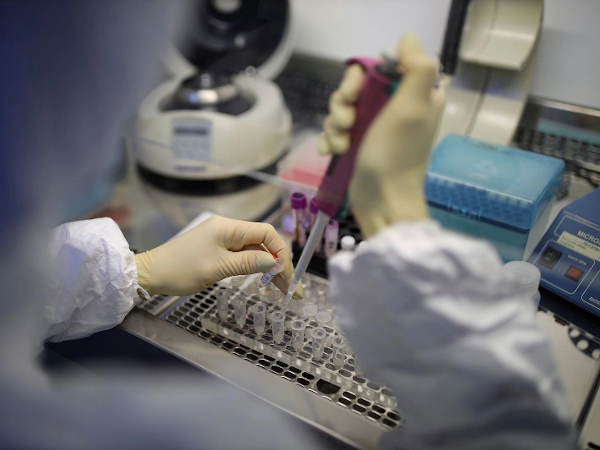
Researchers at Rajiv Gandhi Centre for Biotechnology (RGCB), Thiruvananthapuram are in the final stages of developing a kit that promises to help detect SARS CoVID-19 infection as early as four days post-infection of the virus.
The kit will be able to detect two types of antibodies – Immunoglobulin M (IgM) and Immunoglobulin G (IgG). IgM is the first antibody that appears in human body when it is exposed to a virus or any other antigen. Presence of IgG antibody in the body, in contrast, is indicative of an individual’s immune status to particular pathogens.
IgM is the first antibody that appears in human body when it is exposed to a virus or any other antigen.
Thus, if a person is found to have IgM antibodies even while being asymptomatic, it can be taken that he or she is infected. The person can then be isolated and sent for treatment. However, if someone is found to have IgG antibodies, it can be considered that the person has already had the infection and would be immune to new infections.
This kit is being developed in collaboration with uBIO technologies, which is a company incubated at RGCB’s BioNest facility at Kochi. The company has been producing diagnostic kits and other such devices for DRDO and other organisations and has been exporting its products to over 25 countries. India Science Wire
Source: Vigyan Prasar
You may also like
-
Self-assembly of Organic Molecules Opens a New Path to Green Hydrogen Production
-
Bi-layered Single-piece Dental Implant Reduces the Need for Surgical Unterventions
-
NASA Invites ISRO Into Moon Base Programme as US Opens Door Wider to Indian Space Startups
-
ISRO Successfully Completes Final EOS-05 Orbit-Raising Manoeuvre
-
Scientists Uncover A Way to Outsmart Quantum Entanglement Loss with A Single Move
