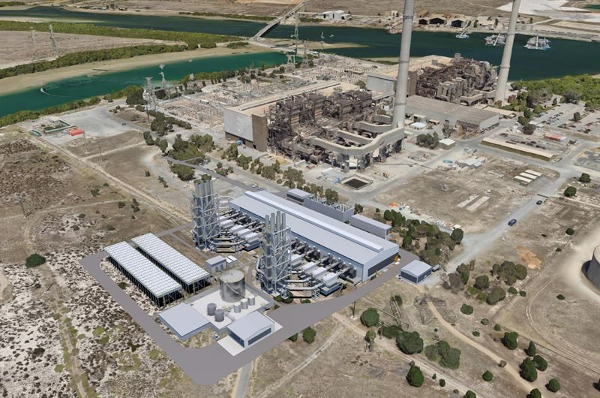
NEW DELHI: Minister of state for atomic energy Jitendra Singh said the “Modi government has earmarked an exclusive budget, approximately Rs 10,000 crore per year, for 10 years for the nuclear plant expansion programme”.
In an interview to TOI, Jitendra Singh said the Modi cabinet’s key decision in its first term to allow JV with PSUs has helped Department of Atomic Energy (DoAE) overcome the financial constraint. “Being a sensitive subject, we could not involve private players. With the nod for JV, PSUs provide funds and DoAE provides them expertise for N-plant set-up.”
He said Delhi, Punjab, Haryana, Himachal and J&K do not have any N-plant. Gorakhpur Haryana Anu Vidyut Pariyojana (GHAVP) will be the first-ever N-plant among the five states. The plant in Haryana “will be up and running in 2 to 3 years” and provide cheap electricity to northern cities. GHAVP, which will have two units of 700MW capacity each, will cost Rs 20,594 crore. The plant, for which land acquisition is complete, will provide employment to 2,000 people.
Singh said, “By 2030, we will double our nuclear energy production. And by 2050, the major source of power will be nuclear energy.” As of March 2018, India has 22 N-reactors in operation in seven N-plants, having a total installed capacity of 6,780 MW. Around 21 new N-reactors with total capacity of 15,700 MW are likely to be set up by 2031.
Source:ToI
Image Courtesy: Global Power Journal
You may also like
-
India’s Strategic Rise Through Free Trade Agreements: Achievements and Impact (2025–26)
-
Reforming for Growth: How Policy Changes Are Transforming India’s Business Environment
-
India to Build First Riverine Lighthouses on Brahmaputra to Boost Inland Waterway Navigation
-
India Assures Energy Security Amid Rising Tensions in the Middle East
-
GPS Technology Transforms Fishing Livelihoods in Car Nicobar
