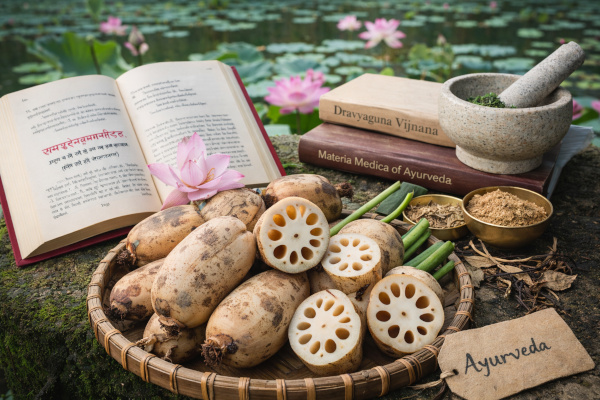
The lotus (Nelumbo nucifera) holds a revered place in Indian civilization, appearing in mythology, spirituality, art, and traditional medicine. While the lotus flower symbolizes purity and spiritual awakening in texts such as the Bhagavad Gita and the Upanishads, Ayurveda also recognizes the therapeutic value of nearly every part of the plant. Among these, the lotus stem, commonly known in India as Kamal Kakdi or lotus root, occupies an important place in traditional Ayurvedic healing and diet.¹
The lotus stem grows beneath the muddy waters of ponds and lakes, yet produces one of the most nutritious and medicinal vegetables in traditional Indian cuisine. Ayurveda regards the lotus plant as a cooling, nourishing, and balancing herb that supports multiple bodily systems. The stem in particular is valued for its ability to regulate digestion, purify blood, strengthen immunity, and restore internal balance.²
Ayurvedic Perspective: Nature and Energetic Qualities
In Ayurvedic philosophy, every food and herb is evaluated according to its Rasa (taste), Virya (potency), and Vipaka (post-digestive effect). Lotus stem is generally described in Ayurvedic materia medica as having sweet and astringent taste (Madhura–Kashaya Rasa), cooling potency (Sheetala Virya), and sweet post-digestive effect (Madhura Vipaka).³
Because of its cooling nature, lotus stem is particularly recommended in conditions associated with excess heat in the body, such as inflammation, bleeding disorders, acidity, and skin irritations. Ayurveda also considers it a nourishing vegetable that strengthens body tissues (Dhatus) while maintaining digestive balance.⁴
A Natural Blood Purifier
One of the most widely cited Ayurvedic benefits of lotus stem is its ability to support blood purification and circulation. Traditional practitioners often recommend lotus root in conditions related to impure blood, including certain skin disorders and inflammatory conditions.
The astringent properties of the stem help regulate minor bleeding and support vascular health. In classical Ayurvedic understanding, foods that stabilize the blood and cool the system are beneficial in managing conditions associated with aggravated Pitta dosha, which governs heat and metabolism in the body.³
Modern phytochemical research also indicates that lotus stem contains polyphenols, flavonoids, and antioxidants, which may help reduce oxidative stress and inflammation in the body.⁵
Supports Digestive Health
Lotus stem is also valued for its ability to improve digestive strength without aggravating internal heat. Its fiber-rich structure supports smooth digestion and promotes regular bowel movement. Ayurveda often emphasizes that digestion (Agni) is the foundation of health, and foods that maintain digestive balance are highly valued.²
The mild sweetness and astringency of lotus stem help soothe the stomach lining and reduce excessive acidity. It is sometimes recommended in traditional dietary practices for individuals experiencing digestive discomfort or mild intestinal irritation.
Strengthening the Respiratory System
In traditional medicine, lotus stem has also been used to support respiratory health. Its cooling and anti-inflammatory properties help calm irritation in the respiratory tract. Lotus root preparations are sometimes used in traditional Asian and Ayurvedic remedies for cough, bronchial irritation, and throat inflammation.⁶
The vegetable is also believed to help reduce mucus accumulation when consumed as part of a balanced diet.
Enhancing Immunity and Vitality
Lotus stem is considered a nourishing food that supports general vitality and immune resilience. Ayurvedic literature often describes lotus as having rejuvenative (Rasayana) qualities that support long-term health when consumed regularly.³
Its combination of nutrients and phytochemicals helps strengthen bodily tissues and supports overall systemic balance.
Nutritional Value of Lotus Stem (per 100 grams)
Modern nutritional science confirms many of the traditional observations about lotus stem. According to the United States Department of Agriculture (USDA) and other nutritional databases, a typical 100-gram serving contains approximately:⁷
- Calories: ~74 kcal
- Carbohydrates: 17 g
- Dietary Fiber: 4–5 g
- Protein: 2.5 g
- Vitamin C: ~44 mg
- Potassium: ~556 mg
- Iron: ~1.2 mg
The high fiber content promotes digestive health, while potassium helps regulate blood pressure and cardiovascular function. Vitamin C acts as a natural antioxidant and supports immune function.
Culinary Use in Traditional Indian Diet
Lotus stem is widely used in various Indian cuisines, particularly in North India and Kashmir. It can be prepared in multiple ways—fried, sautéed, curried, or pickled. Popular dishes include Kamal Kakdi Sabzi and the Kashmiri delicacy Nadru Yakhni, where lotus stem is cooked in yogurt-based gravy with aromatic spices.
From an Ayurvedic perspective, cooking methods also influence the effect of food on the body. Lotus stem cooked with warming spices such as cumin, turmeric, and ginger helps balance its cooling nature and enhances digestibility.
Symbolism and Healing
Beyond its medicinal and nutritional value, the lotus plant carries deep symbolic meaning in Indian philosophy. Emerging pure and beautiful from muddy waters, the lotus symbolizes spiritual elevation and inner resilience. Texts such as the Bhagavad Gita use the lotus as a metaphor for living in the world without attachment.⁸
In many ways, Ayurveda mirrors this symbolism—suggesting that healing, like the lotus itself, arises from harmony between nature and the human body.
Conclusion
The lotus stem is far more than a simple vegetable; it represents a powerful intersection of traditional knowledge and natural nutrition. Revered in Ayurveda for its cooling, nourishing, and balancing properties, lotus stem supports digestion, purifies blood, strengthens immunity, and promotes overall well-being.
In an era when modern diets increasingly move away from traditional foods, rediscovering ingredients like lotus stem offers both nutritional richness and a connection to India’s ancient healing wisdom. Much like the lotus flower that rises unstained from muddy waters, the humble lotus stem reminds us that nature often hides its most powerful medicines beneath the surface.
Reference:
- Sacred Lotus (Nelumbo nucifera) – Encyclopedia Britannica
- Vasant Lad – The Complete Book of Ayurvedic Home Remedies
- P. V. Sharma – Dravyaguna Vijnana (Materia Medica of Ayurveda)
- B. Dash & L. Kashyap – Materia Medica of Ayurveda
- Mukherjee, P. K. – Phytochemical and Pharmacological Review of Lotus
- USDA FoodData Central – Lotus Root Nutritional Profile
- Bhagavad Gita – Chapter 5, Verse 10 (Lotus Symbolism)
You may also like
-
Yoga Mahotsav–2026 Begins 100-Day Countdown to International Day of Yoga
-
India Moves Closer to Universal Safe Drinking Water Access by 2030
-
Dr Jitendra Singh Honours 26 Young Doctors, Highlights Role of AI and Specialisation in Future Healthcare
-
Chundanga (Turkey Berry): The Bitter Green Healer of the Tropics
-
India’s Transformation into a Global Health Powerhouse — A New Era in Public Health
