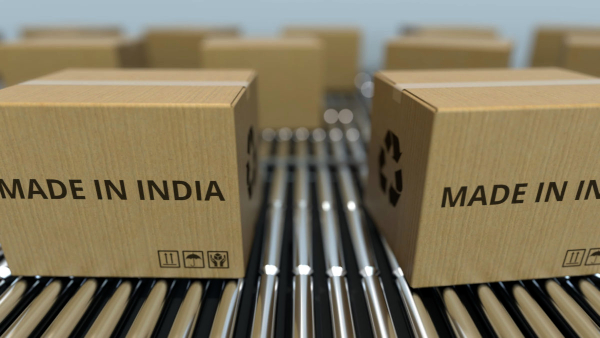
In the period from late 2025 to early 2026, India accelerated its engagement with global trade partners through a series of high‑impact Free Trade Agreements (FTAs) and economic pacts, marking one of the most significant chapters in the country’s international economic diplomacy. These deals were aimed at deepening market access, enhancing export competitiveness, integrating Indian industries into global supply chains, and diversifying trade relationships globally.
A New Wave of FTAs
The Ministry of Commerce and Industry’s official documentation lists a set of major agreements that were signed, announced, or in advanced stages during the 2025‑26 period. These agreements span multiple continents, covering advanced economies, key emerging markets, and strategically important partners.
1. India – United States of America (Interim Framework)
Announced on February 2, 2026, India and the U.S. agreed on an interim trade framework with provisions to reduce additional tariffs on a wide range of Indian exports. Under this framework, the U.S. committed to preferential market access and tariff elimination across products including textiles, leather goods, plastics, machinery, and pharmaceuticals — contingent on final negotiations. The pact also seeks to remove Section 232 national security tariffs on certain metals and provide tariff rate quota access for automotive parts.
Although this framework agreement is not fully operational yet, it signals a major shift in the economic relationship between India and the world’s largest economy, balancing tariff concessions with protections for sensitive sectors such as rice, dairy, and poultry.
2. India – European Union FTA
The most celebrated achievement in this phase was the India–European Union Free Trade Agreement, formally announced on January 27, 2026. This deal has been described in global media as the “mother of all FTAs” because of its scale and strategic importance.
Under this historic agreement:
- 96.8% of tariff lines will offer preferential market access.
- Around 90.7% of India’s export value to the EU becomes duty‑free upon implementation.
- More than USD 33 billion in labour‑intensive exports (textiles, apparel, leather, gems & jewellery) stand to benefit significantly.
- Agriculture products such as tea, coffee, spices, vegetables, and processed foods gain preferential access on approx 87% of relevant tariff lines.
- Sensitive items like dairy, cereals, and poultry were excluded to safeguard domestic interests.
- Services commitments cover 144 subsectors, including IT, professional services, business services, and education.
- Provisions for business mobility and support for AYUSH practitioners further deepen integration.
This agreement not only expands traditional merchandise trade but also incorporates services, mobility of professionals, and digital trade components, reflecting contemporary trade priorities.
3. India – New Zealand FTA
Announced on December 22, 2025, the India‑New Zealand Free Trade Agreement offers zero duties on 100% of Indian exports into New Zealand. It encompasses key sectors including agriculture, processed foods, textiles, leather, and engineering goods. Services liberalisation covers over 118 sectors, and includes enhanced work‑study pathways for students and visa facilitation for skilled professionals. Additionally, New Zealand committed to investing USD 20 billion in India over 15 years, strengthening mutual economic linkages.
4. India – Oman CEPA
The Comprehensive Economic Partnership Agreement (CEPA) with Oman was signed on 18 December 2025. Under this pact:
- Indian exports enjoy 100% duty‑free market access across Oman’s tariff lines (98.08% coverage), representing nearly 99.38% of India’s exports to the Gulf nation.
- Key beneficiary sectors include textiles, agricultural and processed foods, precision instruments, transport equipment, and gems & jewellery.
- Services liberalisation includes expanded intra‑corporate transferee ceilings, recognition of foreign qualifications, and first‑of‑its‑kind provisions for professional mobility.
5. India – UK CETA
Signed on 24 July 2025, the Comprehensive Economic and Trade Agreement (CETA) with the United Kingdom delivers unprecedented duty‑free access for Indian exports (almost 99% of export value and tariff lines). This covers manufactured goods, high technology items, and agricultural products, with tariff concessions effective from Day One. It also opens services markets across 137 subsectors, including IT, telecom, finance, and professional services, alongside simplified visa pathways for Indian professionals.
Broader Impact and Strategic Gains
Collectively, these FTAs have provided India preferential market access to roughly 70% of global GDP and trade flows, encompassing 38 advanced economies as partners.
This expansion of trade agreements has been associated with:
- A strengthening of exports, with cumulative exports reaching USD 720.76 billion in April–January 2025‑26, growing over 6% year‑on‑year.
- Enhanced global market penetration for sectors such as electronics (India is the world’s second‑largest mobile manufacturer), petroleum products, pharmaceuticals, automobiles, and textiles.
- Institutional reforms like the Export Promotion Mission and production‑linked incentives (PLI) supporting MSMEs, infrastructure, and supply chain competitiveness domestically.
While India’s trade deficit with FTA partners has risen in some quarters, prompting calls for enhanced competitiveness, the strategic value of these pacts lies in diversifying export markets, advancing services trade, and embedding India more deeply into global value chains.
Looking Ahead
India’s FTA strategy continues to evolve beyond mere signing of agreements, focusing increasingly on effective utilisation, awareness building among exporters, and securing balanced, mutually beneficial terms with future partners.
Negotiations with other key economies — including Canada, Chile, the Gulf Cooperation Council, and Mercosur members — signal that India’s global trade agenda remains ambitious and forward‑looking.
Source: PIB
You may also like
-
Reforming for Growth: How Policy Changes Are Transforming India’s Business Environment
-
India to Build First Riverine Lighthouses on Brahmaputra to Boost Inland Waterway Navigation
-
India Assures Energy Security Amid Rising Tensions in the Middle East
-
GPS Technology Transforms Fishing Livelihoods in Car Nicobar
-
India–Finland Ties Enter New Phase as President Alexander Stubb Concludes State Visit to India
)