India’s export sector continued to demonstrate resilience and momentum at the start of 2026, with the country’s total exports registering a strong year-on-year growth in January. According to the latest data released by the Ministry of Commerce and Industry, India’s combined merchandise and services exports rose by 13.17 percent to $80.45 billion in January 2026, compared with $71.09 billion in January 2025. The figures reflect the continued expansion of India’s trade footprint despite global economic uncertainties, fluctuating commodity prices, and geopolitical tensions affecting supply chains.
The growth was largely powered by the services sector, which once again emerged as the key driver of India’s export performance. Services exports surged to $43.90 billion in January 2026, recording a substantial increase compared with the $31.12 billion recorded during the same month last year. India’s services sector has steadily strengthened its global presence over the past decade, particularly in areas such as information technology, financial services, business consulting, engineering design, and digital platforms. The rapid digital transformation across the world has further amplified demand for India’s skilled workforce and technology-driven service offerings.
Merchandise exports, which represent the physical goods shipped abroad, stood at $36.56 billion in January 2026, compared with $39.97 billion in January 2025. While merchandise exports experienced some moderation due to softening demand in certain global markets, several sectors continued to perform steadily. Engineering goods, pharmaceuticals, electronics, chemicals, and agricultural products remain among the major contributors to India’s merchandise export basket.
Government officials have pointed out that India’s export performance is taking place in a challenging international environment marked by slowing economic growth in some developed economies, disruptions in global trade routes, and continuing geopolitical tensions in key regions. Despite these headwinds, India has managed to maintain a stable trajectory in its export sector by diversifying markets, strengthening trade partnerships, and expanding its manufacturing and services capabilities.
At the same time, India’s imports also recorded growth during the month. Total imports rose to $90.83 billion in January 2026, compared with $77.41 billion in January 2025. The increase in imports was driven by higher demand for energy products, industrial raw materials, electronics, and capital goods required to sustain India’s expanding industrial and infrastructure sectors.
As a result, the country recorded an overall trade deficit of $10.38 billion in January 2026. While a trade deficit indicates that imports exceeded exports during the month, policymakers often note that such a trend is not unusual for a rapidly growing economy like India, where large volumes of imports are required to support domestic manufacturing, infrastructure projects, and energy needs.
Energy imports, particularly crude oil, continue to play a major role in shaping India’s import bill. As one of the world’s largest energy consumers, India imports a significant portion of its crude oil requirements. Fluctuations in global oil prices can therefore have a direct impact on the country’s trade balance. However, India has increasingly sought to diversify its energy sources and suppliers to mitigate risks arising from global supply disruptions.
The services sector’s strong performance has also helped offset some of the pressures faced by merchandise exports. India’s IT and digital services industries have built a formidable reputation globally, serving clients across North America, Europe, and Asia. Indian technology firms and service providers continue to benefit from the global demand for cloud computing, artificial intelligence, cybersecurity, data analytics, and digital transformation solutions.
In recent years, India has also focused on expanding its export capabilities through various policy initiatives and trade agreements. The government has actively pursued Free Trade Agreements (FTAs) and economic partnerships with several countries and regional blocs, aiming to provide Indian businesses greater access to global markets. Agreements with the United Arab Emirates and Australia, along with ongoing negotiations with the European Union and the United Kingdom, are expected to open new opportunities for exporters.
In addition to trade agreements, the government has launched several initiatives aimed at strengthening India’s manufacturing base and improving export competitiveness. Programs such as the Production Linked Incentive (PLI) scheme are designed to encourage domestic manufacturing in key sectors including electronics, pharmaceuticals, automotive components, and renewable energy equipment. By expanding manufacturing capacity and improving supply chain efficiency, these initiatives aim to boost India’s merchandise exports in the long run.
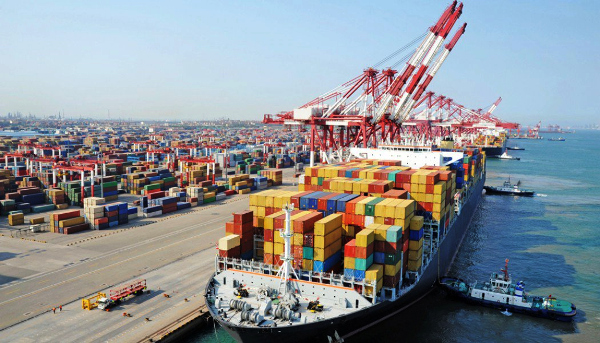
Infrastructure development has also played an important role in supporting export growth. The expansion of port capacity, improvements in logistics networks, and the digitization of customs processes have helped reduce the time and cost associated with international trade. India’s logistics ecosystem is gradually becoming more efficient, enabling exporters to compete more effectively in global markets.
Looking ahead, policymakers remain cautiously optimistic about India’s trade outlook. While global economic conditions remain uncertain, India’s large domestic market, growing manufacturing sector, and strong services industry provide a solid foundation for sustained export growth. Continued efforts to diversify export markets, promote innovation, and strengthen supply chains are expected to further enhance the country’s trade resilience.
The January 2026 export figures therefore highlight a broader trend in India’s economic journey — one where services, technology, and manufacturing together are expanding the country’s role in global trade. As India continues to integrate more deeply into international supply chains and strengthen its economic partnerships around the world, its export sector is likely to remain a critical pillar of national growth and global engagement.
Source: News on Air
You may also like
-
India Pumps 5,000 Tonnes of Diesel to Bangladesh, Boosting Cross-Border Energy Cooperation
-
India’s Coal Sector Achieves Major Production Milestone
-
India’s Economy Could Grow Eightfold by 2047, Says NSA Ajit Doval
-
Kathua in J&K Emerges as New Pharmaceutical Hub as ₹600-Crore Orchid Pharma Facility Takes Shape
-
Indian Railways Renews Over 54,600 km of Tracks Since 2014 to Strengthen Safety and Speed
