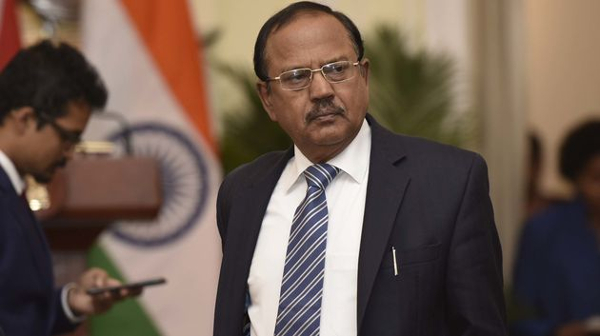
India’s economic trajectory could witness a dramatic transformation over the next two decades, with the country’s Gross Domestic Product potentially expanding nearly eightfold by the time it celebrates 100 years of independence in 2047. This bold prediction was made by India’s National Security Advisor, Ajit Doval, during an address to graduating students at the convocation ceremony of Indian Institute of Technology Madras in Chennai.
Speaking about India’s long-term prospects, Doval expressed strong confidence in the nation’s economic and technological future. According to him, if India sustains high growth and leverages its demographic advantage, the country’s GDP could expand to nearly $32 trillion by 2047, a massive leap from its current size.
Such economic expansion would also significantly raise living standards across the country. Doval noted that India’s per capita income could rise from around $2,500 today to nearly $22,000 by the time the nation marks its centenary of independence.
A central factor behind this optimistic outlook, he said, is India’s demographic strength. By 2047, the country could have a working population of about 1.1 billion people, making it the largest workforce in the world. This workforce, he suggested, will be increasingly skilled and capable of contributing to multiple sectors including technology, manufacturing and innovation.
Doval emphasized that India’s demographic profile provides a major advantage compared with many other global powers. While India’s workforce is expected to expand and become more productive, countries such as China may face demographic headwinds due to shrinking working-age populations in the coming decades.
Highlighting the role of technology in shaping the country’s future, Doval urged young graduates to take the lead in advancing cutting-edge innovations such as artificial intelligence and next-generation communications. He pointed to the example of India’s rapid progress in developing indigenous alternatives in telecommunications technology as evidence of the country’s growing technological capabilities.
The National Security Advisor also stressed that India’s rise will not be driven by economic growth alone. The country’s civilizational heritage, social resilience and expanding middle class will play an important role in shaping its global influence. Together with a large and skilled workforce, these factors could transform India into one of the most powerful economies and strategic actors in the world by 2047.
Addressing the graduating students, Doval reminded them that the realization of this vision depends largely on the next generation of innovators, entrepreneurs and leaders. The students entering the workforce today, he said, will be at the peak of their careers when India marks a century of independence. Their choices, capabilities and commitment could become the decisive “X-factor” determining whether India achieves its ambitious economic and strategic goals.
As India moves toward the milestone year of 2047, the country’s long-term development vision increasingly centers on innovation, demographic strength and economic resilience. If these elements align successfully, the coming decades could m
References:
You may also like
-
Kathua in J&K Emerges as New Pharmaceutical Hub as ₹600-Crore Orchid Pharma Facility Takes Shape
-
Indian Railways Renews Over 54,600 km of Tracks Since 2014 to Strengthen Safety and Speed
-
Cabinet Clears Key Amendments to FDI Policy for Investments from Land-Border Countries
-
India’s Strategic Rise Through Free Trade Agreements: Achievements and Impact (2025–26)
-
Reforming for Growth: How Policy Changes Are Transforming India’s Business Environment
