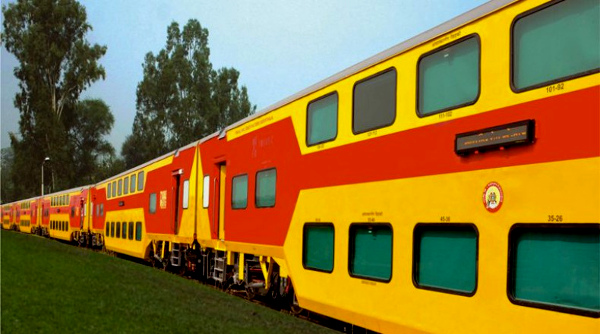
The Indian Railways is likely to introduce a new ‘zero-based’ timetable soon. Once it is introduced, the timetable is expected to cut down travel time of long-distance trains by at least 30 minutes to six hours on average, Railway Board Chairman and CEO VK Yadav confirmed a few days ago.
The timetable is likely to be introduced by the national transporter once the coronavirus situation stabilised.
The revised timetable is based on the premise that the existence of every train and stoppage must be justified based on goals of providing transportation with “optimum and efficient utilisation of the available resources”.
Idea behind new timetable
Yadav had said that the idea behind the new timetable is to increase the occupancy of “poorly-patronised” trains and to also reduce waitlisting in those trains which are in high demand.
“Once the timetable is operational, the journey time of long-distance trains will be reduced between half an hour and six hours on an average. Under this timetable the speeds of trains will also increase,” Yadav said.
According to an Indian Express report, the national transporter is likely to generate around Rs 8,000 crore per year through savings and earnings after the time-table is implemented. The report also notes that in the new timetable, around 600 trains with traditionally low passenger ration will be taken off the system, while 400 trains will be either merged or upgraded.
Rationalising stops, revamping facilities
As part of the plan, the Indian Railways is also planning to “rationalise stoppages” for optimum efficiency. Around 10,000 stoppages could be done away with as part of the plan.
The new timetable, which is readied in collaboration with IIT-Bombay, will also help to create around 15 per cent more dedicated paths for freight trains. It will ultimately help the national transporter generated more revenue from freight operations.
A livemint.com report noted that the ‘zero timetable’ concept also involved a provision for integrated ticketing, access for persons with disabilities, leisure facilities, check-in facilities, transfer and transit facilities among other things. It will also include amenities such as travelators, escalators, elevators at stations that will be designated as “hubs”.
Source: India Today
You may also like
-
Civil Aviation Ministry Monitors Middle East Airspace Disruptions; Relief Flights Planned for Stranded Passengers
-
CCS Reviews West Asia Crisis; Focus on Safety of Indian Nationals and Regional Stability
-
Unique Identification Authority of India Partners with Google to Display Authorised Aadhaar Centres on Maps
-
From Colonial Symbol to Sovereign Statement: Rajagopalachari’s Bust Replaces Lutyens – VIKSIT BHARAT BY 2047
-
Sarvam AI: Powering a Made-in-India AI Revolution
