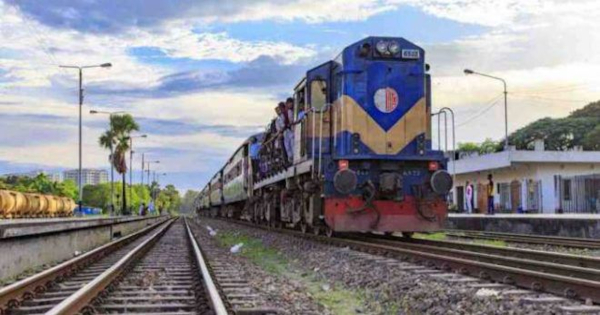
India’s railway infrastructure has undergone significant modernisation over the past decade, with more than 54,600 kilometres of railway tracks renewed between 2014 and February 2026, according to the government. The large-scale track renewal programme undertaken by Indian Railways is aimed at improving safety, reliability, and speed potential across the country’s rail network.
The information was provided by Ashwini Vaishnaw in a reply to questions in the Lok Sabha, where he highlighted the steps taken to modernise track infrastructure and enhance train operations.
Continuous Track Renewal for Safe Train Operations
According to the ministry, track renewal is an ongoing process carried out based on several criteria including track age, traffic density, and physical condition. Renewal works are prioritised after evaluating these parameters to ensure that tracks remain safe for trains to operate at their designated speeds.
Safety remains a central focus for Indian Railways. A structured system of inspections and maintenance has been established under the guidelines of the Indian Railways Permanent Way Manual, which governs track monitoring and upkeep across the network.
Railway tracks are regularly inspected by designated officials through daily patrols, on-foot inspections, trolley inspections, and footplate or rear-window inspections conducted during train movements.
Advanced Monitoring Technologies
To supplement manual inspections, Indian Railways has deployed several advanced monitoring technologies to assess the health and geometry of tracks.
These include Track Recording Cars (TRC) and the Oscillation Monitoring System (OMS), which operate across the entire railway network at scheduled intervals. These systems measure track alignment, stability, and vibration characteristics to identify potential maintenance requirements.
The data collected from these inspections enables authorities to carry out timely maintenance interventions, ensuring that safety standards are maintained throughout the network.
Modern Track Infrastructure and Materials
As part of its infrastructure upgrade programme, Indian Railways has introduced modern track structures and improved engineering technologies.
Primary track renewals now use 60-kg rails with 90 Ultimate Tensile Strength (UTS) along with wider and heavier pre-stressed concrete sleepers (PSC) and elastic fastening systems. In addition, fan-shaped turnout layouts and H-beam sleepers are being installed on girder bridges to improve structural reliability.
Other improvements include the use of thick web switches and weldable CMS crossings in turnout renewal works, which enhance durability and reduce maintenance requirements.
Indian Railways has also increased the supply of 260-metre long rail panels, which significantly reduces the need for welded joints along tracks. Fewer joints improve ride quality while also enhancing operational safety.
Mechanisation and Improved Maintenance Systems
Modern welding techniques such as flash butt welding are being adopted to strengthen rail joints. At the same time, Indian Railways is expanding the use of mechanised track maintenance systems to ensure greater reliability and efficiency.
High-output track tampers, point-and-crossing tampers, and advanced rail grinding machines are now being deployed to improve track stability and maintain optimal geometry.
Track laying and renewal activities have also been mechanised through specialised equipment such as PQRS (Portal Quick Relaying System), TRT (Track Renewal Train), and T-28 track machines.
To further improve monitoring and maintenance, Indian Railways has introduced Integrated Track Monitoring Systems (ITMS) and portable track measuring trolleys that continuously record track parameters, particularly in railway yards.
Data from inspections and monitoring equipment is integrated into a web-enabled Track Management System (TMS), enabling detailed analytics and more precise planning of maintenance activities.
Increased Speed Potential Across the Rail Network
These modernisation efforts have significantly improved the speed potential of India’s railway tracks.
In 2014, only 6.3 percent of the network—about 5,036 km—was capable of supporting speeds of 130 kmph or higher. By February 2026, this figure had increased more than threefold to 23,713 km, representing 22.4 percent of the network.
Similarly, track sections capable of speeds between 110 kmph and 130 kmph have increased from 26,409 km (33.3 percent) in 2014 to 62,036 km (58.7 percent) in 2026.
At the same time, the share of track segments with speed potential below 110 kmph has declined sharply from 60.4 percent in 2014 to 18.9 percent in 2026.
Overall, the total track network under these speed classifications has expanded from 79,342 km in 2014 to 105,672 km in 2026, reflecting both infrastructure expansion and upgrades.
Strengthening Safety and Efficiency
Indian Railways has also implemented additional safety measures, including interlocking of level crossing gates and the use of advanced phased-array ultrasonic technology for testing rails and welds.
Together, these initiatives are part of a broader strategy to modernise India’s railway infrastructure, improve passenger comfort, and enhance freight movement efficiency.
With continued investment in track renewal, advanced monitoring systems, and mechanised maintenance technologies, Indian Railways aims to further strengthen safety standards while enabling higher-speed train operations across the expanding rail network.
Reference
- Press Information Bureau – “Indian Railways Renews 54,600 km of Tracks During 2014–26 to Ensure Safe Train Operations,” March 11, 2026.
You may also like
-
India Moves Toward Satellite Life-Extension Technology with Support for OrbitAID
-
India Notifies Standards for Green Ammonia and Green Methanol to Boost Green Hydrogen Economy
-
India’s Data Centre Capacity Quadruples Since 2020 as AI Demand Accelerates
-
Cabinet Clears Key Amendments to FDI Policy for Investments from Land-Border Countries
-
India’s Strategic Rise Through Free Trade Agreements: Achievements and Impact (2025–26)
