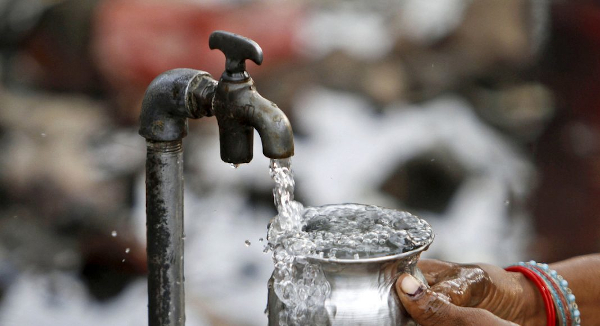
India has made substantial progress toward ensuring universal access to safe and affordable drinking water, a key target under the global development agenda. The Government of India has reiterated its commitment to achieving universal safe drinking water access by 2030, in alignment with United Nations Sustainable Development Goal 6.1, which calls for equitable and affordable drinking water for all.
The flagship programme driving this effort is the Jal Jeevan Mission (JJM), launched in August 2019 by the Government of India in partnership with state governments. The mission seeks to provide safe, adequate, and regular tap water supply to every rural household across the country. Although drinking water management falls under the jurisdiction of state governments, the Union government supports the states through technical guidance and financial assistance.
Rapid Expansion of Rural Tap Water Connections
At the time of the mission’s launch in 2019, only 3.23 crore rural households—about 16.7 percent of the total—had access to tap water connections in their homes. Since then, the programme has expanded rapidly.
According to official data reported by states and Union Territories as of 3 March 2026, the mission has delivered more than 12.58 crore additional tap water connections in rural areas. As a result, out of approximately 19.36 crore rural households in India, around 15.82 crore households—representing 81.71 percent—now have tap water supply in their homes.
The data reflects a dramatic improvement in rural water infrastructure over the past six years. The detailed status of tap water connections—covering state-wise, district-wise, and village-wise progress—is publicly available on the Jal Jeevan Mission dashboard maintained by the Ministry of Jal Shakti.
Recognising the importance of completing the programme, **Nirmala Sitharaman announced in the Union Budget 2025–26 that the Jal Jeevan Mission would be extended until 2028 to ensure its objectives are fully realised.
Tackling Water Quality Challenges
Beyond expanding access, the mission also focuses on improving water quality and safety. During the planning of water supply schemes, special priority is given to habitations affected by chemical contamination, particularly arsenic and fluoride.
State governments have been advised to develop piped water supply systems based on alternative safe sources for villages where groundwater contamination is prevalent. In the interim, authorities have installed Community Water Purification Plants (CWPPs) in affected areas to ensure access to safe drinking water for daily needs.
These purification systems typically provide 8–10 litres of potable water per person per day, sufficient for drinking and cooking until permanent piped supply infrastructure is commissioned.
According to the Jal Jeevan Mission’s Integrated Management Information System (JJM-IMIS), all rural habitations in India currently have access to safe drinking water free from arsenic and fluoride contamination through short-term measures, even in areas where long-term infrastructure projects are still underway.
District-Level Water Quality Challenges
Despite progress, certain regions continue to face water quality issues. Government data identifies 11,488 quality-affected habitations across several states, including **Assam, Bihar, Odisha, Punjab, Rajasthan, Tripura, and West Bengal.
Among the districts most affected is Barmer district in Rajasthan, which alone accounts for 5,472 quality-affected habitations. Other districts with significant numbers include Balotra (1,015 habitations) and Phalodi (438 habitations) in Rajasthan, and Darrang district in Assam, with 425 affected habitations.
In Kerala, where water infrastructure is comparatively better developed, a smaller number of affected habitations have been reported across districts such as Alappuzha, Kannur, Kozhikode, and Malappuram.
Urban Water Infrastructure Initiatives
While the Jal Jeevan Mission focuses primarily on rural households, the government is simultaneously working to improve water infrastructure in cities through the Atal Mission for Rejuvenation and Urban Transformation (AMRUT) and AMRUT 2.0.
Launched on 25 June 2015, the AMRUT programme covers 500 cities across India, focusing on improving water supply, sewerage and septage management, storm water drainage, urban green spaces, and non-motorised transport infrastructure.
Under AMRUT, 1,403 water supply projects worth ₹43,378.59 crore have been initiated across the country.
The programme was further expanded with the launch of AMRUT 2.0 in 2021, which aims to make cities “self-reliant” and “water secure.” A key objective of AMRUT 2.0 is achieving universal sewerage and septage management coverage in the 500 AMRUT cities.
So far, 3,531 water supply projects worth ₹1,19,670.51 crore have been approved under AMRUT 2.0.
A Long Road Toward Water Security
The progress achieved since 2019 demonstrates the scale of India’s push toward improving water access. Expanding rural tap water coverage from 16.7 percent to over 81 percent in less than seven years represents one of the fastest infrastructure rollouts in the country’s history.
The information was presented by **V. Somanna in a written reply in the Rajya Sabha.
With the continued implementation of Jal Jeevan Mission, urban water programmes such as AMRUT, and sustained coordination between the central and state governments, India aims to move steadily toward achieving universal safe drinking water access by 2030, ensuring that every household—rural and urban—has reliable access to clean and safe water.
References
- Press Information Bureau – Government of India press release on universal safe drinking water access (March 9, 2026).
- Jal Jeevan Mission official dashboard and reports.
- Atal Mission for Rejuvenation and Urban Transformation programme documents.
- Rajya Sabha parliamentary reply by Minister of State for Jal Shakti.
You may also like
-
The Ayurvedic Benefits of Lotus Stem: The Healing Power of Kamal Kakdi
-
CARA Issues Nationwide Directions to Strengthen Adoption Procedures and Safeguard Children’s Identity
-
Chanakya Niti – Chapter 3
-
Government Launches Bharat-VISTAAR: AI-Powered Digital Platform for Farmers
-
Yoga Mahotsav–2026 Begins 100-Day Countdown to International Day of Yoga
