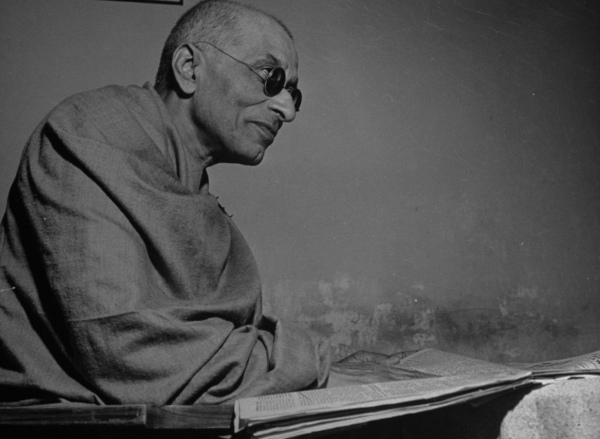
When India attained independence in August 1947, political freedom was achieved, but the formal structures of the colonial state still lingered. The final constitutional break from British authority came in 1948 with the appointment of Chakravarti Rajagopalachari as the first and only Indian Governor-General of independent India, a role he held from June 21, 1948, to January 26, 1950. With the adoption of the Constitution and India’s transition into a republic, the office of Governor-General was abolished, making Rajagopalachari a singular figure in Indian constitutional history.
Born on December 10, 1878, in Thorapalli village of present-day Tamil Nadu, Rajagopalachari was trained as a lawyer before entering public life. He joined the Indian National Congress during the early phase of the freedom movement and soon emerged as one of its most respected leaders. He played a prominent role in the Non-Cooperation Movement, the Civil Disobedience Movement, and the Salt Satyagraha, for which he was imprisoned multiple times by the British colonial government.
Rajagopalachari’s rise was marked not by mass oratory but by intellectual clarity and administrative competence. In 1937, he became the first Indian Chief Minister of the Madras Presidency, governing one of British India’s largest provinces. His tenure focused on education reform, social justice, and fiscal prudence, though some of his policies — particularly the introduction of compulsory Hindi education — sparked controversy and protests.
In 1942, during the Quit India Movement, Rajagopalachari broke ranks with the Congress leadership by advocating negotiation with the British to avoid large-scale violence and economic collapse. While criticised at the time, historians later acknowledged that his approach reflected concern over the human cost of prolonged confrontation, particularly as World War II intensified pressures on the subcontinent.
After independence, Rajagopalachari was appointed Governor of West Bengal, a state grappling with the immediate aftermath of Partition. His administrative handling of refugee rehabilitation and communal tensions earned him the confidence of Prime Minister Jawaharlal Nehru, leading to his appointment as Governor-General following the death of C. Rajagopalachari’s predecessor, Lord Mountbatten.
As Governor-General, Rajagopalachari consciously transformed the office from a colonial institution into a symbolic Indian one. He reduced ceremonial excess, emphasised constitutional restraint, and projected moral authority rather than imperial grandeur. One of his most noted acts was placing portraits of Mahatma Gandhi and Ramakrishna Paramahamsa in Government House, underlining that India’s sovereignty rested on ethical and civilisational foundations rather than colonial legacy.
India officially became a republic on January 26, 1950, and with it, the Governor-General’s office ceased to exist. Rajagopalachari handed over power peacefully, marking the formal end of British constitutional authority in India — a transition completed without upheaval or personal ambition.
In the years that followed, Rajagopalachari served as Chief Minister of Madras State from 1952 to 1954 and later founded the Swatantra Party in 1959, advocating free markets, decentralisation, and individual liberty at a time when state-led socialism dominated Indian policy. His economic views, once considered unconventional, later gained renewed attention during India’s liberalisation debates decades after his death.
Beyond politics, Rajagopalachari was a prolific writer and translator. His retellings of the Ramayana and Mahabharata sold over one million copies, making them among the most widely read modern interpretations of Indian epics. His writings aimed to make classical Indian thought accessible to ordinary readers, reinforcing his belief that India’s modern identity must remain rooted in its cultural heritage.
Rajagopalachari was awarded the Bharat Ratna, India’s highest civilian honour, in 1954, recognising his contributions to public life, governance, and intellectual thought. He passed away on December 25, 1972, at the age of 94.
Today, Chakravarti Rajagopalachari is remembered not merely as an administrator or freedom fighter, but as the man who presided over the final constitutional moment of decolonisation. As the first and only Indian Governor-General, his legacy lies in ensuring that the end of British rule was marked by dignity, continuity, and confidence — a reminder that independence is secured not just through struggle, but through wise stewardship of freedom.]
End Note
Encyclopaedia Britannica, “Chakravarti Rajagopalachari”, biography and public offices,
Wikipedia, “C. Rajagopalachari”, sections on literary works and legacy,
Wikipedia, “Governor-General of India”, historical overview and abolition of the office after 1950,
You may also like
-
Global Dance Overture Brings Indo–Russian Cultural Harmony to Kamani Theatre
-
Kharavela: The Lion of Kalinga Who Rewrote Power, Piety and Prestige in Ancient India
-
INSV Kaundinya Returns to Mumbai: A Voyage that Revives India’s Ancient Maritime Glory
-
The Forgotten War on the Western Coast: The Story of Rani Abbakka Chowta
-
Cabinet Approves Alteration of the Name of the State of “Kerala” to “Keralam”
