Research

News on Science, Technology and Research in India

India’s ‘Highest’ Herbal Park opens at 11,000 Feet

India witnessed on Saturday the inauguration of its “highest” herbal park, at Mana in Uttarakhand’s Chamoli district. The main aim of the herbal park, according to Sanjiv Chaturvedi, Chief Conservator of Forests (Research), is to “conserve various medicinally and culturally important alpine species, and facilitate a study on the propagation of these species, as well as their ecology.”

India Records 572% Growth in Grant of Patents in Last 7 Years

Minister of Commerce and Industry, Consumer Affairs & Food & Public Distribution and Textiles Shri Piyush Goyal today conferred the National Intellectual Property Awards 2020 to the winners at an event. Dr GiridharAramane, Secretary, Ministry of Road Transport and Highways and Department for Promotion of Industry and Internal Trade and other senior officials were also present at virtual event.

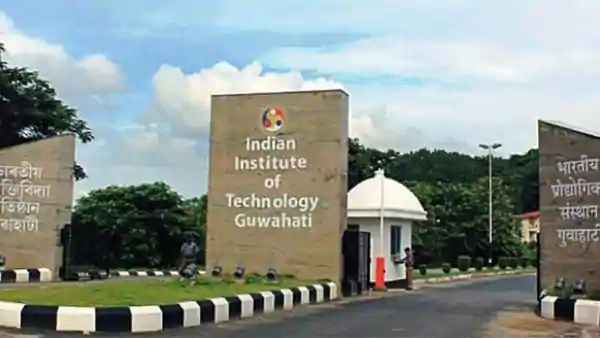
IIT Guwahati Researchers Develop New Memory Architectures Methods to Boost Processor Speeds

IIT Guwahati researchers have developed methods to solve the problems in computer systems domain. Specific contributions being in multi-core processor-based systems that need an equally large on-chip memory to commensurate the data demands of applications and hence preventing energy consumption to ensure the temperature remains under the thermal design power (TDP) budget.

Chandrayaan-2 Detects Presence of Water Molecules on Moon

According to data acquired from the expedition, Chandrayaan-2, ISRO’s second lunar mission, has identified the existence of water molecules on the moon. The imaging infrared spectrometre (IIRS) is one of the payloads on-board Chandrayaan-2, which is put in a 100 km polar orbit to gather worldwide scientific data, according to a study co-authored by Mr. A S Kirankumar, former Indian Space Research Organisation (ISRO) chairman.

Porous Carbon Nano-Particles from Waste Onion Peels Used for Making Soft Actuators with Enhanced Photo-Mechanical Capacity

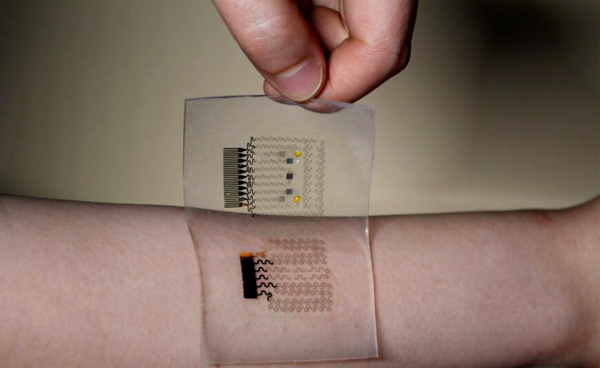
Using porous carbon nanoparticles from waste onion peels, a team of scientists have developed soft robotic actuators with enhanced photomechanical capacity. The actuators can act as efficient traps for the illuminating low-power near-infrared (NIR) light and can convert a control signal into mechanical motion with bioengineering applications such as drug delivery, wearable and assistive devices, prostheses, and even artificial organs.