Research

News on Science, Technology and Research in India

Researchers Design White Light Emitters for LED Applications

Researchers at Indian Institute of Technology (IIT) Madras have successfully developed a white light emitter for use in LEDs. The development of energy-efficient Light Emitting Diodes or LEDs replaced the energy-inefficient incandescent lamps in lighting and display applications. While LEDs have been available in almost all colours, white LEDs are a more recent development.

Clue to Mystery of Solar Flares & CMEs in Regions on Sun with Disturbed Magnetic Field can Help Improve Solar Weather Predictions

Astronomers exploring regions on the Sun with disturbed magnetic fields or active regions that sometimes exhibitsolar flares without accompanying Coronal Mass Ejection (CME) have confirmed that changing structure of the magnetic field on the Sun’s surface determined whether a flare or a CME was emitted. This understanding will be useful in improving predictions of solar weather, which can affect electrical, and communication systems in Earth and satellite systems in space.

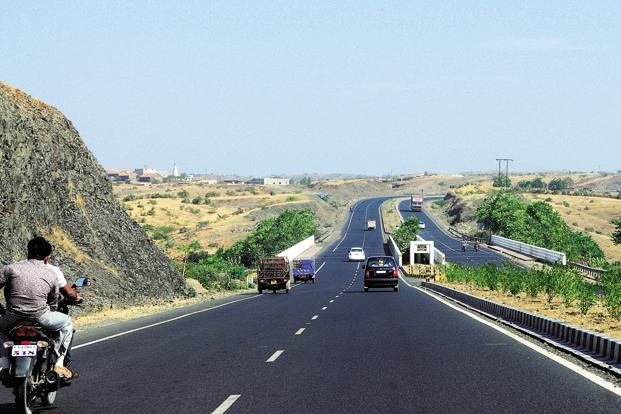
IIT Researchers Working on First-of-its Kind Geography Based Smart Speed Warning System

“Traditional warning systems are based on the fixed speed threshold, however, the concept of a smart warning system is based on upcoming road infrastructure and vehicle location. On approaching curves along a roadway, including blind curves or hairpin bends, vehicles equipped with such a system will warn drivers in advance, which will allow drivers to adopt corrective actions and avoid accidents,” he added.

Tea & Banana Waste Used to Develop Non-Toxic Activated Carbon

A team of scientists have used tea and banana waste to prepare non-toxic activated carbon, which is useful for several purposes like industrial pollution control, water purification, food and beverage processing, and odour removal. The newly developed process avoids usage of any toxic agent for synthesizing activated carbon, thus making the product cost-effective as well as non-toxic.

Tuning Viscosity and Elasticity of Fluids can Make Transport and Processing in Food Industries More Efficient

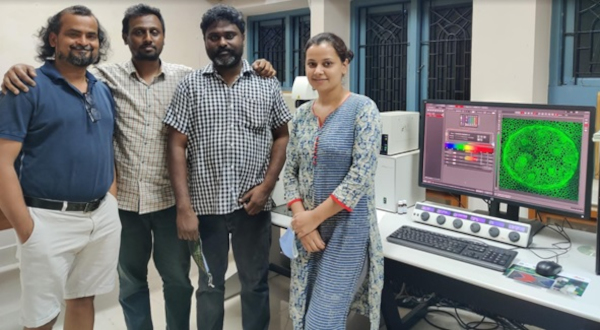
Scientists from Raman Research Institute, an autonomous institute of the Department of Science & Technology, Govt. of India, have found that by changing the viscosity of the displacing fluid and the concentration-dependent elasticity of the displaced fluid, the instability can be reduced and the roughness of the interfacial pattern and the efficiency of displacement can be controlled.