Akhanda Bharath

The vastness of the Bharath, the land rich in heritage and cultural diversity

Ramayana in Vietnam: Champa, Hindu Deities and the Sacred Cultural Bridge With Bharat

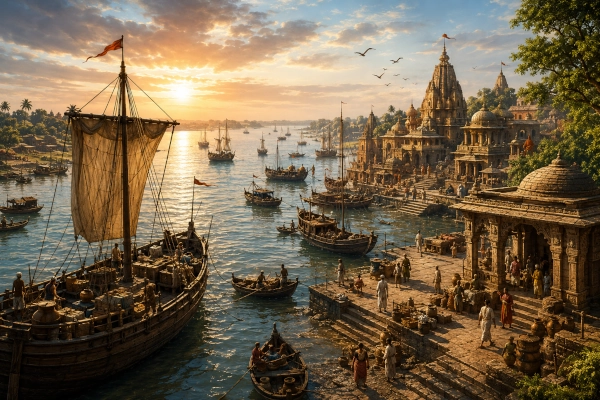
The ancient Champa kingdom flourished along the coast of present-day central and southern Vietnam for many centuries. Located on important maritime routes between India, China and Southeast Asia, Champa became a powerful cultural meeting ground. Indian merchants, priests, scholars and maritime networks carried Sanskrit, Hinduism, Buddhism, temple architecture, royal rituals and epic traditions into the Cham world. Over time, the Cham people created their own refined civilisation, blending Indic religious ideas with local Austronesian culture.

Ramayana Beyond Borders: Akhand Bharat, Tibet, China and the Civilisational Journey of Rama

The Ramayana’s presence in China and Tibet shows the deeper meaning of Akhand Bharat as a civilisational idea. Here, Akhand Bharat is best understood as a sacred-cultural sphere shaped by dharma, knowledge, pilgrimage, literature, philosophy, language and memory. It is not merely a modern political expression. It is the story of how Indian civilisation touched neighbouring regions through wisdom, ethics, devotion and narrative power.

Kerala Varma Pazhassi Raja: The Lion of Kerala Who Turned the Forests of Wayanad into a Battlefield of Freedom

Pazhassi Raja’s greatness came from the way he understood power. He knew that the British East India Company possessed disciplined troops, firearms, revenue machinery and political cunning. He also knew that the people of Malabar possessed something equally powerful: knowledge of the land, loyalty to local authority, control over forest routes and the will to resist outside domination. He converted this strength into one of the earliest and most memorable armed struggles against colonial power in India.

Human Skeletal Remains from Rakhigarhi Transferred to Anthropological Survey of India for Advanced Scientific Research

Rakhigarhi, spread across approximately 550 hectares in Haryana, is widely recognized as the largest known settlement of the Indus-Saraswati Civilization. Archaeological excavations have revealed evidence of continuous habitation from the Early Harappan to the Mature Harappan periods, including planned settlements, drainage systems, craft production centres, trade networks, and burial grounds

Mongolia and the Ramayana: A Forgotten Chapter of Bharat’s Cultural Reach

The Ramayana is central to this world because it carries the idea of Maryada — disciplined conduct, righteous leadership, loyalty, sacrifice and the victory of Dharma. Rama is remembered as the king who places duty above comfort, the warrior who fights for justice, the son who honours his father, the husband who crosses oceans for Sita, and the ruler whose name becomes a standard for good governance.

Ramayana in Japan: How Rama and Sita Travelled Through Buddhism, Deities, Theatre and Anime

This explains why the Japanese Ramayana is not a simple copy of Valmiki’s Ramayana. In the Buddhist world, Rama appears through traditions such as the Dasaratha Jataka, where Rama becomes Rama-Pandita, a figure of patience, discipline and moral wisdom. This Buddhist Rama is less focused on royal conquest and more focused on restraint. The story becomes a lesson in conduct, duty, obedience and emotional control. The epic hero becomes a moral exemplar.

Ethical Warfare in the Ramayana: How Rama Turned Moral Legitimacy into Strategic Power

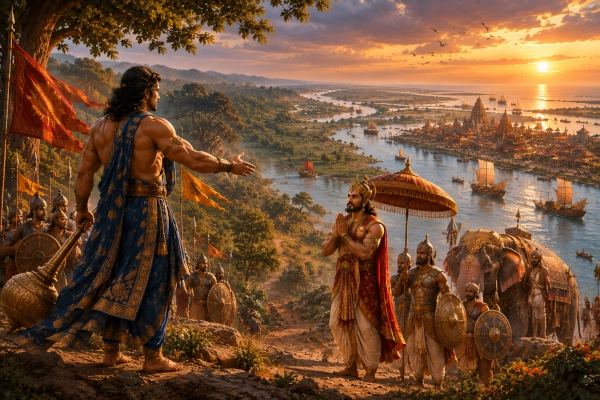
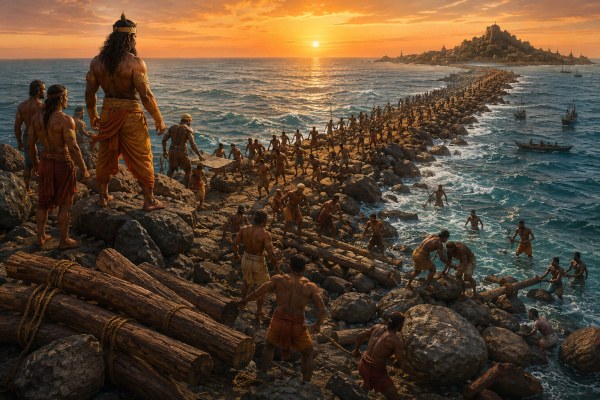
Ethical warfare means that a campaign carries a rightful cause, a disciplined method and a constructive end state. Rama’s war against Lanka follows this structure. The cause is clear. Sita has been abducted and held against her will. Ravana has violated dharma, honour and royal conduct. Rama’s response is built around justice. His purpose is focused. His army marches for rescue and restoration. This clarity gives the campaign moral force.

Symbolic Warfare in the Ramayana: How Rama Won the Moral Battlefield Before the Final Battle

The destruction of Ashoka Vatika turns reconnaissance into psychological warfare. Hanuman damages Ravana’s prized garden, defeats elite warriors and forces the enemy court to respond. This action is military, psychological and symbolic at the same time. The garden represents royal luxury and imperial pride. Its destruction tells Lanka that Ravana’s private world is vulnerable. The enemy is forced to witness the strength of a single warrior from Rama’s side. The message is direct: if one envoy can do this, the full army can do far more.

Morale Management in the Ramayana: The Battlefield Weapon That Kept Rama’s Army Fighting

Rama’s greatest strength as a commander is emotional steadiness. He carries grief, duty and anger, yet his presence gives direction to others. When the army looks toward him, it sees purpose. Rama does not lead through loud display. He leads through clarity, restraint and dharmic conviction. His cause gives the army moral power. The soldiers know they are fighting to rescue Sita, punish adharma and restore rightful order. This transforms the war from a campaign of revenge into a campaign of justice. A morally convinced army stands longer under pressure because it believes the battle has meaning.

Categories