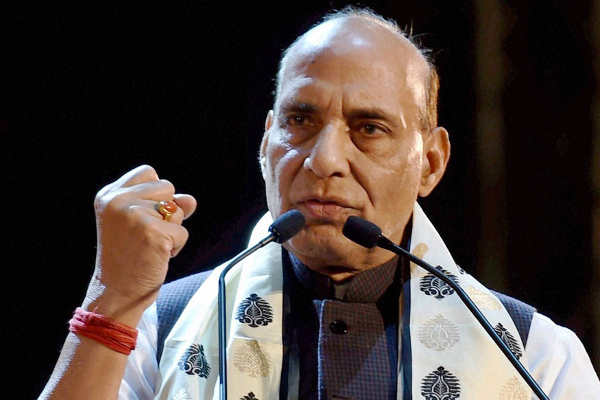
Defence Minister Rajnath Singh is expected to undertake a two-nation visit to Vietnam and South Korea from May 18, in a move that underlines India’s growing focus on defence partnerships across the Indo-Pacific. The visit comes soon after high-level engagements with both Hanoi and Seoul, and is expected to centre on maritime security, defence-industrial cooperation, advanced military technology and regional strategic coordination.
The Vietnam leg will be watched closely because defence ties between New Delhi and Hanoi have gained strong momentum in recent weeks. On May 6, Rajnath Singh held talks in New Delhi with Vietnam’s Deputy Prime Minister and Minister of National Defence General Phan Van Giang. The meeting reviewed the expanding defence relationship and reflected the growing strategic trust between the two countries.
India and Vietnam have also recently upgraded their relationship to an Enhanced Comprehensive Strategic Partnership. Both sides have reaffirmed that defence and security cooperation is a key pillar of the partnership, with focus areas including joint exercises, staff talks, defence industrial cooperation, maritime security, hydrography, information sharing, search-and-rescue operations and naval port calls.
A major point of attention is the possible BrahMos missile deal with Vietnam. Reports suggest that discussions on the supersonic cruise missile system have reached an advanced stage, with the potential deal valued at around ₹5,800 crore. If concluded, Vietnam would become another major Southeast Asian buyer of the BrahMos system after the Philippines, strengthening India’s profile as a defence exporter in the region.
The BrahMos question carries wider strategic meaning. Vietnam sits at the heart of the South China Sea security environment, while India has consistently backed freedom of navigation, respect for international law and a rules-based Indo-Pacific. For Hanoi, a system such as BrahMos would add credible coastal and maritime deterrence. For India, it would mark another step in turning defence exports into a strategic instrument of diplomacy.
Beyond missiles, India is also looking at broader military support for Vietnam. New Delhi has discussed assistance in maintenance, repair and overhaul for Vietnamese military platforms such as Sukhoi-30 fighter aircraft and Kilo-class submarines. This is important because Vietnam operates a large inventory of Russian-origin systems, while India has long experience in sustaining and upgrading similar platforms.
The South Korea leg of the visit is expected to focus more heavily on defence manufacturing, technology transfer and innovation. India and South Korea already have a successful template in the K9 Vajra-T self-propelled howitzer, produced in India by Larsen & Toubro with technology from Hanwha Aerospace. During South Korean President Lee Jae Myung’s India visit in April 2026, both sides agreed to reinvigorate the 2020 Roadmap to Defence Industry Cooperation and explore future platforms such as self-propelled air-defence gun-missile systems.
Another important area is KIND-X, the Korea-India Defence Accelerator, which is being positioned as a bridge between defence start-ups, companies, investors and research institutions from both countries. The model is similar in spirit to India’s defence innovation partnerships with other major strategic partners, but the South Korean angle is particularly valuable because Seoul brings advanced electronics, shipbuilding, artillery, aerospace, missile and manufacturing capabilities.
The visit also comes against the backdrop of South Korea’s own recent diplomatic outreach to India. President Lee’s April visit was the first by a South Korean leader to India in eight years, and the talks covered cooperation in shipbuilding, artificial intelligence and defence. That visit gave fresh political energy to the India–South Korea Special Strategic Partnership.
Taken together, the Vietnam and South Korea visits show India’s Indo-Pacific strategy moving from broad diplomatic signalling to practical defence outcomes. With Vietnam, the emphasis is on maritime security, deterrence, platform support and defence exports. With South Korea, the focus is on advanced manufacturing, co-development and next-generation defence technologies. Both tracks support India’s larger goal of becoming a more active security and industrial partner in the Indo-Pacific.
For New Delhi, this is not just about military diplomacy. It is about building an ecosystem of trusted defence partners across Asia, reducing dependence on limited supply chains, expanding India’s defence export footprint and strengthening the regional balance in a contested maritime theatre. If the Vietnam and South Korea engagements produce concrete results, Rajnath Singh’s visit could become an important marker in India’s next phase of Indo-Pacific defence outreach.
You may also like
-
DRDO Opens Indigenous Thermal Tank Target Technology to Indian Defence Industry
-
China Reduced PLA Deployment Along LAC in 2025 as India Maintained Robust Border Posture: Defence Ministry
-
China Welcomes Modi’s Strategic Autonomy Message as India–China Ties Move Toward Wider Engagement
-
India–Canada CEPA Talks Enter Fourth Round as Both Sides Target Deal by End of 2026
-
Why Space Is Becoming the Fifth Domain of Modern Warfare
