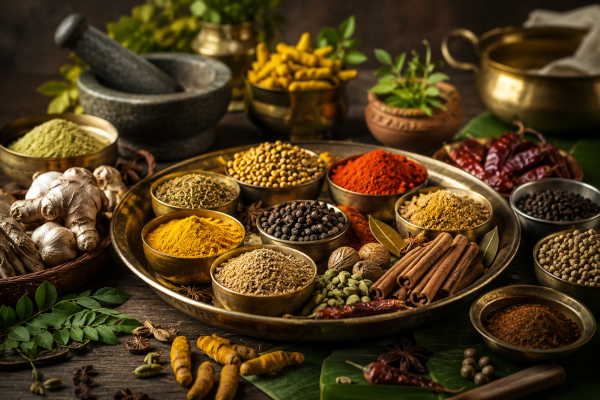
Long before modern nutrition science began discussing gut microbiomes, anti-inflammatory compounds, metabolic health, antioxidants, or functional foods, Indian civilisation had already integrated preventive medicine directly into everyday cooking. In the Indian knowledge system, the kitchen was never viewed merely as a place to prepare food for taste or survival. It functioned as a decentralised health system where spices, herbs, oils, fermentation methods, and seasonal recipes worked together to maintain bodily balance, strengthen digestion, support immunity, and prevent disease before it emerged.
This philosophy forms one of the foundational pillars of Ayurveda. Unlike many modern medical systems that primarily focus on treating illness after symptoms appear, Ayurveda places enormous emphasis on prevention. The central idea is simple yet profound: health is maintained not through occasional medication, but through daily habits involving food, digestion, sleep, climate adaptation, and lifestyle rhythms. Indian spices therefore evolved not merely as flavouring agents, but as biological regulators carefully selected over centuries through observation, experience, and ecological adaptation.
What modern science now calls “functional foods,” traditional Indian households simply called food.
One of the most important concepts in Ayurveda is “Agni,” or digestive fire. Ancient Ayurvedic physicians believed that weakened digestion lies at the root of many diseases because improperly digested food generates “Ama” — toxic metabolic residue that accumulates within bodily channels. Indian spices were therefore heavily designed around supporting digestion, improving absorption, reducing inflammation, regulating metabolism, and preventing microbial imbalance.
This explains why almost every traditional Indian dish contains carefully balanced spice combinations rather than isolated ingredients.
Take jeera, or cumin, for example. In Ayurveda, cumin is regarded as one of the most important digestive spices. It stimulates digestive enzymes, reduces bloating, improves nutrient absorption, and balances weakened digestion. Modern studies have also examined cumin for antioxidant activity, digestive support, and metabolic benefits. Yet Indian households had already been using jeera water, cumin-tempered buttermilk, and digestive spice blends for centuries without requiring biochemical terminology to justify them.
Similarly, turmeric occupies an extraordinary place in Indian food culture. Curcumin, turmeric’s most studied compound, is now globally researched for anti-inflammatory and antioxidant properties. But in Indian kitchens, turmeric was never treated as merely a colouring agent. It was integrated into daily cooking because traditional systems associated it with wound healing, immunity support, microbial balance, and internal cleansing. Turmeric milk, turmeric rice, turmeric-based curries, and ceremonial uses all reflected a deeper medicinal understanding embedded within culture itself.
Black pepper presents another fascinating example. Ayurveda describes black pepper as a stimulant for digestion and circulation, while modern studies have shown that piperine can enhance bioavailability of certain nutrients and compounds — including curcumin from turmeric. Traditional Indian cooking instinctively paired turmeric with black pepper long before pharmacology explained why the combination worked so effectively.
Coriander seeds, widely used in Indian curries and digestive preparations, were traditionally viewed as cooling and balancing, particularly useful during hot climates and Pitta aggravation. Fennel seeds became common after meals not merely as mouth fresheners, but because they supported digestion and reduced gas formation. Mustard seeds stimulated warmth and circulation. Fenugreek aided metabolism and digestion. Hing reduced intestinal discomfort. Ajwain was valued for its powerful digestive action. Curry leaves became associated with digestion, micronutrients, and metabolic support. Even ginger — now celebrated globally as a superfood — has been central to Indian preventive medicine systems for millennia.
Indian cuisine therefore evolved as a carefully engineered biochemical ecosystem adapted to climate, agriculture, disease patterns, and human physiology.
Climate played an enormous role in shaping these traditions. India’s tropical and subtropical environments historically created conditions favourable for microbial growth, digestive disturbances, food spoilage, and seasonal infections. Spices with antimicrobial, digestive, and preservative properties naturally became integrated into daily diets. Tamarind, turmeric, mustard oil, asafoetida, garlic, and numerous spice combinations likely helped improve food preservation and gastrointestinal resilience in pre-refrigeration societies.
Seasonal adaptation was equally important. Ayurveda emphasised that the body changes across seasons, requiring different foods and spice balances throughout the year. During monsoons, warming digestive spices became important because digestive strength was believed to weaken. During summer, cooling ingredients like coriander, cumin, buttermilk, and fennel were emphasised. Winter foods often incorporated warming oils, pepper, ginger, sesame, and strengthening herbs.
This seasonal intelligence remains deeply embedded in many Indian regional cuisines even today.
Fermentation represented another hidden layer of preventive medicine in Indian food culture. Traditional foods such as idli, dosa batter, kanji, pickles, fermented rice dishes, curd preparations, and buttermilk were rich in microbial diversity long before the concept of probiotics entered modern scientific vocabulary. Fermentation improved digestibility, nutrient availability, and gut microbial balance. Spices were often integrated into these preparations to regulate fermentation and enhance digestive compatibility.
Indian cooking methods themselves were medicinally intelligent. Tempering spices in ghee or oil — known as tadka or chaunk — was not merely about aroma. Fat-soluble compounds from spices become more bioavailable when heated in oils or ghee. Many active phytochemicals require lipid carriers for efficient absorption. Traditional kitchens understood this practically even without molecular chemistry.
The widespread use of ghee in Ayurveda also reflected deeper nutritional logic. Ghee acted not only as nourishment but also as a carrier for herbal compounds and fat-soluble nutrients. Combined with spices, it created highly absorbable medicinal food systems.
Modern nutritional science increasingly validates many of these ancient insights. Research now explores:
- anti-inflammatory phytochemicals,
- antioxidant compounds,
- gut microbiome interactions,
- metabolic regulation,
- immune modulation,
- and bioactive plant compounds
present in traditional Indian spices.
Turmeric, cinnamon, cloves, black pepper, cumin, ginger, garlic, and fenugreek are now widely studied internationally for their biological effects. Yet modern science often examines these ingredients in isolation, whereas traditional Indian systems understood them synergistically within complete dietary frameworks.
This distinction is extremely important.
Indian cuisine was never based on “superfoods” alone. It relied on combinations. The balance between heating and cooling foods, digestive enhancers and heavy foods, oils and spices, fermentation and fibre, seasonal variation and bodily constitution formed a complex nutritional intelligence developed over centuries.
The structure of a traditional Indian meal itself often reflects preventive medicine principles:
- lentils for protein and fibre,
- rice for energy,
- curd or buttermilk for microbial support,
- pickles for fermentation,
- spices for digestion,
- vegetables for micronutrients,
- and herbs for metabolic balance.
Even the order of eating sometimes reflected digestive philosophy.
Perhaps the most remarkable aspect of Indian preventive medicine systems is that they democratised healthcare through ordinary households. Medicine was not restricted only to physicians or temples. Grandmothers, home cooks, village communities, and traditional food systems collectively preserved vast practical health knowledge across generations.
This may explain why Indian civilisation produced one of the world’s oldest continuously evolving food-medicine cultures.
Today, much of the modern world is rediscovering concepts that traditional Indian systems long considered normal:
- gut health,
- anti-inflammatory diets,
- plant-based nutrition,
- fermented foods,
- circadian eating,
- microbiome diversity,
- and food as preventive medicine.
Ironically, what is marketed globally today as advanced wellness often resembles principles already embedded within traditional Indian kitchens.
The modern industrial food system increasingly separated food from medicine. Processed foods prioritised shelf life, convenience, and hyper-palatability over metabolic balance and digestive health. Traditional Indian food systems, by contrast, evolved under a fundamentally different philosophy — one where nourishment, digestion, immunity, climate adaptation, and prevention remained interconnected.
This is why Indian spices continue to attract global scientific and culinary interest. They represent not merely flavour profiles, but fragments of an ancient civilisational understanding of health.
The Indian kitchen was therefore never just a kitchen. It was a preventive healthcare laboratory refined across centuries — one where everyday meals quietly functioned as medicinal systems designed to sustain balance long before illness demanded intervention.
Source:
https://www.ncbi.nlm.nih.gov/pmc
https://www.ncbi.nlm.nih.gov/books/NBK92768
https://www.ncbi.nlm.nih.gov/pmc/articles/PMC3252704
https://www.ncbi.nlm.nih.gov/pmc/articles/PMC5664031
https://www.ncbi.nlm.nih.gov/pmc/articles/PMC3535097
https://www.ncbi.nlm.nih.gov/pmc/articles/PMC3924990
https://www.ncbi.nlm.nih.gov/pmc/articles/PMC3709629
https://www.ncbi.nlm.nih.gov/pmc/articles/PMC2781182
https://www.ncbi.nlm.nih.gov/pmc/articles/PMC4127827
https://www.britannica.com/science/Ayurveda
https://www.who.int/publications/i/item/9789240011507
You may also like
-
Before the Heart Falls Ill: The Ayurvedic Way of Protecting Hridaya Through Daily Living
-
Why Ayurveda Begins the Morning by Looking at the Tongue
-
High Blood Pressure Through an Ayurvedic Lens: Stress, Diet and Dosha Imbalance
-
IISc Develops Engineered Nanobody Antivenom With Broad Protection Against Indian Cobra Venoms
-
Indian MedTech Startup Periwinkle Takes Rapid AI Cervical Cancer Screening to BRICS
