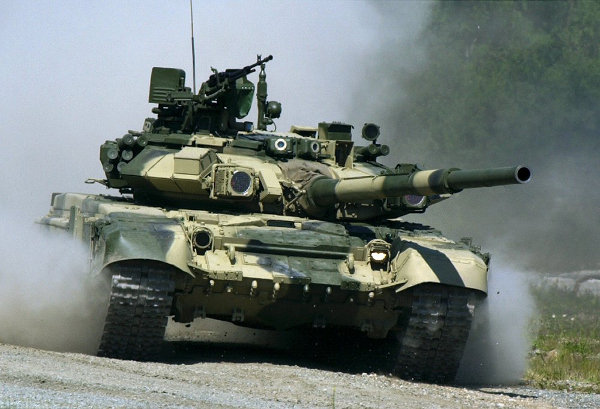
India’s armoured vehicle modernisation effort may be entering a more consequential phase, with reports indicating that Armoured Vehicles Nigam Limited is looking at an indigenous family of engines spanning roughly 400 HP to 1500 HP for future tracked and wheeled combat platforms. Even though that exact horsepower band is not yet publicly confirmed in a single official government announcement, the broader direction is clearly real: AVNL’s own annual reporting says the company has “taken up development of new engines” and the “upgradation of existing engines” for tanks and infantry combat vehicles, while also highlighting active work on future platforms such as the FICV, Indian Light Tank and FRCV.
From a force-structure perspective, an indigenous engine family of this scale would be strategically important because it would cover nearly the full spectrum of India’s future armoured needs. At the lower end, engines in the 400–600 HP class are typically relevant for lighter specialist combat vehicles, support variants and some protected mobility platforms. The 700–1000 HP band is more aligned with infantry combat vehicles and upgraded legacy tracked platforms. The 1200–1500 HP class is where future main battle tanks and heavier combat vehicles become practical, particularly when armies seek high mobility without sacrificing armour, electronics or larger turrets. This mapping is an engineering inference based on known weight-power relationships in armoured vehicle design, but it fits with India’s visible procurement trajectory toward FICV, Indian Light Tank and FRCV-type programmes.
The strongest officially validated pillar of this story is the 1500 HP segment. In March 2024, the Ministry of Defence announced the maiden test-firing of India’s first indigenously made 1500 HP engine for main battle tanks at BEML’s Mysuru engine division. The government described it as a major milestone for defence self-reliance and said the engine had been developed with support from DRDO’s Combat Vehicles Research & Development Establishment and other ecosystem partners. That matters because 1500 HP is the power class generally associated with modern or next-generation MBTs seeking strong acceleration, cross-country mobility and enough reserve power for additional mission systems.
The mid-to-upper power band is also supported by official evidence. In March 2025, the Defence Acquisition Council cleared the procurement of 1350 HP engines for T-90 tanks, explicitly to upgrade the current 1000 HP engine configuration. That approval is significant because it shows that India is not thinking only about clean-sheet future engines, but also about incremental uprating of current armoured fleets already in service. A T-90 moving from 1000 HP to 1350 HP would, in principle, improve power-to-weight ratio, mobility under armour growth, acceleration, gradient performance and heat/high-altitude operating margins.
AVNL’s own public documents reinforce that this is not a theoretical discussion. Its 2024–25 annual report states that the company has already completed major projects including the uprating of T-72 tanks from 780 HP to 1000 HP, and that it has “taken up development of new engines” while upgrading existing engines for tanks and infantry combat vehicles. The same report also says Engine Factory Avadi repaired two 1400 HP engines for MBT Arjun and is working on sustenance-related engine items for the Arjun fleet. That combination of 780-to-1000 HP uprating, 1400 HP sustainment work, and new-engine development strongly suggests an organisation building competence across multiple horsepower tiers rather than working in a single isolated niche.
Technically, building an indigenous armoured-engine family is far more demanding than simply scaling one engine design up or down. Engines in this class must operate under high dust loads, severe vibration, rapid thermal cycling, shock, prolonged idling, abrupt torque demand and battlefield maintenance constraints. In tracked vehicles especially, the engine is only one part of a tightly integrated powerpack that includes transmission, cooling package, filtration, air induction, exhaust management, lubrication, electronic controls and interfaces with steering and final-drive systems. That is why AVNL’s Future Ready Combat Vehicle expression of interest is particularly revealing: it specifies a minimum 1500 HP power pack for the FRCV, showing that future Indian tank design is already anchored around this power class.
The engineering challenge becomes even harder when one considers Indian operating conditions. Engines for armoured vehicles in India must tolerate high ambient temperatures, degraded air quality, long logistics chains and potentially high-altitude deployment. Under such conditions, cooling efficiency and air filtration become mission-critical. A nominal horsepower rating on paper is not enough; the real test is whether the engine can sustain usable output without power fade, overheating or excessive wear when the vehicle is fully laden with armour, ammunition, sensors and electronic subsystems. This is one reason why indigenous development matters: imported engines are often optimised for different climatic and maintenance realities, whereas a domestic design can be tailored around Indian duty cycles and serviceability requirements. That conclusion is an inference from the operating envelope implied by India’s current and future AFV fleet, together with AVNL’s OEM role and MoD’s self-reliance emphasis.
Another technical issue is modularity. A genuine engine family programme would ideally share subsystems across variants: fuel injection architecture, pistons, liners, turbocharging philosophy, control electronics, diagnostic systems, cooling modules and service tooling. Shared architecture lowers lifecycle costs, simplifies training and reduces spares complexity across the fleet. For a country like India, which operates a mix of T-72, T-90, Arjun, BMP-derived vehicles and future armoured projects, this is arguably as important as peak horsepower itself. An indigenous family approach would allow deeper commonality between current sustainment requirements and next-generation vehicle programmes. AVNL’s annual report does not spell out this architecture, but its emphasis on both upgrades and new engines points in that direction.
This is also a story about industrial sovereignty. AVNL’s website says the company has achieved 100% indigenisation of engines for the T-72, T-90 and BMP-II platforms in its production context, and describes the enterprise as India’s main armour OEM with very high indigenisation levels across tracked fleets. Separately, older Engine Factory Avadi material notes engine-testing infrastructure covering roughly 300 HP to 1000 HP, which indicates a pre-existing industrial base for lower and mid-power AFV engines. If India now extends that competence upward into the 1350–1500 HP class with mature powerpacks and long-life reliability, it would significantly reduce dependence on foreign engine ecosystems in one of the hardest segments of defence manufacturing.
The future programmes make this even more consequential. AVNL’s FRCV document cites the Indian Army’s plan for 1770 Future Ready Combat Vehicles in a phased approach, with 590 vehicles as the firm requirement in Phase I, and specifies a minimum 1500 HP powerpack requirement. If a domestic engine line matures in time, it would not just power an isolated prototype; it could become the mobility backbone for one of the largest future armoured procurements in the country. In parallel, AVNL’s annual reporting identifies the FICV, Indian Light Tank and wheeled armoured vehicle efforts as active or strategic programmes, meaning the eventual demand signal could extend across several vehicle categories rather than a single tank project.
AVNL Annual Report 2024-25
https://avnl.co.in/files/inline-documents/avnl_annual_rpt_stat.pdf
PIB — Maiden test-firing of India’s first indigenously-made 1500 HP engine for Main Battle Tanks
https://www.pib.gov.in/PressReleaseIframePage.aspx?PRID=2015720
PIB — DAC clears capital acquisition proposals worth over Rs 54,000 crore to enhance defence capabilities
https://www.pib.gov.in/PressReleseDetailm.aspx?PRID=2113268
PIB — Ministry of Defence Year End Review 2025
https://www.pib.gov.in/PressReleasePage.aspx?PRID=2210154
AVNL — Expression of Interest for Future Ready Combat Vehicle (FRCV)
https://www.avnl.co.in/files/notices-documents/AVNL_EOI_FRCV.pdf
AVNL — Make in India
https://avnl.co.in/make-in-india
Engine Factory Avadi Product Catalogue
https://avnl.co.in/files/avnl_documents/EFA-PRODUCT-CATLOUGE.pdf
IDRW — AVNL to Develop Next-Generation Power Packs from 400HP to 1500HP for India’s Armoured Fleet
https://idrw.org/avnl-to-develop-next-generation-power-packs-from-400hp-to-1500hp-for-indias-armoured-fleet/
You may also like
-
India’s Indigenous Sonar Ecosystem Powers New Generation of Indian Navy Warships
-
Murshidabad Becomes First West Bengal District to Complete Land Handover for India-Bangladesh Border Fencing
-
India’s LR-AShM Family Could Reach 3,500 Km as DRDO Develops Extended-Range Hypersonic Variants
-
Indian Composite Manufacturing Gets BrahMos Boost With ₹60-Crore Order to Allen Reinforced Plastics
-
HAL-Samtel Opens New Gurugram Facility to Expand Indigenous Defence Avionics and Display Manufacturing
