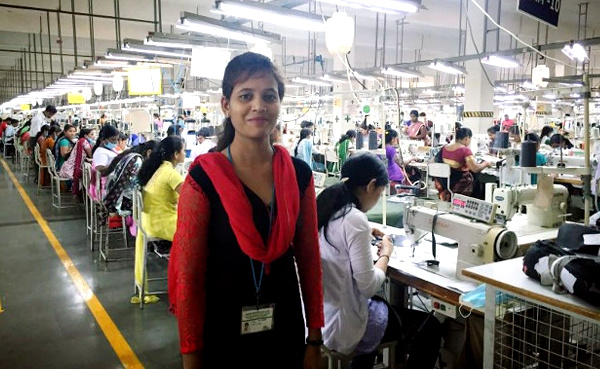
According to a new report, women-owned businesses in India are projected to accelerate by ~ 90% in the next five years.
EdelGive Foundation, a philanthropic organisation, conducted a survey in 13 states and union territories (UTs).
Nearly 3,300 women entrepreneurs were identified during the mapping of these regions, who were divided into three categories: manufacturing, retail, and service delivery. A total of 1,235 women entrepreneurs were chosen for the study and interviewed.
These entrepreneurs, as well as their family members, staff, and customers, were interviewed. In-depth interviews were also conducted with 20 NGOs that encourage women entrepreneurs.
After starting a company, ~ 80% of women in semi-urban and rural India report a significant boost in their socioeconomic and cultural status.
It was also observed that, despite a number of state-run schemes and policies promoting women’s entrepreneurship, adoption of these initiatives is minimal.
Around 1% of the women entrepreneurs polled have taken advantage of the government initiative, owing to the fact that only about 11% are aware of such programmes.
The multi-faceted review investigated at a variety of factors, including social, financial, personal, and familial factors, to better assess the full journey of women entrepreneurs, as well as the role of government, NGOs, and corporations.
Although the study shows that women entrepreneurs’ socio-cultural lives are improving, it also indicates that there are still disparities in financial knowledge and resources, as well as marketing, development, technical, and socio-cultural challenges they face.
Lack of awareness about financial assistance and schemes, non-availability of appropriate documents, perception of the procedure of using these schemes as “complex,” and possessing no assets to place on mortgage are among the challenges.
According to the report, women-owned businesses in India are expected to increase by ~ 90% in five years, compared to similar businesses in the US and the UK, which are expected to grow by 50% and 24%, respectively.
The study suggests that states conduct meta-analysis to determine their particular requirements and priorities and execute related initiatives, promote goods from women entrepreneurs under a common brand with tax incentives, and impart soft-skills training such as accounting.
It also indicates that aspiring entrepreneurs formalise and grow their businesses by implementing HR management and communication, implementing awareness generating and community mobilisation projects for moral support, and establishing mentorship programmes at the local level.
Jammu and Kashmir, Uttar Pradesh, Gujarat, Haryana, Rajasthan, Maharashtra, Manipur, Tripura, Daman, West Bengal, Jharkhand, Tamil Nadu and Madhya Pradesh are the states/UTs where the study was conducted.
Source: IBEF
You may also like
-
TDB Backs BigEndian Semiconductors with ₹130 Crore for Indigenous VeerAI Vision Chip
-
Wayanad Jeerakasala Rice — Kerala’s Aromatic Grain from the High Valleys of the Western Ghats
-
Bharat Forge Secures Long-Term Pratt & Whitney Canada Contract for Critical Aero-Engine Components
-
UltraTech Cement Nears 2 GW Green Power Capacity as Decarbonisation Drive Accelerates
-
GST 2.0 Simplifies Registration and Accelerates Refunds for Indian Businesses
