A state-of-art zoological park with a distinctive collection of indigenous and exotic animals, and birds from the various regions of the world, is located in the picturesque hills near the tallest statue of the world, the ‘Statue of Unity’ and the Sardar Sarovar Dam, in Kevadia, Gujarat. The new zoological park is touted as the world’s fastest made ‘jungle safari’ and is billed to extend an exciting trip for viewers who can enjoy the scenic beauty of the hills and vivid wildlife to give an immersive and entertaining experience.
Dr Rajiv Kumar Gupta, an Indian Administrative Service (IAS) officer, who is currently the Additional Chief Secretary (Forest & Environment Dept.) and also the MD of Sardar Sarovar Narmada Nigam Ltd (SSNL) shared some photos of the jungle safari with its newest inhabitant.
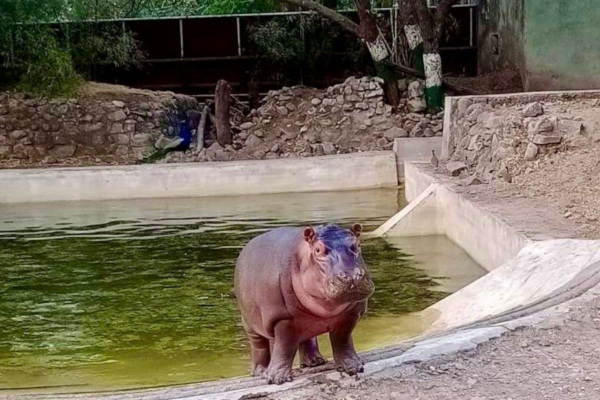
Gupta took to the microblogging site to share few images of the facility and its adorable new entrant ‘Bhim’. In his tweet, he wrote that the ‘15-month Hippopotamus’ is ready to join the ‘world’s fastest ever made Jungle Safari’ which is located near the Statue of Unity. Further in his post, he shared details about the adorable Hippo calf will be joining others at the ‘zoo in a few days’.
The new jungle safari is spread over 375 acres at seven different levels. It is situated on the right bank of the Narmada River, near the Statue of Unity and sits at an altitude or elevation of 29 metres to 180 metres.
The zoological park is currently home to more than 186 species of fauna, which also include distinct biological communities from Africa, Australia, America and Asiatic regions.
Source: New18
Image Courtesy: News18
You may also like
-
India Builds Indigenous Nuclear Technology Ecosystem as Three-Stage Programme Moves Towards Thorium Era
-
ONGC Begins Commercial Crude Oil Production From West Bengal’s Ashoknagar Field
-
CISF Partners Drone Federation of India to Build Indigenous Counter-Drone Capabilities for Critical Installations
-
Tata Power Renewables Commissions 72.5 MW Solar Project in Rajasthan to Support Tata Steel’s Decarbonisation
-
DoT and C-DOT to Establish End-to-End Optical Network Testbed for Indigenous Telecom Technologies
