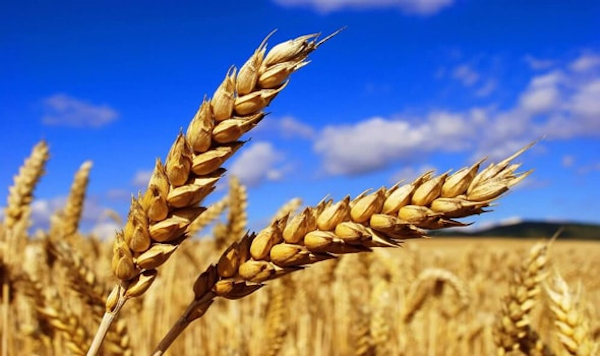
We may soon have a wheat variety that does not lose its productivity under heat stress.
Heat stress causes a dramatic reduction in yield and quality loss of wheat, the food crop that nurtures more than one-third of the world population.
In order to address this challenge, Dr. Vijay Gahlaut, an Inspire Faculty Fellow of the Department of Science and Technology (DST), is exploring the epigenetic route to modify gene expression in a manner that is stably transmitted but do not involve differences in the underlying DNA sequence, so that the heritable genes do not buckle under heat stress and non-stress conditions during different grain filling stages.
Dr. Vijay who is faculty at the Biotechnology division at the Institute of Himalayan Bioresource Technology, Palampur, will identify the role of DNA methylation (a biological process by which methyl groups are added to the DNA molecule) patterns of heat stress-tolerant and heat stress-sensitive wheat genotypes during different grain filling stages. He proposes to carry this out through a process called epigenomic mapping, which will also help in the identification of natural epigenetic variation.
His recent publication in the journal ‘Genomics’ has shown that differential expression pattern of C5-MTase genes under heat stress suggesting their role in stress response in wheat. This could give a major clue to producing heat-tolerant productive wheat varieties.
The utilization of identical genes that differ in the extent of methylation known asepialleles identified through his research could be one of the most promising solutions to improving wheat productivity by engineering elite wheat varieties with enhanced heat stress tolerance and increase grain yield.
You may also like
-
IISc Develops Engineered Nanobody Antivenom With Broad Protection Against Indian Cobra Venoms
-
Self-assembly of Organic Molecules Opens a New Path to Green Hydrogen Production
-
Bi-layered Single-piece Dental Implant Reduces the Need for Surgical Unterventions
-
NASA Invites ISRO Into Moon Base Programme as US Opens Door Wider to Indian Space Startups
-
ISRO Successfully Completes Final EOS-05 Orbit-Raising Manoeuvre
