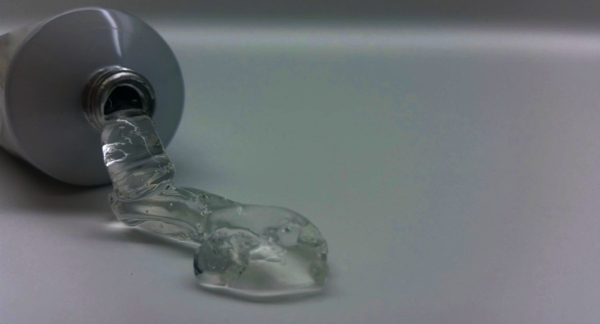
Researchers in India have invented a gel that can be used to protect farmers against pesticides. They published their results in Science Advances.
Farmers are exposed to toxic pesticides through skin contact and inhalation. In 2017, the spraying of pesticides is thought to have led to over 40 deaths, 25 cases of lost vision and over 1,000 hospitalizations from the Vidharbha region in Maharashtra, India, alone.
Organophosphates are a major class of pesticides which can enter the body through the skin and cause severe neurotoxicity with persistent exposure. These chemicals disrupt communication between brain cells by inhibiting the acetylcholinesterase enzyme, and are implicated in learning deficits, suffocation, paralysis, muscle weakness, loss of endurance and even death.
In the present study, a team of researchers at the Institute for Stem Cell Science and Regenerative Medicine (inStem) in Bangalore, India, has developed a topical gel that can be applied on the skin before pesticides are sprayed. This gel can deactivate pesticides on the skin, thereby preventing pesticide-induced toxicity and lethality.
The researchers also demonstrated in an animal model that a one-time, topical application of their gel prevented pesticide-induced toxicity, alleviating symptoms such as loss of neuronal communication, muscle control and death. Furthermore, the gel exhibited broad-spectrum activity, detoxifying a wide range of commonly used pesticides in India.
“Preapplication of the oxime-based cream on the skin in vulnerable individuals is likely to translate to reduction in the exposure load of organophosphates. This concept needs to be evaluated in clinical trials before widespread use. As the authors have stated, a cost-effective preparation is also required,” said Dr. J. V. Peter, director of Christian Medical College, India, who was not involved in the study.
Source: National Center for Biological Sciences
Image Courtesy:
You may also like
-
Indian Scientists Discover How Rapidly Spinning Black Holes Produce High-Frequency X-Ray Oscillations
-
ISRO Completes Historic SPADEX Mission as Both Satellites Re-enter Earth’s Atmosphere After Successful Space Docking Experiments
-
Indian Scientists Discover Rare Accretion Disk Around Neutron Star 24,000 Light-Years Away
-
BARC Scientists Develop Indigenous Technology to Recover 90% of Lithium from Seawater
-
How Indigenous Indian Technologies Are Helping Aircraft and Trains Navigate Safely Through Dense Fog
